Fox Valley Crack Damage Calculator
2-step wizard · Based on WI freeze-thaw data — 80–100 cycles/year
Understanding Concrete Damage in Fox Valley
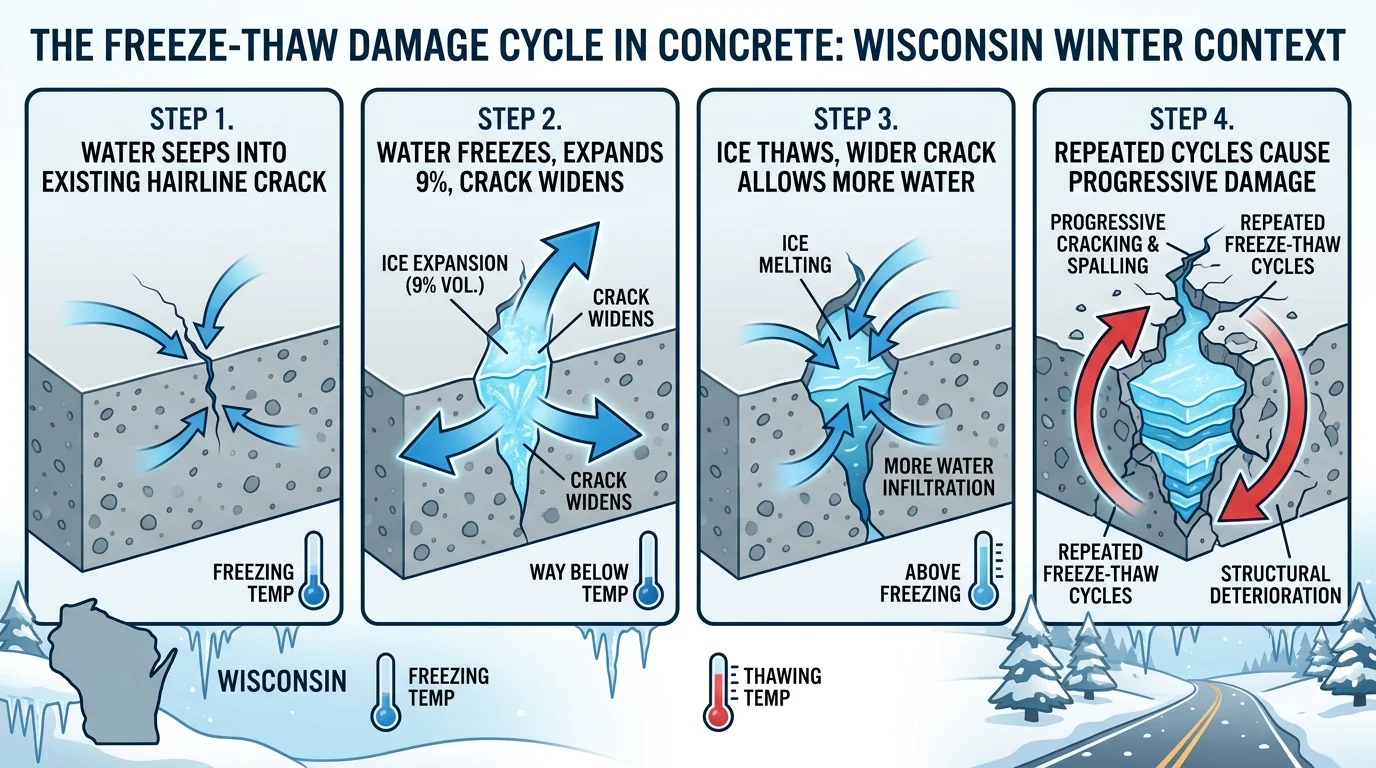
Fox Valley averages 80–100 freeze-thaw cycles per year — one of the highest rates in the Midwest. Here's what that means for your concrete.
Understanding Your Crack Type
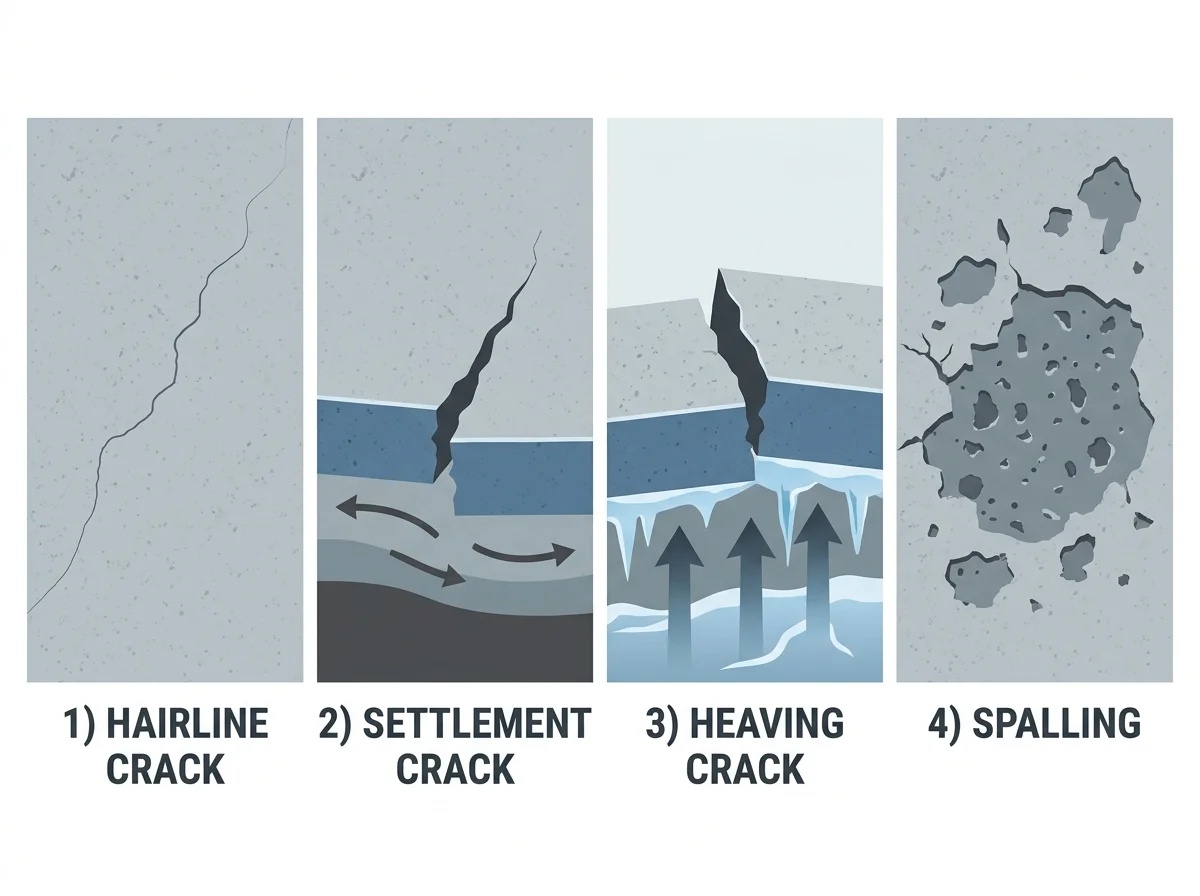
The four main concrete crack types. Identifying yours correctly determines whether you need a surface repair or a more involved fix.
Fine surface cracks under 1/8" — usually caused by concrete shrinking as it cures. Cosmetic if sealed promptly, but Fox Valley freeze-thaw cycles will widen them each winter.
Crack follows the slab edge with one side lower than the other. Indicates soil movement underneath. Fix the drainage cause or the crack returns.
Slab sections at different heights — frost is pushing the slab up. Common in Fox Valley clay soils. Patching is temporary; subbase work is usually needed.
Surface flaking off in chunks or layers. Caused by freeze-thaw damage to an unprotected or improperly mixed surface. Resurfacing or replacement if widespread.
How Fox Valley Winters Destroy Concrete
Fox Valley averages 80–100 freeze-thaw cycles per year. Water seeps into a crack, freezes, expands 9%, widens the crack, thaws, allows more water in — then repeats. A 1/8" crack can become a 1/4" crack in a single winter.
Road salt accelerates this dramatically by lowering the freezing point and drawing moisture into the surface. This is why repairs that cost $300 today can become $2,000+ jobs after just two or three winters.
The fix? Seal existing cracks before freeze season and use a penetrating sealer to block moisture entry. The best time to apply: October, on clean dry concrete, before the first hard freeze. See sealer guide ↓
When to Repair vs. Replace
- ✓ Cracks are isolated — not spread across the whole slab
- ✓ The base is stable — no soft spots when probed with a screwdriver
- ✓ The slab is under 15 years old and in otherwise good shape
- ✓ Total crack area is less than 25% of the slab surface
- ✗ Multiple cracks spread across the slab — it's a pattern, not an accident
- ✗ Frost heaving is widespread — the subbase has failed
- ✗ Repair cost would exceed 50% of full replacement
- ✗ The slab is 20+ years old with repeated patching history
A Fox Valley contractor can probe under the slab with a screwdriver — soft spots mean the base has failed and surface patching will be temporary. Learn about concrete repair services →
"A $0.50–1.00/sqft sealer prevents thousands in freeze-thaw damage."
A penetrating silane-siloxane sealer blocks moisture and road salt from entering the surface. Applied every 3–5 years, it dramatically slows freeze-thaw damage. It won't fix existing cracks, but it prevents new ones and extends the life of any repairs you make.
Don't use a film-forming sealer on driveways — it traps moisture and can peel. A penetrating sealer soaks in and creates no film to peel or chip.
Browse Fox Valley concrete repair contractors to get a free estimate on your crack repair.
Planning a new concrete project?
Use our cost estimator for driveways, patios, sidewalks, and basement floors.
Concrete Cost Estimator