


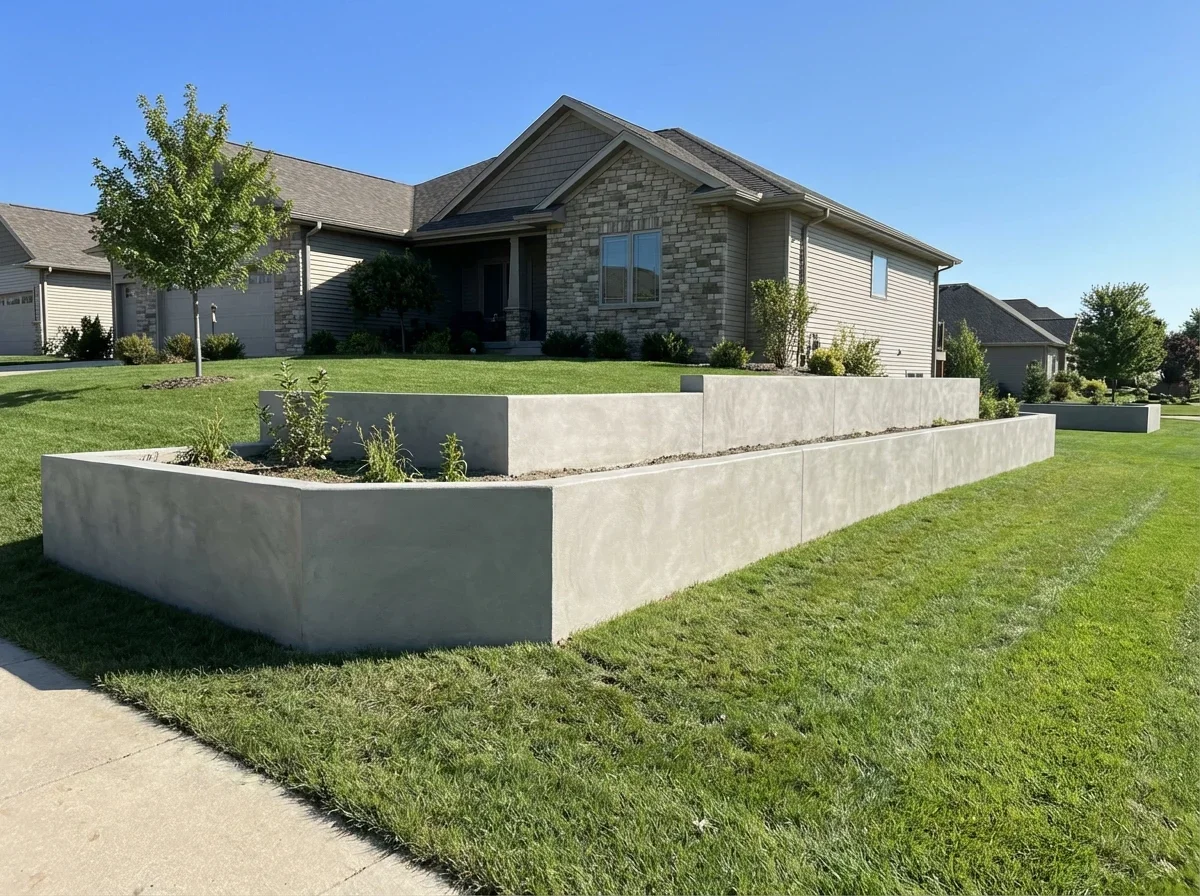
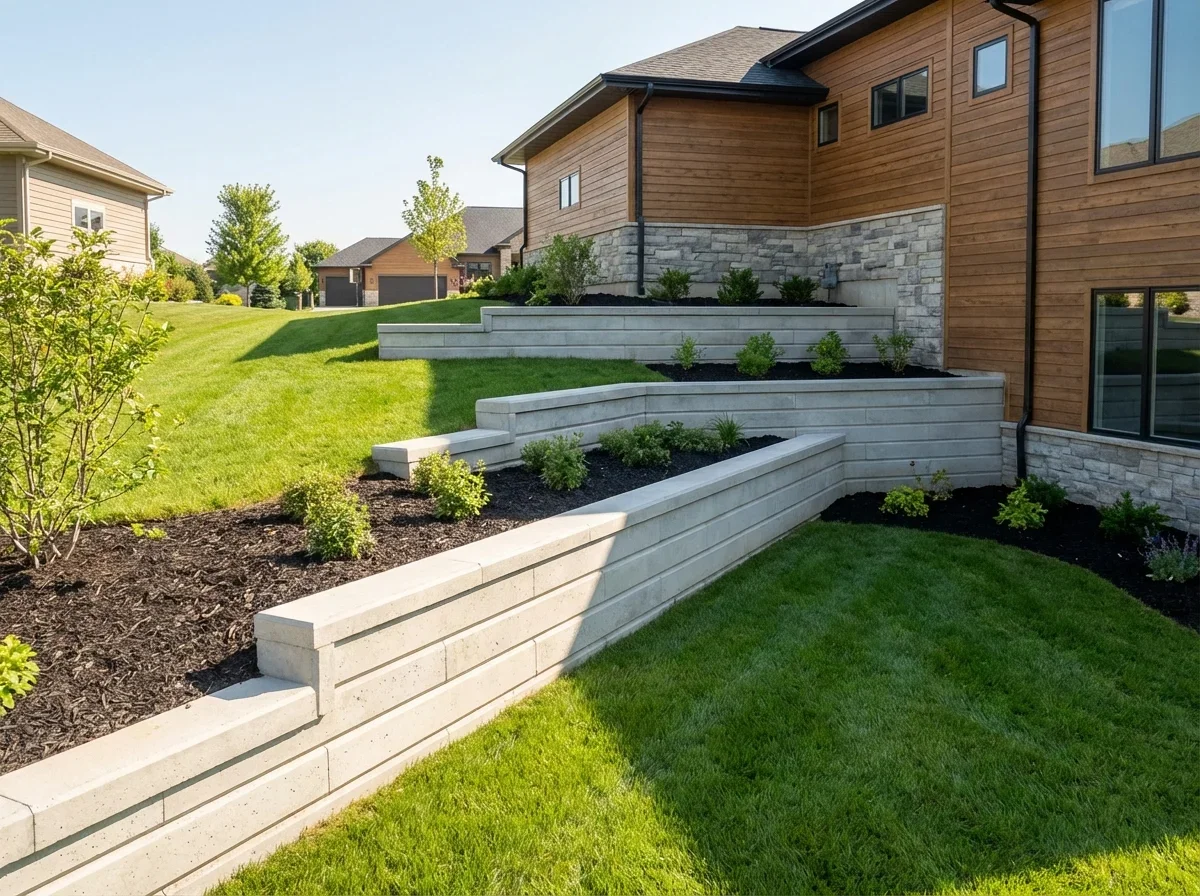
When Do You Need a Retaining Wall?
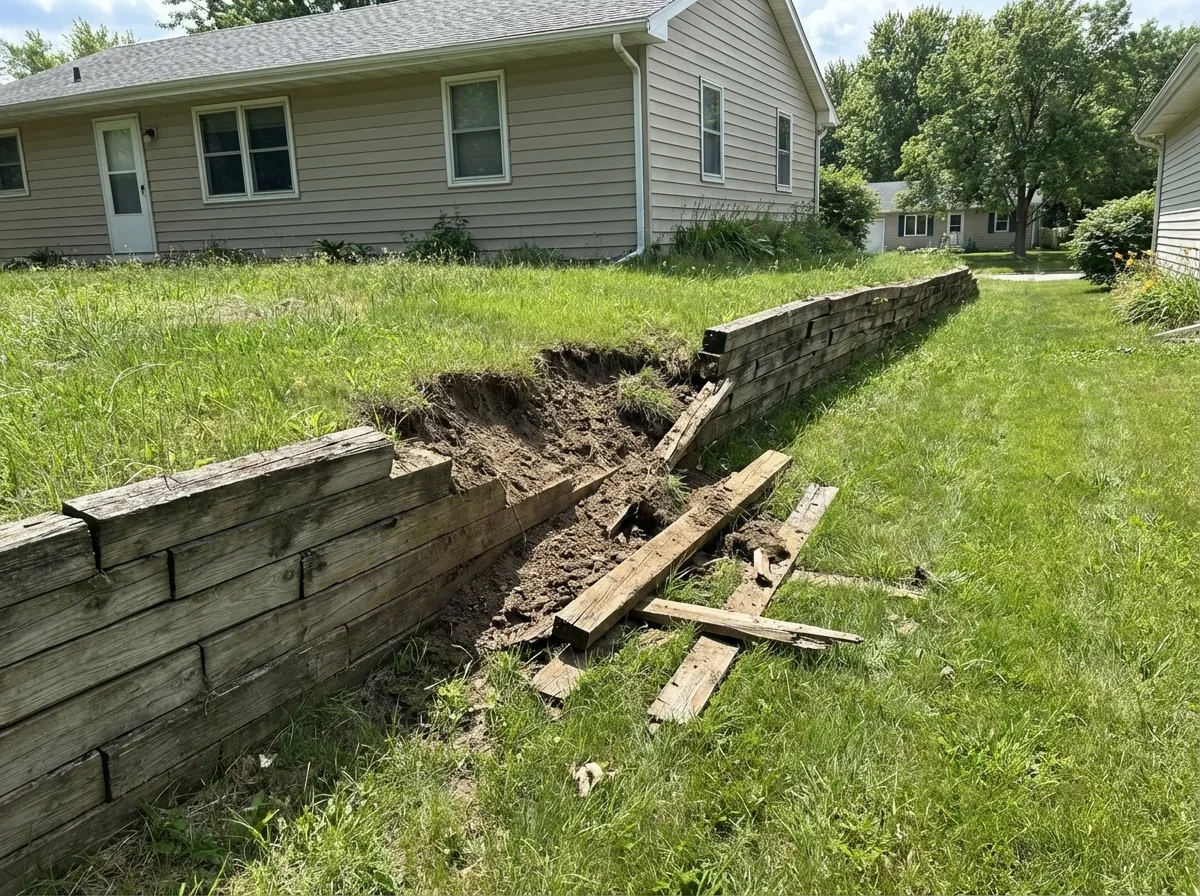
You notice it after every spring thaw. The hillside behind your Appleton home slumps a little more. The garden bed you built three years ago now tilts at an angle. Your patio pavers have settled unevenly because the soil underneath keeps washing away.
Maybe you're not dealing with erosion yet. Maybe you just have a sloped lot in Neenah that's eating up half your usable yard space. The kids have nowhere flat to play. You can't put in the patio you've been planning. Every time you mow, you're white-knuckling a push mower on a 20-degree slope.
Here's what happens when you ignore slope problems: The erosion accelerates. What starts as minor washout after rainstorms becomes gullies. Soil migrates downhill and piles against your foundation or your neighbor's fence. In severe cases, you're looking at foundation exposure, compromised drainage systems, even structural issues if the earth movement affects your home's footings.
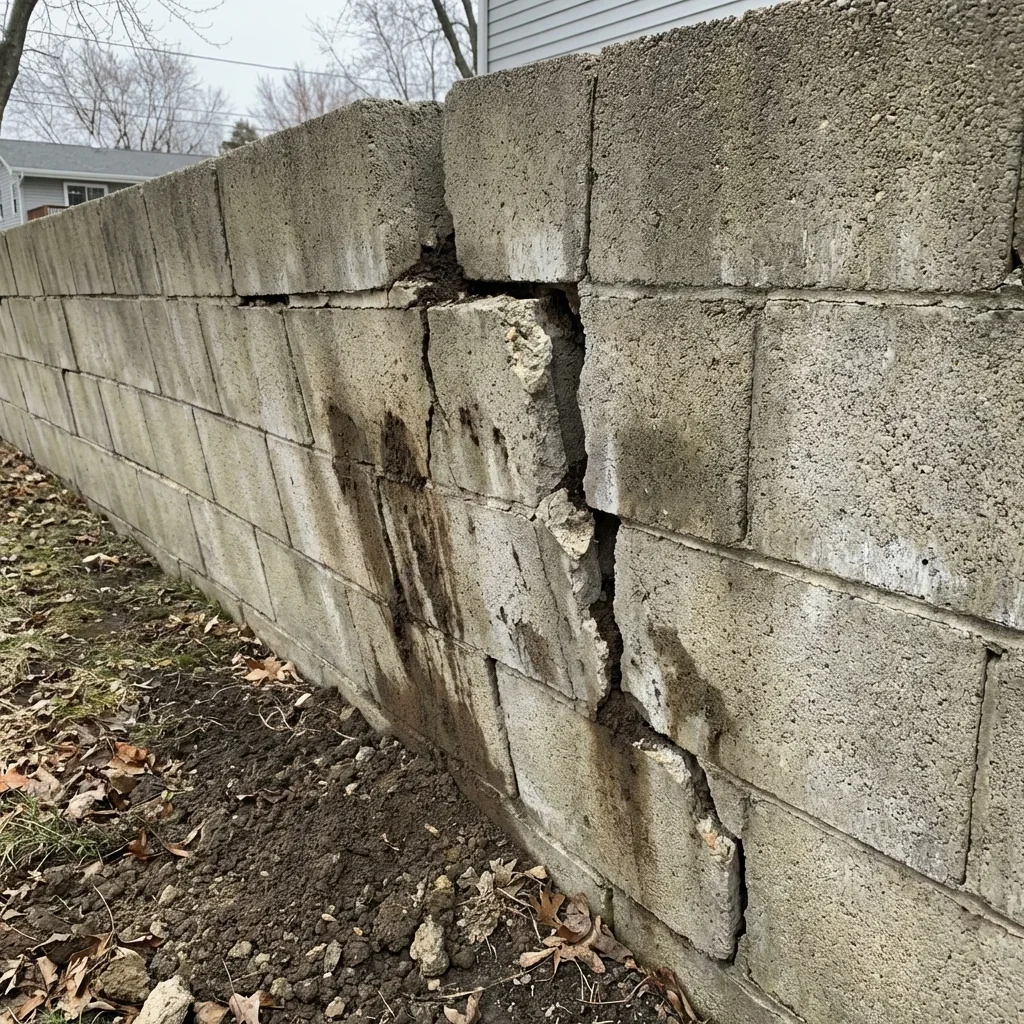
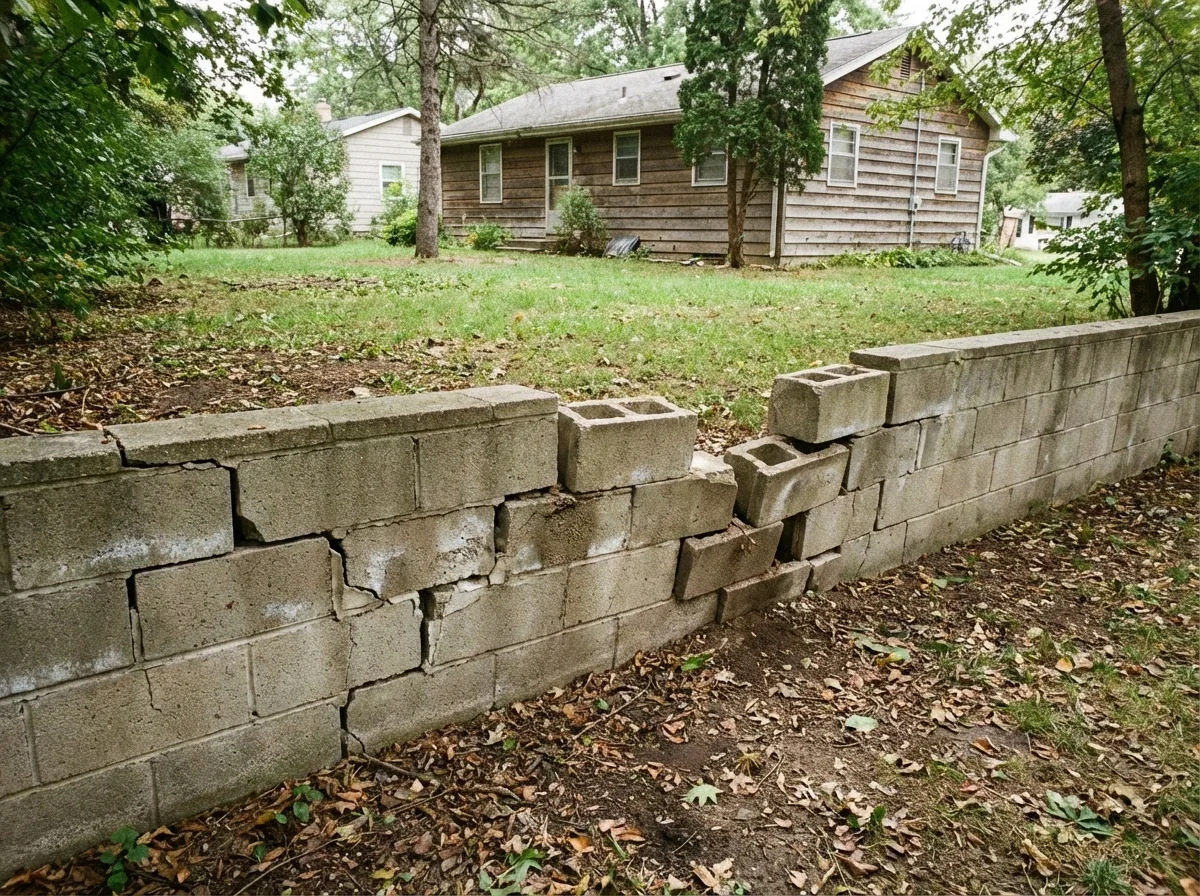
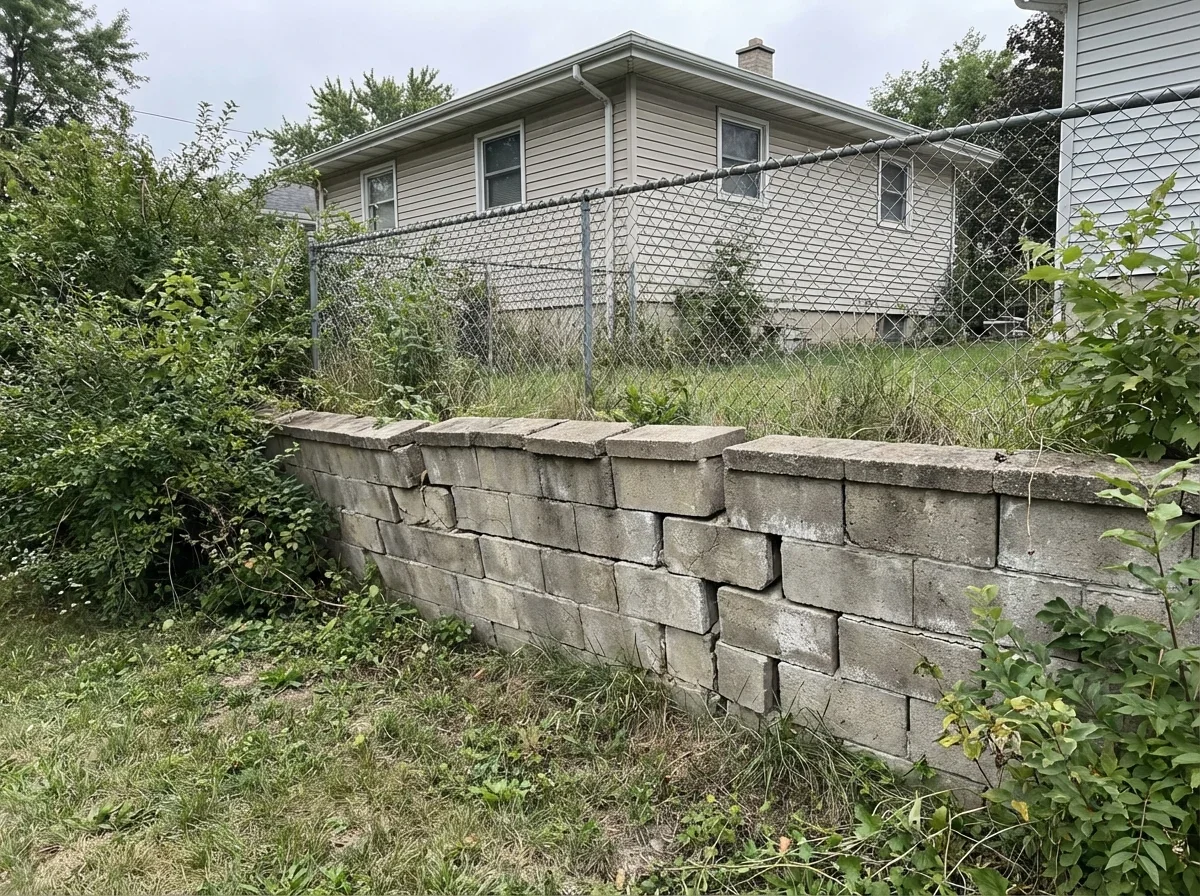
The fix isn't throwing down some landscape timbers and hoping for the best. Wisconsin freeze-thaw cycles destroy anything that isn't properly engineered. Frost heave will push poorly constructed walls out of alignment within two winters. Water trapped behind a wall with inadequate drainage will freeze, expand, and crack even thick concrete.
The cost of waiting: A 20-foot retaining wall properly installed costs $8,000–$12,000. Foundation repairs after erosion undermines your home's footings? $15,000–$40,000. Every season you delay, the problem literally gets bigger.
You need a wall that's engineered for Wisconsin soil conditions and frost depth. That means proper footings, drainage systems that don't clog with freeze-thaw cycles, and construction that accounts for lateral earth pressure. The backyard project becomes a legitimate structural element — and it requires professional engineering and installation.
What Does a Retaining Wall Cost in the Fox Valley?
Retaining wall costs depend on height, length, soil conditions, and the type of wall system you choose. In the Fox Valley, you're looking at $25–$50 per square foot of wall face for professionally installed concrete retaining walls. A typical 4-foot tall, 30-foot long wall runs $3,000–$6,000. Taller walls requiring engineering stamps and reinforced construction push toward the higher end.
Height and Length Factors
Wall height drives cost exponentially, not linearly. A 3-foot wall might run $30/sqft. A 6-foot wall hits $45–$50/sqft because it requires engineered footings, reinforcement, and often a building permit with stamped plans.[1]
| Wall Height | Cost per Sq Ft | 30-Foot Wall Cost |
|---|---|---|
| 2–3 feet | $25–$35 | $1,500–$3,150 |
| 4–5 feet | $35–$45 | $4,200–$6,750 |
| 6+ feet | $45–$60+ | $8,100–$10,800+ |
Walls over 4 feet typically require engineered plans and permits in most Fox Valley municipalities.[1] That adds $800–$1,500 in engineering fees and 2–3 weeks to the timeline, but it's not optional — it's code. And it's the difference between a wall that lasts 30 years and one that fails in five.
Drainage and Soil Considerations
Wisconsin clay soil doesn't drain well. Water trapped behind a retaining wall freezes in winter and expands with enough force to push concrete out of alignment. Proper drainage systems aren't optional — they're structural necessities.
A professional installation includes perforated drain tile behind the wall, geotextile fabric to prevent soil clogging, and clean gravel backfill. This adds $8–$12 per linear foot but means your wall survives freeze-thaw cycles.
Challenging soil conditions — high clay content, high water tables, or expansive soils common around Oshkosh and Green Bay — can add 20–30% to costs. Sometimes soil needs to be excavated and replaced with engineered fill. Sometimes drainage systems need to daylight to a lower area or connect to existing storm systems.
| Material System | Cost Range | Best For |
|---|---|---|
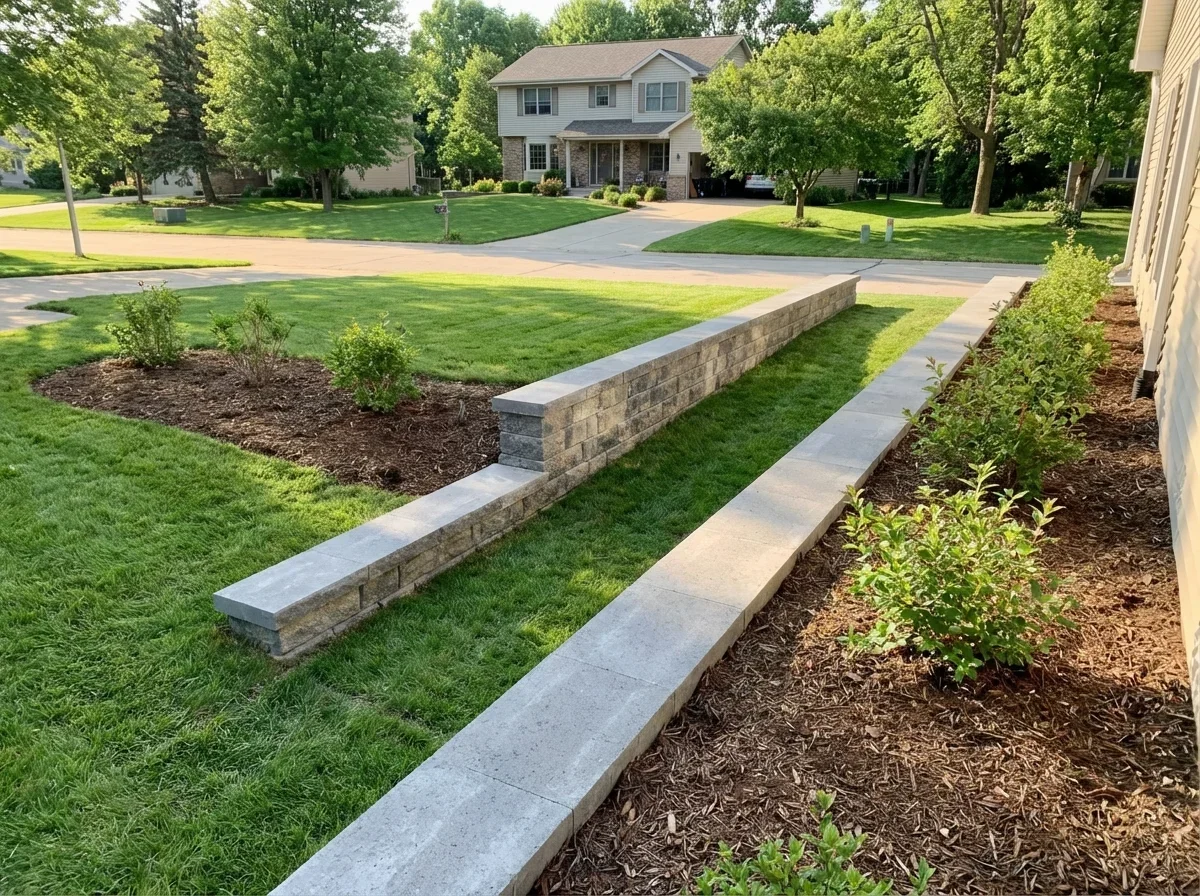
| Segmental concrete blocks (SRW) | $30–$45/sqft | Curved walls, terraced designs, DIY-friendly appearance |
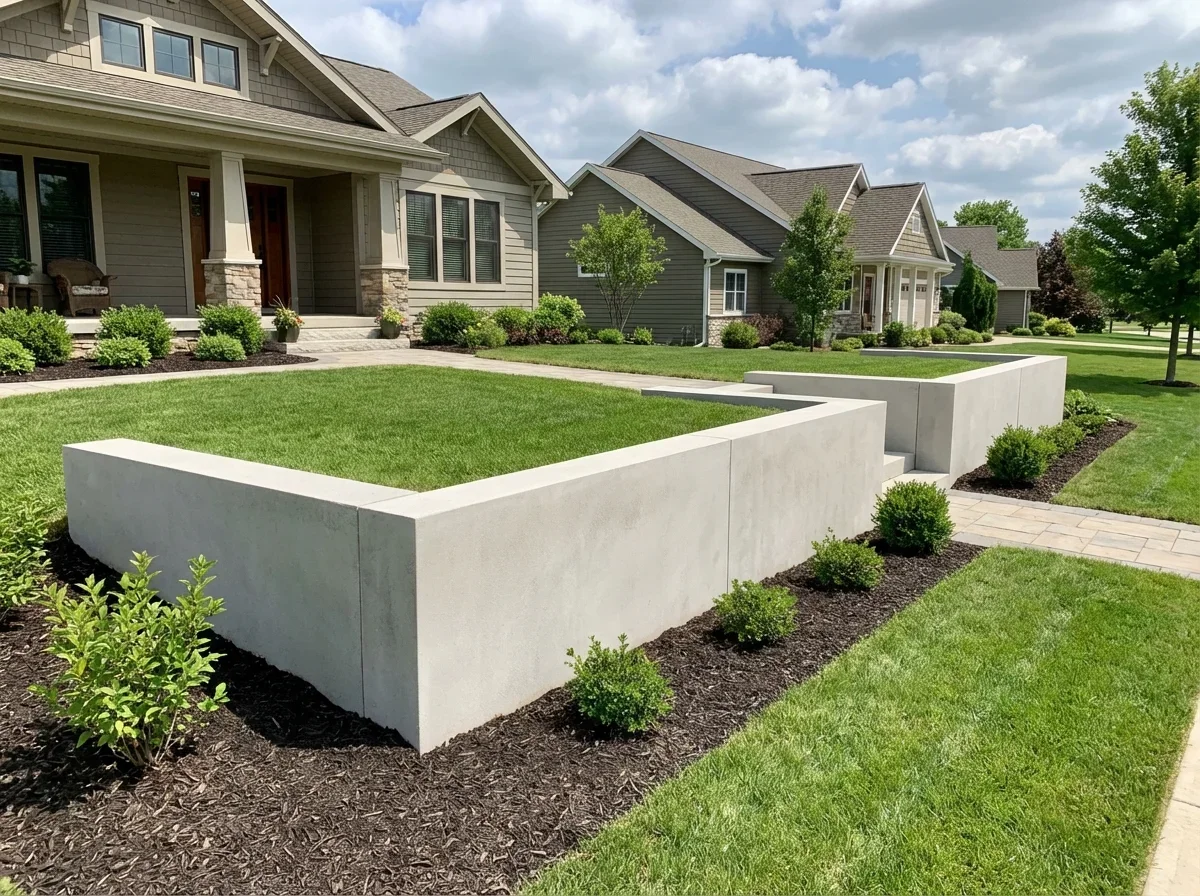
| Poured concrete | $40–$60/sqft | Tall walls (6'+), commercial applications, maximum strength |
| Concrete block (CMU) | $35–$50/sqft | Straight walls, below-grade foundations, high-load applications |
These prices include excavation, proper base preparation, drainage installation, backfill, and compaction. They assume normal access for equipment. Difficult access — backyard installations requiring hand excavation or small equipment in Menasha or Kaukauna neighborhoods with narrow side yards — adds 25–40% to labor costs.
The Retaining Wall Installation Process
A properly engineered retaining wall isn't a weekend project. It's a multi-phase construction process that accounts for Wisconsin's frost depth requirements and soil conditions. Here's what happens from consultation to final backfill.
Site Evaluation and Engineering
The contractor evaluates your slope, soil type, drainage patterns, and what's being retained (just soil, or soil plus driveway loads or structures). They mark utility locations. For walls over 4 feet, they bring in a structural engineer to design the wall system, specify footing dimensions, and calculate drainage requirements.
The engineer's stamped plans get submitted for a building permit. Most Fox Valley municipalities require permits for walls exceeding 4 feet in exposed height.[1] Permit review takes 2–4 weeks. The engineering fee covers calculations for lateral earth pressure, surcharge loads, and frost heave protection.
Excavation and Base Preparation
Excavation starts at the wall's front face and goes back 3–4 feet behind where the wall will sit. The footing trench must extend to 48 inches below grade to get below Wisconsin's frost line.[2] This isn't negotiable — frost heave will destroy any wall with inadequate footing depth.
The contractor builds a level, compacted base using crushed limestone. Typically 6–8 inches of ¾" clean stone, compacted in lifts with a plate compactor or jumping jack. The base must be perfectly level — a quarter-inch off across a 20-foot wall compounds into major alignment problems by the top course.
For poured concrete walls, this phase includes building forms and installing rebar. For segmental block walls, the first course gets pinned to the base with rebar stakes. Proper base prep takes a full day for a typical residential wall and determines whether your wall stands straight for 30 years or leans after three winters.
Wall Construction and Drainage Installation
The wall goes up course by course. Segmental blocks interlock and set back slightly with each row — typically ¾" per course — creating a batter (backward lean) that counteracts soil pressure. Poured walls require forming, rebar placement, and concrete placement in a single pour to avoid cold joints.
Drainage installation happens as the wall rises. Perforated 4" drain tile runs along the base, wrapped in filter fabric. The space behind the wall gets backfilled with clean ¾" gravel (not dirt) for at least 12 inches. Geotextile fabric separates the gravel from native soil to prevent fine particles from clogging the drainage system.
The drain tile daylights to a lower area or connects to storm drainage. In areas with high water tables near Green Bay or Little Chute, the contractor may install multiple drain outlets or a gravel-filled trench running the wall's length.
Final backfill uses native soil, placed in 8-inch lifts and compacted. Top 6–12 inches can be topsoil for landscaping. The contractor grades the area behind the wall to direct surface water away from the wall face. Total installation time: 3–7 days for a typical residential wall, depending on height and access.
How to Choose a Retaining Wall Contractor
The wrong contractor builds a retaining wall that looks fine for two years, then starts leaning, cracking, or heaving out of the ground. The right contractor builds a structural system that your grandkids will still be mowing around. Here's how to tell the difference in Fox Valley's competitive concrete market.
Engineering and Permitting Experience
Ask if they work with structural engineers for walls over 4 feet. The contractor should know which local municipalities require permits and at what heights. Red flag: "We don't usually bother with permits for walls under 6 feet." Many Fox Valley communities enforce the 4-foot rule strictly, and unpermitted work can complicate future home sales or require expensive teardown and rebuild.
Get specific about frost protection. The footing should extend to 48 inches below grade — full stop.[2] If they say "we usually go down 36 inches and haven't had problems," they're building to warmer-climate standards and hoping for the best. Frost heave isn't a maybe in Wisconsin. It's a when.
Drainage System Design
Every retaining wall contractor will say they "include drainage." What matters is specifics:
- Perforated drain tile behind the wall at footing level
- Geotextile filter fabric to prevent soil migration into gravel
- 12+ inches of clean gravel backfill (not native soil) behind the wall face
- Daylight outlet or connection to storm system — not a dead-end drain
Ask where the water goes. If the answer is vague or "it just drains into the ground," that's a problem. Trapped water will freeze, expand, and push the wall over. A professional shows you the drainage plan on paper before excavation starts.
For clay soils common around Appleton and Greenville, ask about subgrade drainage improvements. Sometimes the native soil below the base needs treatment or replacement. Skipping this step leads to base settlement and wall failure within 5–10 years.
Warranty and References
Look for 2–5 year warranties covering structural issues — cracking, settling, leaning. Cosmetic surface wear isn't warrantied, but major movement or drainage failure should be. Ask for photos of walls they installed 5+ years ago. Better yet, ask for addresses in De Pere or Seymour where you can drive by and see how their work ages.
Check if they're insured for the structural work they're performing. General liability should cover property damage, but walls over a certain height may require additional coverage. Ask about workmanship guarantees if settling or movement occurs within the warranty period.
Get at least three quotes. The lowest bid usually skips drainage, cuts corners on base prep, or ignores frost depth requirements. The highest bid might include unnecessary engineering or premium finishes you don't need. The middle quote with detailed line items and specific construction methods usually represents honest work at fair pricing.
Your retaining wall is a structural element. Choose the contractor who treats it that way — engineering first, aesthetics second, shortcuts never.
Frequently Asked Questions
Proper retaining wall installation requires attention to foundation, drainage, and structural details. The most common mistakes homeowners and inexperienced installers make are:
- Skipping or poor base preparation — Failing to excavate and compact soil adequately, leading to settling and wall failure
- No drainage system — Omitting gravel backfill or drainage pipes, causing water pressure buildup and collapse
- Incorrect block alignment — Not setting blocks level and plumb, resulting in uneven stress distribution
- Insufficient backfill compaction — Not properly compacting soil behind the wall, allowing shifting and tilting
- Missing or inadequate footer/footing — Installing blocks directly on unprepared ground instead of a compacted gravel base
- No geotextile fabric — Failing to install landscape fabric to separate backfill from soil, reducing drainage effectiveness
- Improper batter angle — Not tilting the wall slightly back into the slope (typically 1–2 inches per foot of height), reducing structural stability
Each error compounds the risk of wall failure, especially in Wisconsin's freeze-thaw cycles. Professional installation ensures compliance with local building codes and long-term durability.
- Wisconsin Department of Safety and Professional Services. "Retaining Walls." https://dsps.wi.gov/Documents/Contractors/RC/PID-SPS66RetainingWalls.pdf. Accessed February 10, 2026.
- Wisconsin Department of Safety and Professional Services. "Frost Protection for Foundations of Buildings and Structures, SPS 321.18." https://docs.legis.wisconsin.gov/code/admin_code/sps/architecture__and_building/320-325/321/18. Accessed February 10, 2026.
Related Articles
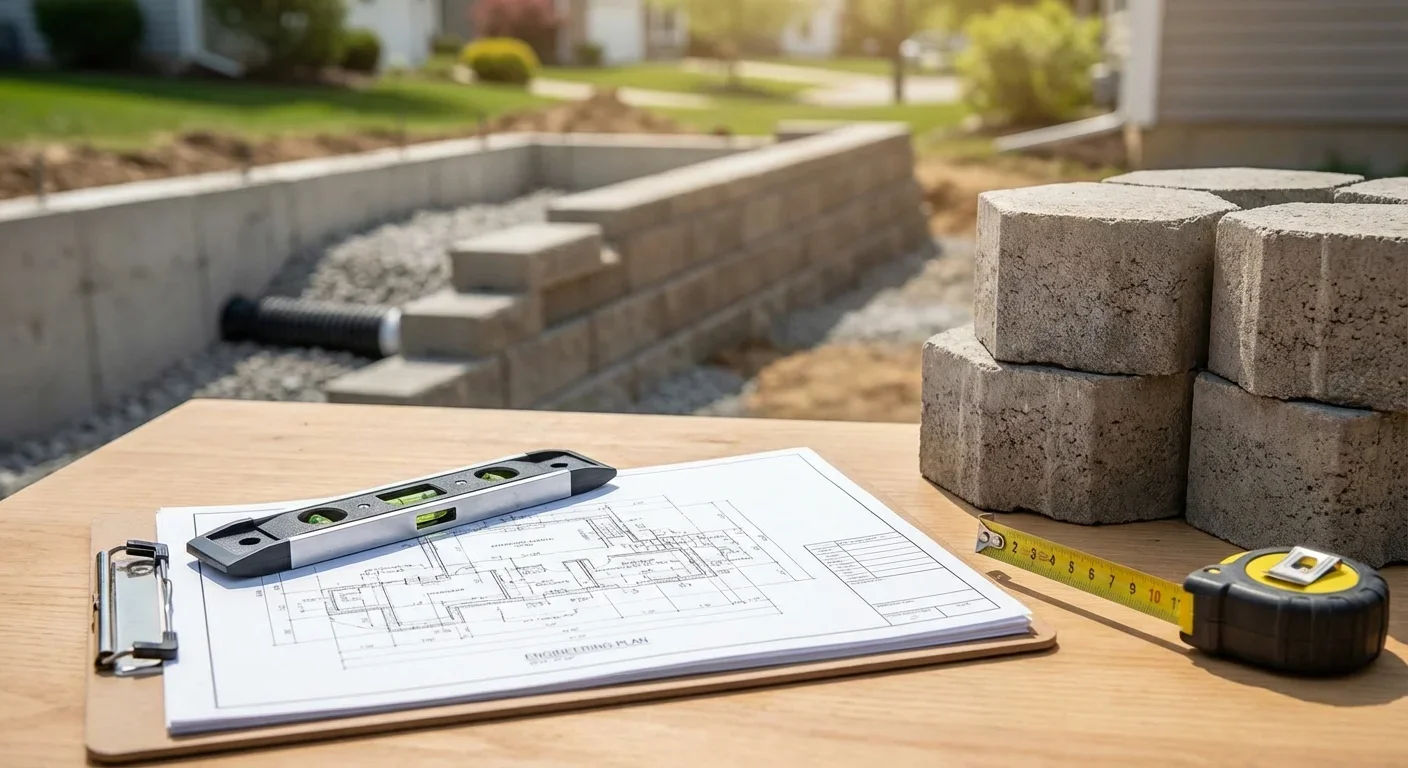
Concrete Retaining Walls: Types, Engineering & Contractor Selection
Find qualified retaining wall contractors. Learn about engineering requirements, wall types, drainage systems, and what proper installation requires.
Read Guide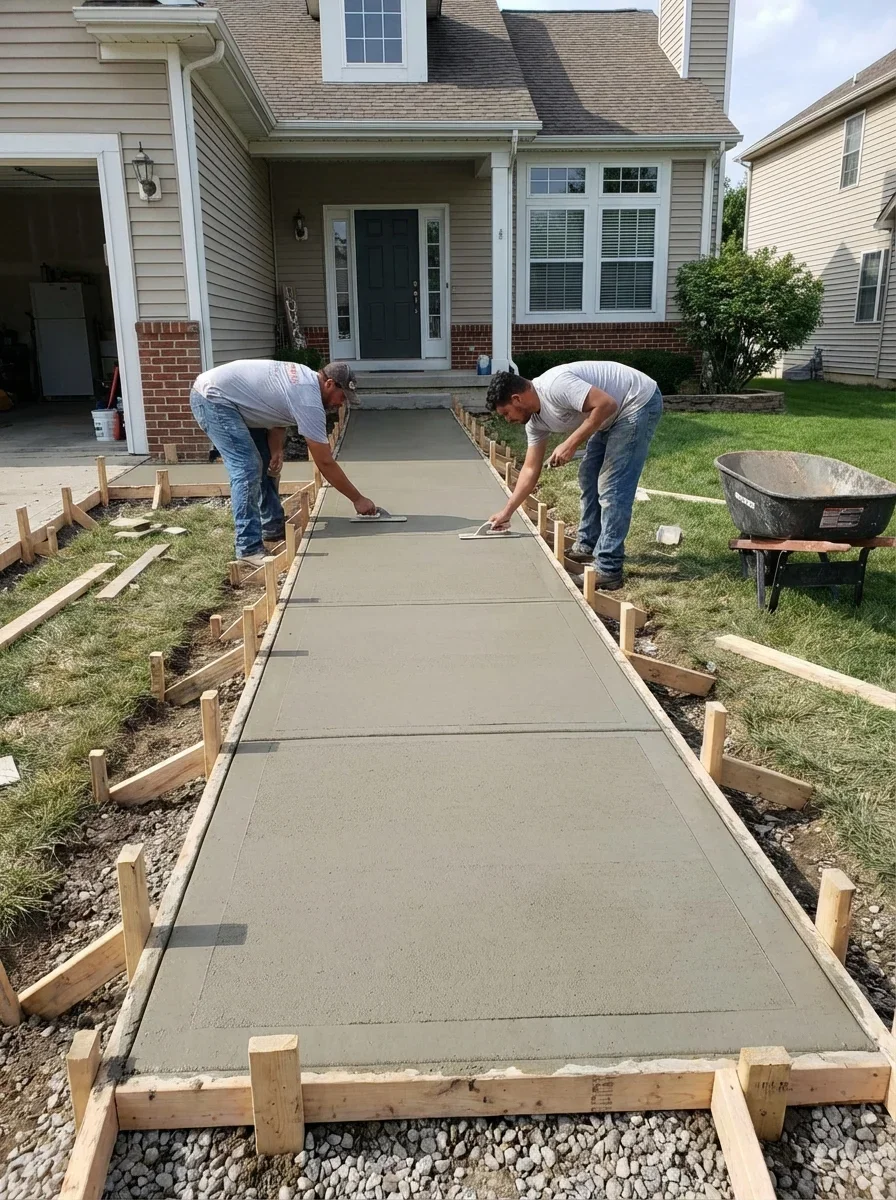
Residential Concrete Contractors: Services, Costs & How to Hire
Connect with licensed residential concrete contractors in Fox Valley. Compare quotes for driveways, patios, sidewalks, and more. Free estimates from vetted pros.
Read Guide
Residential Concrete Costs: What Small Jobs Really Cost
Small concrete projects have different pricing than large pours. Learn why contractors charge minimum fees, what drives small job costs, and how to get fair quotes.
Read Cost Guide
Innovative Techniques and Technologies in Concrete Construction
Discover advanced concrete techniques and technologies available from today's contractors: from self-healing concrete to 3D texturing and eco-friendly mixes.
Read Guide
How Much Do Concrete Contractors Cost? Pricing Guide
Understand concrete contractor pricing in Fox Valley. Learn what drives costs, regional price ranges, and how to compare quotes from licensed professionals.
Read Cost Guide
How to Choose the Right Concrete Contractor for Your Project
Learn what separates quality concrete contractors from the rest. Licensing, insurance, experience, equipment, and questions to ask before hiring for your project.
Read Guide
Licensing and Insurance: What to Verify Before Hiring a Concrete Contractor
Learn what credentials to verify before hiring a concrete contractor in Wisconsin. Understand licensing requirements, insurance types, and how to protect yourself.
Read Guide