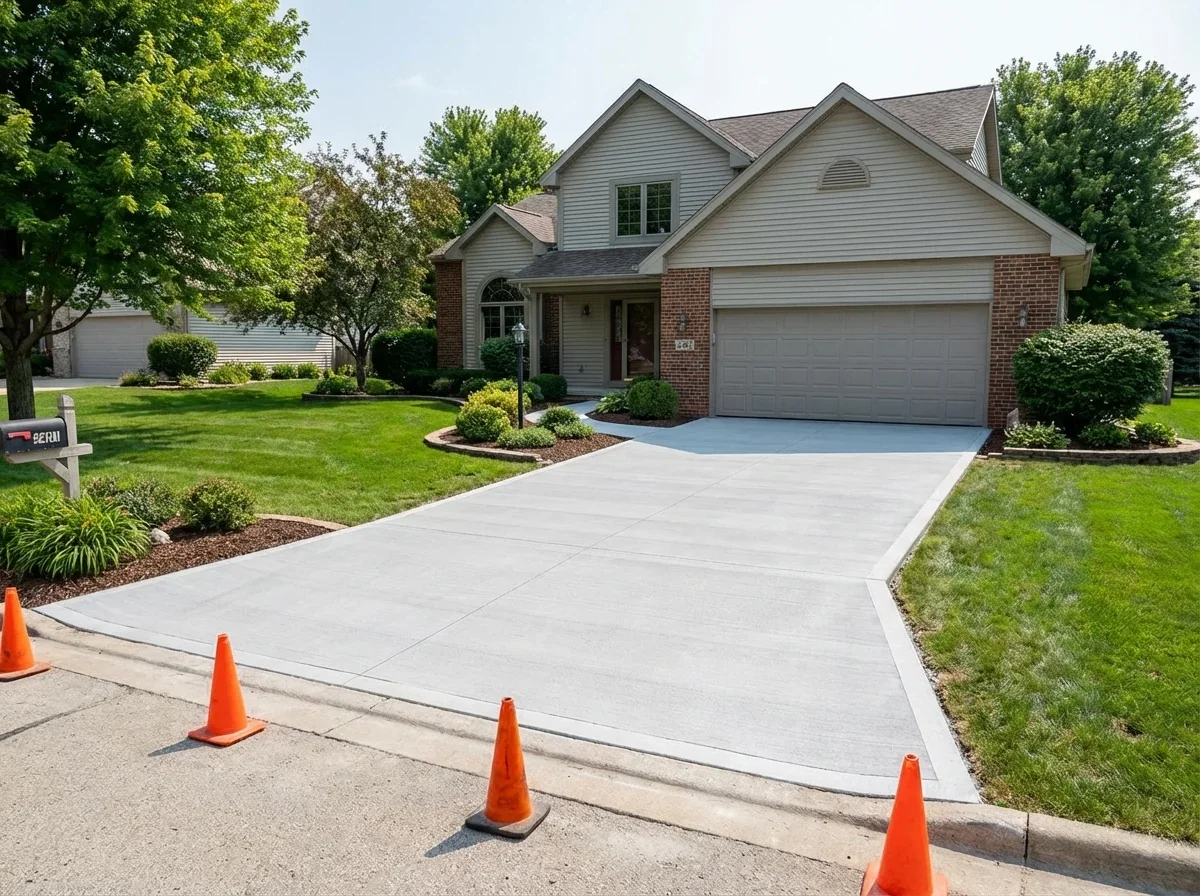

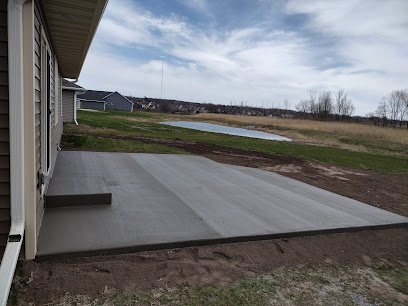


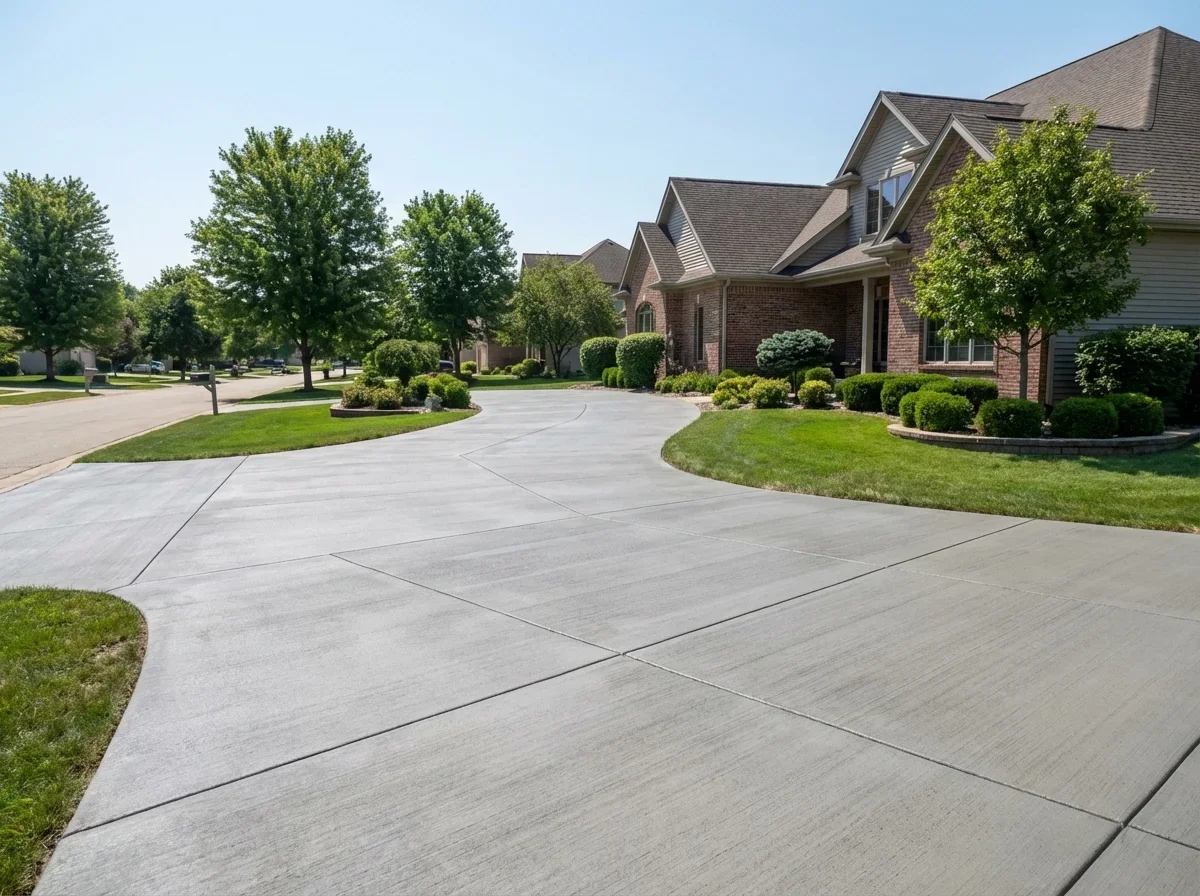
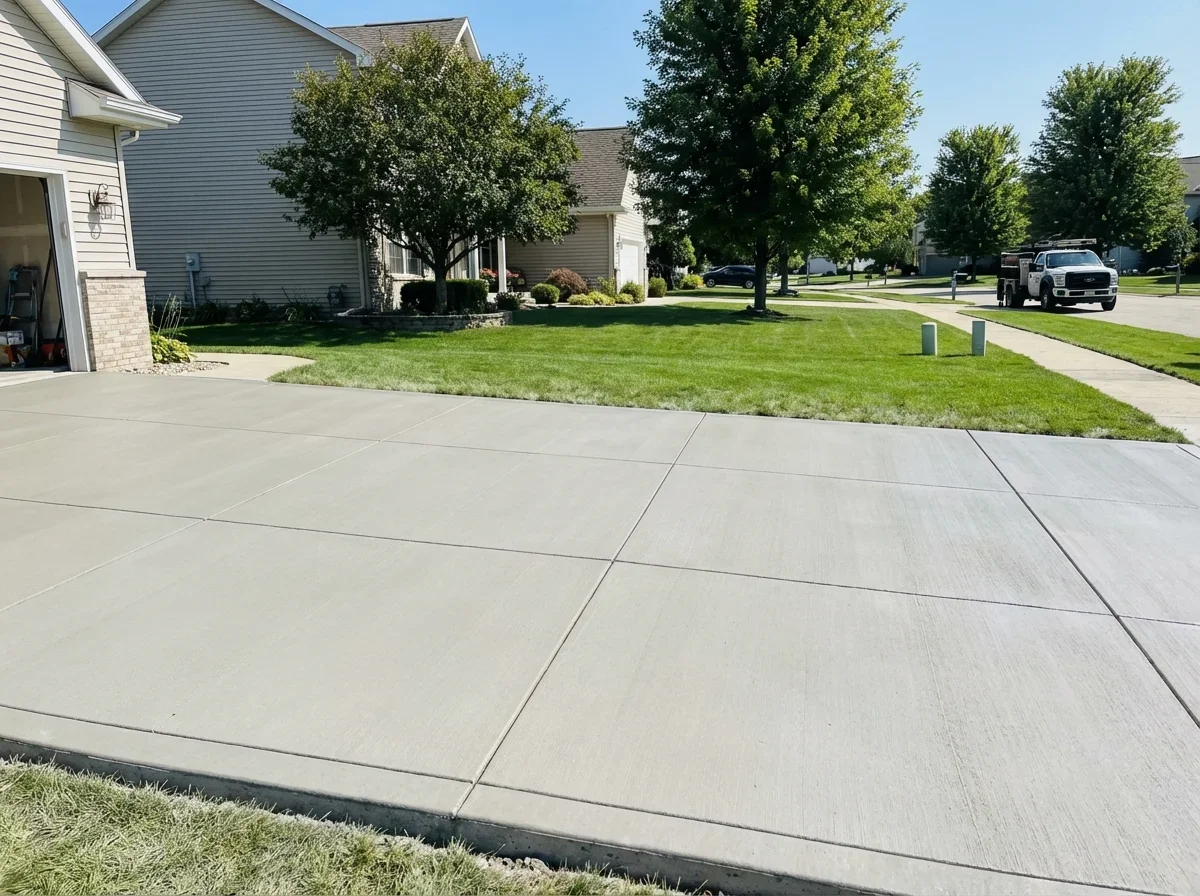
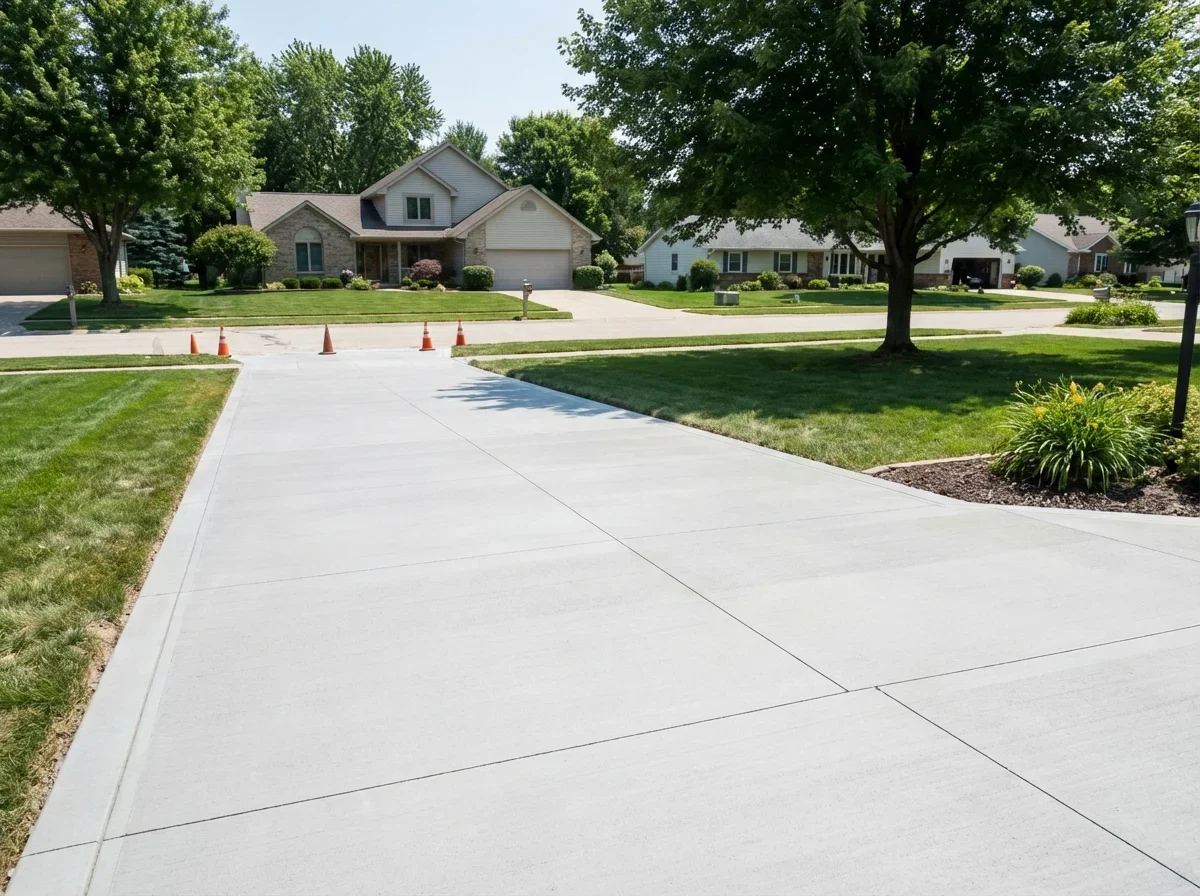
Why Fox Valley Homeowners Choose Concrete Driveways
Your driveway takes more punishment than almost any part of your property. Vehicle weight, salt, snow removal, temperature swings from -20°F to 90°F—the Fox Valley climate doesn't give cheap materials a chance.
Asphalt might cost less up front, but homeowners in Appleton and Green Bay know the reality: seal coating every 2-3 years, cracks by year five, full replacement around year 15. You're patching problems instead of forgetting about your driveway.
Concrete changes that equation entirely. A properly installed concrete driveway lasts 30-40 years with essentially zero maintenance. No sealing. No crack filling. No resurfacing. You pay once and you're done.
The cost difference disappears when you add up the maintenance. Asphalt looks cheaper until you calculate seal coating ($0.15-0.25/sqft every 2-3 years), crack repairs, and eventual replacement. Concrete costs more today but far less over the life of your home.
The property value factor matters. When buyers tour homes in Neenah or Oshkosh, they notice driveways. A fresh concrete driveway signals "this home is maintained." A patched asphalt driveway raises questions about what else needs work.
Timing matters too. If you're planning to sell within 3-5 years, a new driveway returns 50-75% of its cost in added home value. If you're staying long-term, you're investing in something you'll use twice a day for decades without worrying about it.
The decision isn't really concrete vs asphalt. It's whether you want to deal with your driveway again in five years or never think about it for the next thirty.
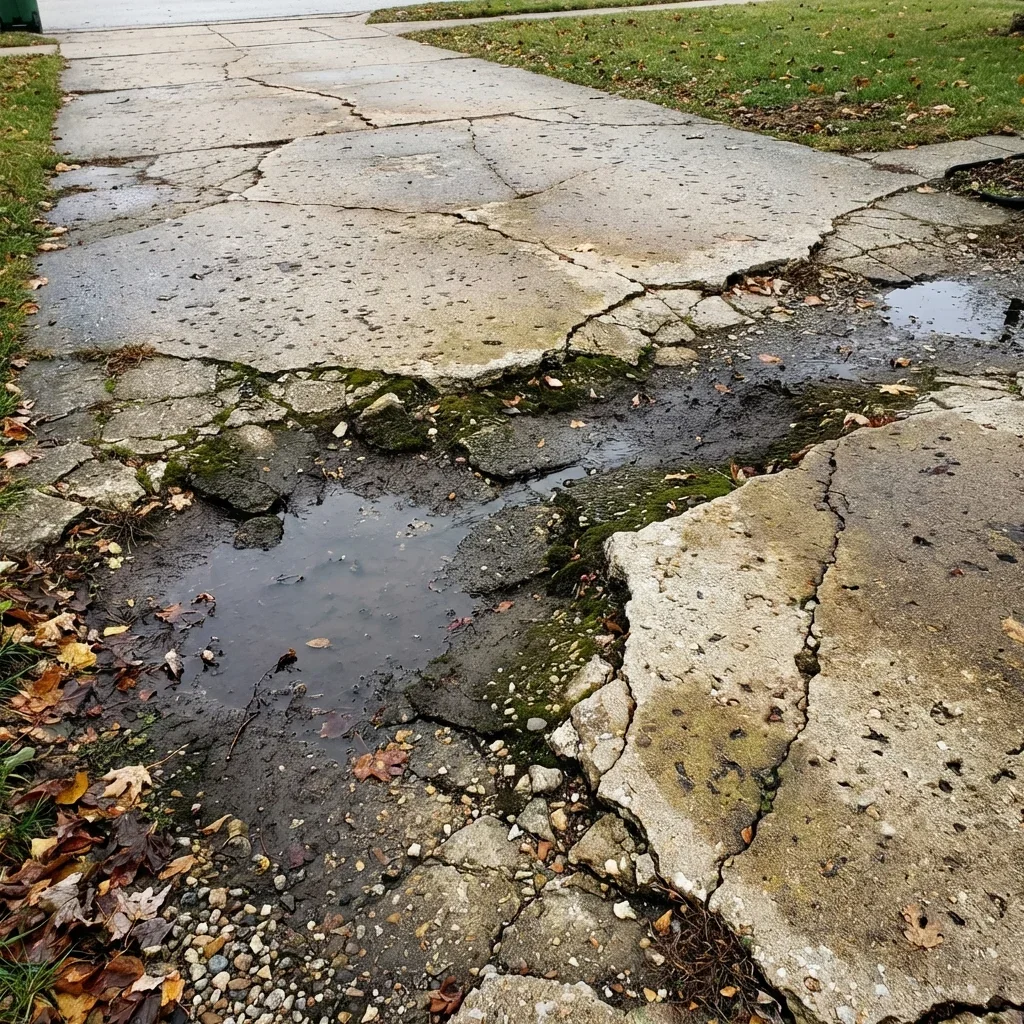
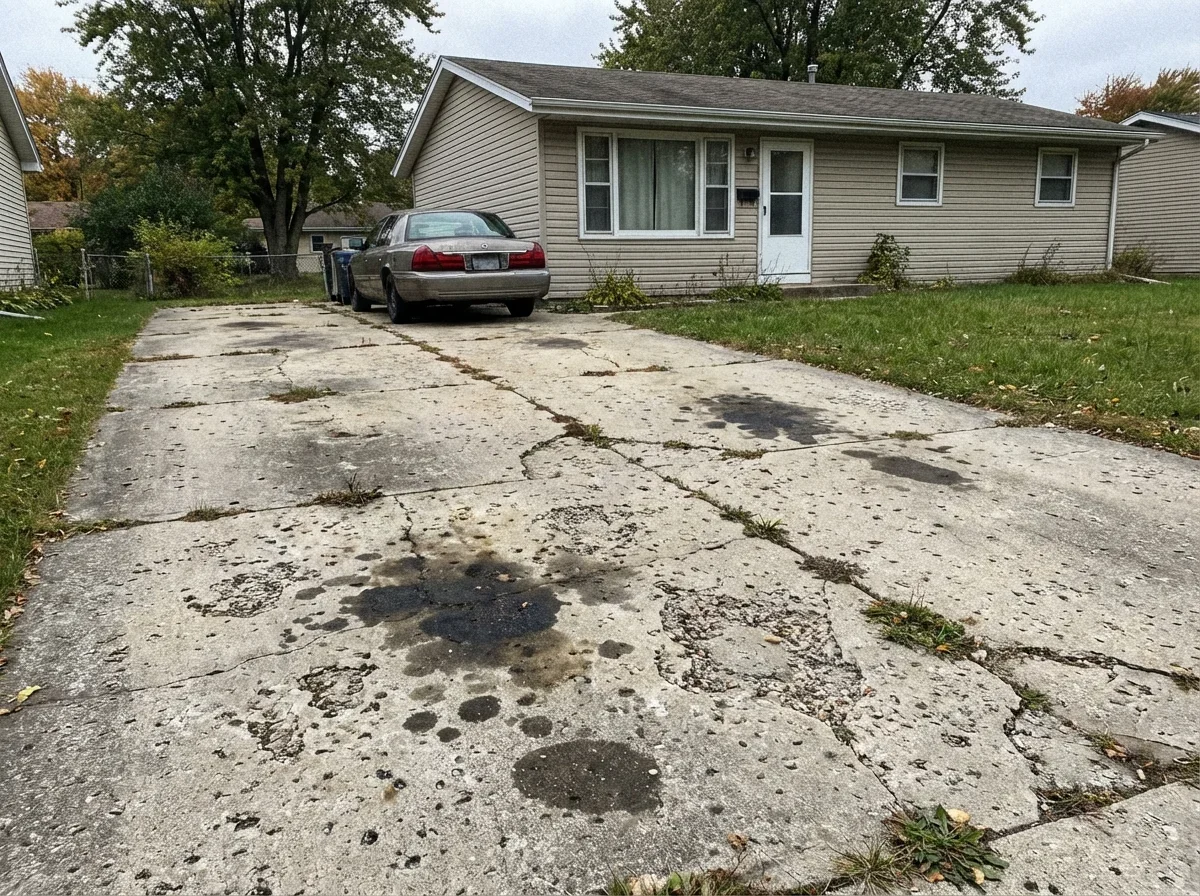
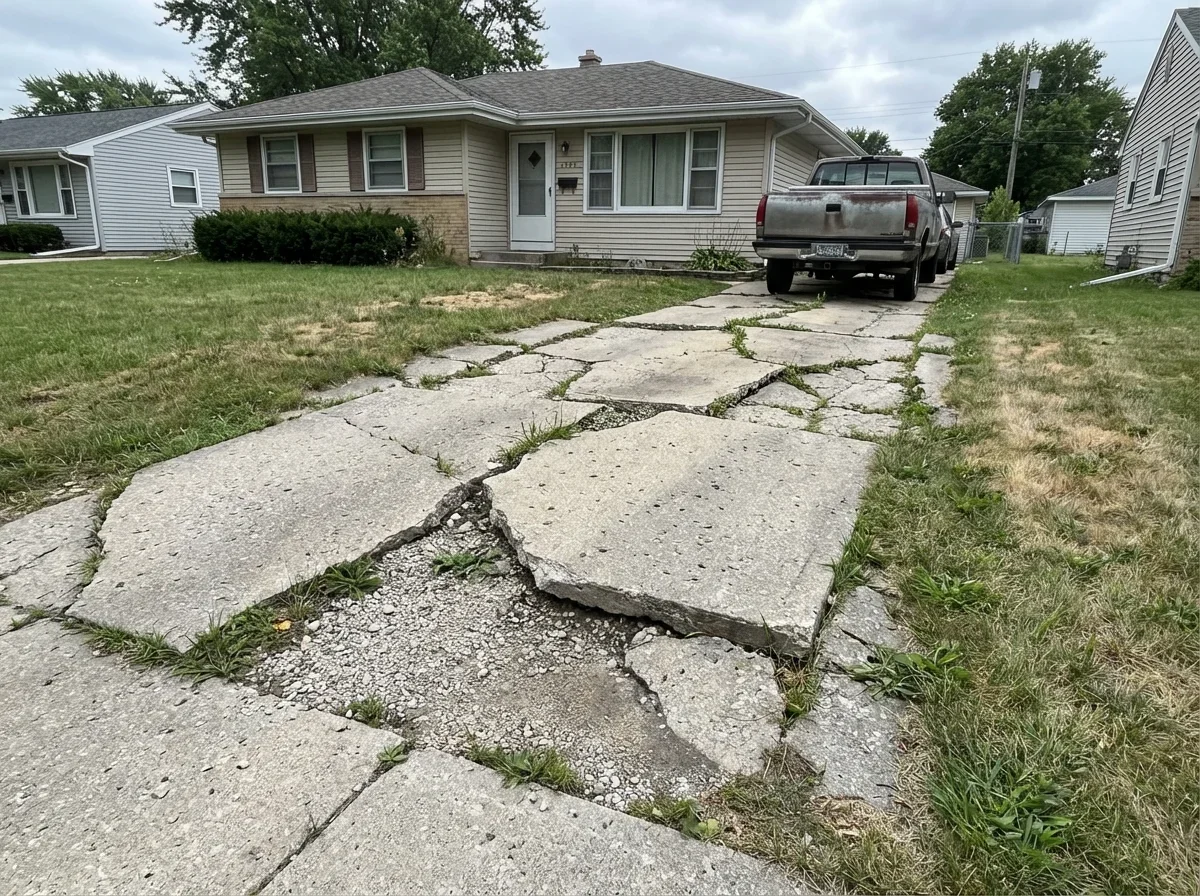
What Does Driveway Installation Cost in the Fox Valley?
Concrete driveway installation in Appleton, Green Bay, and surrounding Fox Valley communities typically runs $6–$12 per square foot installed. Here’s how common configurations break down for 2025 pricing.
All estimates include excavation, 4” compacted aggregate base, 6” concrete, and 7-day cure time. Add $800–$1,500 for difficult access or removal of old concrete.
What Affects Your Price
Your property layout drives total cost more than any other factor. Curved driveways, sloped properties, and tight access all increase the price. If concrete trucks can’t reach your site easily, contractors in Neenah and Menasha sometimes need to wheelbarrow concrete 100+ feet — that adds $800–$1,500 in labor.
Finish Options
| Finish | Cost Premium | Lifespan | Best For |
|---|---|---|---|
| Broom finish | Standard | 25+ years | Traction, low maintenance |
| Exposed aggregate | +$2–$4/sqft | 30+ years | Texture, hides minor cracks |
| Stamped pattern | +$4–$8/sqft | 20–25 years | Decorative, requires resealing |
| Tinted concrete | +$1–$2/sqft | Same as base | Color consistency |
DIY vs Professional
| DIY / Rented Mixer | Professional Install | |
|---|---|---|
| Cost (800 sqft) | $1,500–$2,500 materials | $4,800–$9,600 installed |
| Finish quality | Uneven, visible seams | Smooth, consistent |
| Lasts | 5–10 years typical | 30–40 years |
| Base prep | Often skipped | Engineered, compacted |
| Warranty | None | 1–5 year guarantee |
Standard 6-inch thickness with 4 inches of compacted aggregate base is the baseline for Wisconsin driveways. Homeowners expecting heavier loads — RVs, boats, commercial vehicles — should spec 7–8 inches, adding $1.50–$2.50/sqft.
The Driveway Installation Process
A properly installed driveway takes 7-10 days from excavation to the day you can drive on it. Here's what happens and what to expect at each phase.
Site Preparation and Excavation
Your contractor starts by marking utility lines and setting grade stakes. They'll excavate 10-14 inches deep—that accounts for 6-8" of compacted aggregate base plus 4-6" of concrete. In the Fox Valley region, proper base depth is non-negotiable. Our 48-inch frost line means soil movement from freeze-thaw cycles. A solid aggregate base provides drainage and prevents heaving.
They'll remove the old driveway if you have one, plus topsoil and soft material down to stable subgrade. For properties in Greenville or Freedom with high water tables, you might see additional drainage work—perforated pipe along edges or extra base depth.
Next comes aggregate placement: typically 6-8 inches of crushed limestone, placed in lifts and compacted with a plate tamper or vibratory roller. Proper compaction is critical. You can't see it once concrete is poured, but this layer determines whether your driveway lasts 15 years or 40.
Forming, Pouring, and Finishing
Wood or metal forms go in next, set to proper slope (typically 2% grade away from garage for water runoff). Good contractors use expansion joints every 10-15 feet and isolation joints where the driveway meets your garage slab or sidewalk. These joints accommodate concrete movement—without them, you get random cracks.
Pour day is weather-dependent. Temperature needs to be above 50°F and rising, with no rain or freeze forecast for 3-5 days. The concrete truck needs access close to your property; long pours require concrete pumps which add $500-800 to cost.
The crew screeds (levels) the concrete, then lets it set slightly before finishing. Broom finish is standard: a rough texture created by dragging a broom across the surface for traction. Exposed aggregate requires washing and brushing to reveal stones. Stamping happens while concrete is still workable, using patterns and texture mats.
Control joints get cut within 24 hours—shallow grooves that direct where cracks form (they're nearly invisible). These joints should create panels roughly square; a 12-foot-wide driveway gets joints every 10-12 feet.
Curing and Timeline to Use
Fresh concrete needs moisture and moderate temperature to cure properly. Your contractor will apply curing compound or cover the surface with plastic. In Little Chute's variable spring weather, protecting fresh concrete from temperature swings and rain matters.
Timeline to use your driveway:
- 24-48 hours: Walk-on strength (light foot traffic only)
- 7 days: Vehicle traffic at lower temperatures (drive carefully, don't turn wheels while stopped)
- 28 days: Full cure and strength (normal use, no restrictions)
Heat accelerates curing; cold slows it. A July pour in Seymour reaches usable strength faster than a September pour. Contractors worth hiring won't rush the timeline—driving on concrete too early causes surface damage that never fully recovers.
Most contractors return after 30 days to remove forms (if wood) and do a final inspection. This is when you address any concerns about finish quality or drainage before the warranty clock starts.
How to Choose a Driveway Contractor
The Fox Valley has dozens of concrete contractors. Some have poured hundreds of local driveways that still look great after 20 years. Others are two guys with a truck who'll be gone by next season. Choosing wrong means living with problems for decades.
Questions to Ask Before Hiring
How long have you been pouring driveways in the Fox Valley? Experience with local soil conditions, frost depth, and climate matters. A contractor who's worked in Shawano and Oshkosh understands the specific challenges our freeze-thaw cycles create.
What thickness and base depth do you recommend for my property, and why? This reveals whether they actually looked at your site or are giving a generic answer. Answers should address your soil type, drainage, and vehicle use. Be skeptical of contractors who say 4" is always enough or don't discuss base preparation in detail.
Do you use rebar or fiber reinforcement? Wire mesh is outdated and often ends up at the bottom of the slab where it does nothing. Rebar or fiber-reinforced concrete is standard for quality work. If they say "not necessary for driveways," that's a red flag.
What's your warranty and what does it actually cover? Most concrete contractors offer 1-3 year warranties on workmanship. This should cover major cracking, settling, or surface spalling—not minor hairline cracks, which are normal. Get warranty terms in writing. Ask what happens if the business closes.
Can I see recent driveways you've completed nearby? Good contractors are happy to provide addresses (with homeowner permission) of projects from 2-5 years ago. Drive by and look. Check for cracking patterns, surface condition, how edges are holding up.
Red Flags to Avoid
Walk away from contractors who:
- Can't provide proof of liability insurance and workers comp coverage
- Want full payment upfront (standard is 1/3 down, 1/3 at pour, 1/3 at completion)
- Don't pull permits or say "permits aren't necessary"
- Rush you to decide or claim prices are "only good today"
- Have no online presence, reviews, or verifiable business history
- Don't provide written contracts with specific materials, dimensions, and timelines
Price alone shouldn't decide. The $4/sqft bid probably means 3" concrete on minimal base with no reinforcement. That driveway will crack and settle within three years. The $14/sqft bid might include decorative features you don't need. Focus on the contractor's reputation and the specs in the proposal.
Compare at least three detailed written estimates. They should break out excavation, base depth and material, concrete thickness and type, reinforcement, finish, and cleanup. Vague one-number bids make comparison impossible.
Check online reviews, but look for patterns rather than individual complaints. Every contractor has an unhappy customer. But if multiple reviews mention disappearing after payment, poor communication, or driveways cracking within two years, that's a pattern worth noticing.
The right contractor will spend time understanding your property, explain what they're recommending and why, provide a detailed written proposal, and have a portfolio of local work you can verify. You're hiring someone to create something you'll use twice a day for the next 30 years—it's worth taking the time to choose well.
Frequently Asked Questions
A typical two-car driveway costs $3,000–$8,000 depending on material and local labor rates.
Here's the typical cost breakdown by material for a standard 20 ft × 20 ft (400 sq ft) two-car driveway:
| Material | Cost per Sq Ft | Total Cost (400 sq ft) | Lifespan | Notes |
|---|---|---|---|---|
| Gravel | $0.50–$2.00 | $200–$800 | 2–3 years | DIY-friendly; requires annual maintenance |
| Recycled Asphalt | $1.00–$3.00 | $400–$1,200 | 4–7 years | Compacts over time; minimal maintenance |
| Tar and Chip | $1.50–$3.00 | $600–$1,200 | 4–7 years | Binds gravel with asphalt; low maintenance |
| Asphalt | $3.00–$6.00 | $1,200–$2,400 | 15–20 years | Popular in Wisconsin; needs seal-coating every 2–3 years |
| Concrete | $6.00–$12.00 | $2,400–$4,800 | 25–30 years | Most durable; virtually maintenance-free; highest upfront cost |
| Stamped Concrete | $8.00–$15.00 | $3,200–$6,000 | 25–30 years | Decorative finish; same durability as standard concrete |
Labor is typically $5–$7 per square foot in addition to material costs. Site prep (grading, base, removal) may add $500–$1,500.
- Portland Cement Association. "Frost Protection for Concrete Flatwork." https://www.cement.org/docs/default-source/fc_concrete_technology/is001-frost-protection-for-concrete-flatwork.pdf. Accessed February 10, 2026.
- Federal Highway Administration (FHWA), U.S. Department of Transportation. "Concrete Pavements for Airports and Streets and Roads." https://www.fhwa.dot.gov/pavement/concrete/pubs/hif12027.pdf. Accessed February 10, 2026.
Related Articles
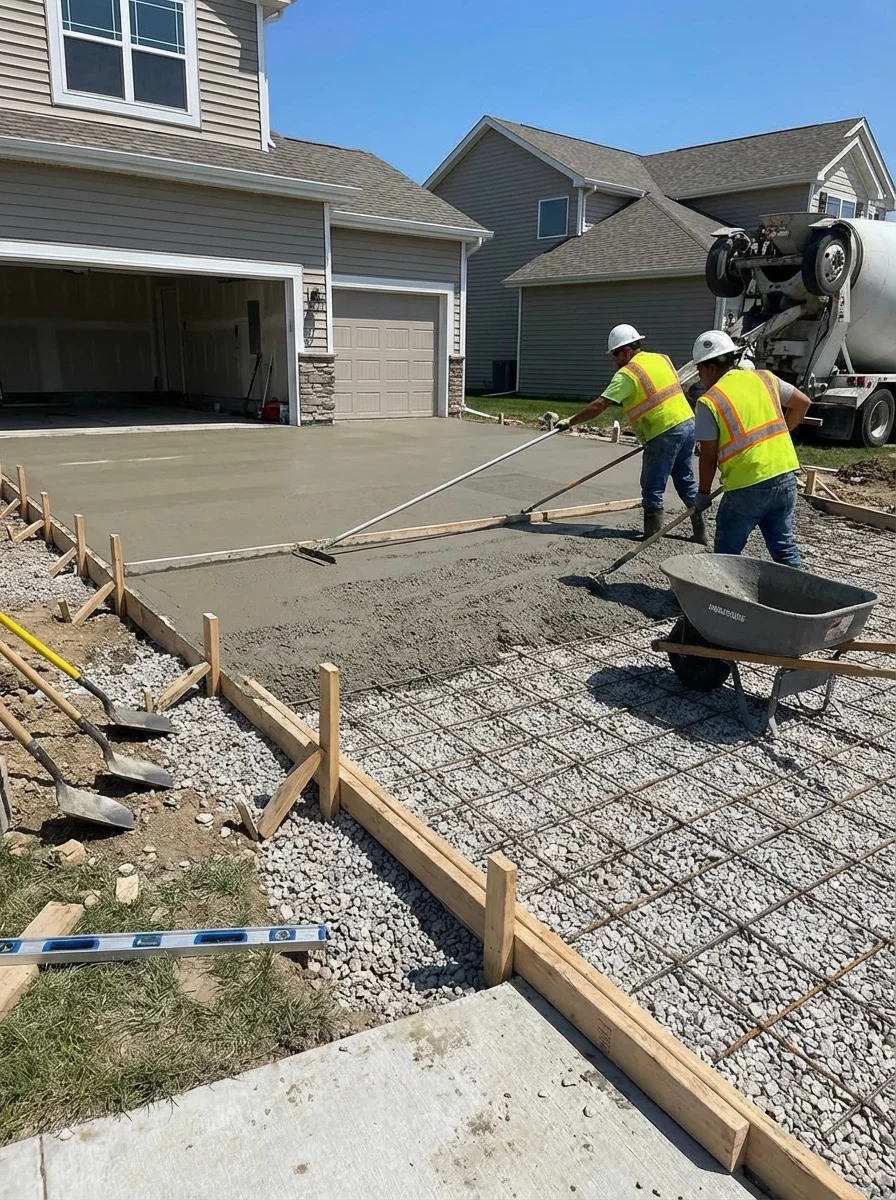
Concrete Driveway Installation: Process, Materials & What to Expect
Learn how professional driveway installation works—from site prep to curing. Understand what quality contractors do, typical timelines, and costs.
Read Guide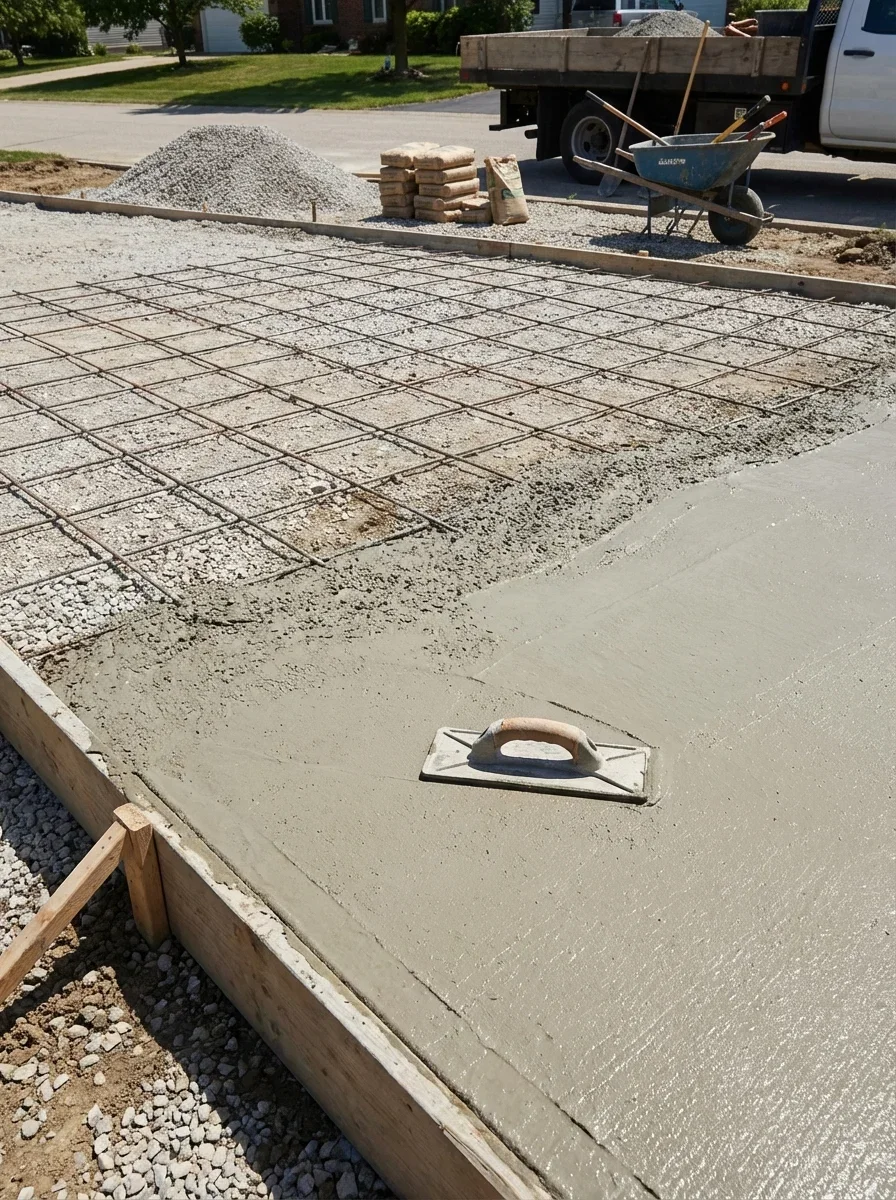
Concrete Driveway Services
Find qualified concrete driveway contractors in Fox Valley. Compare installation, repair, and resurfacing pros. Get free quotes from licensed contractors.
Read Guide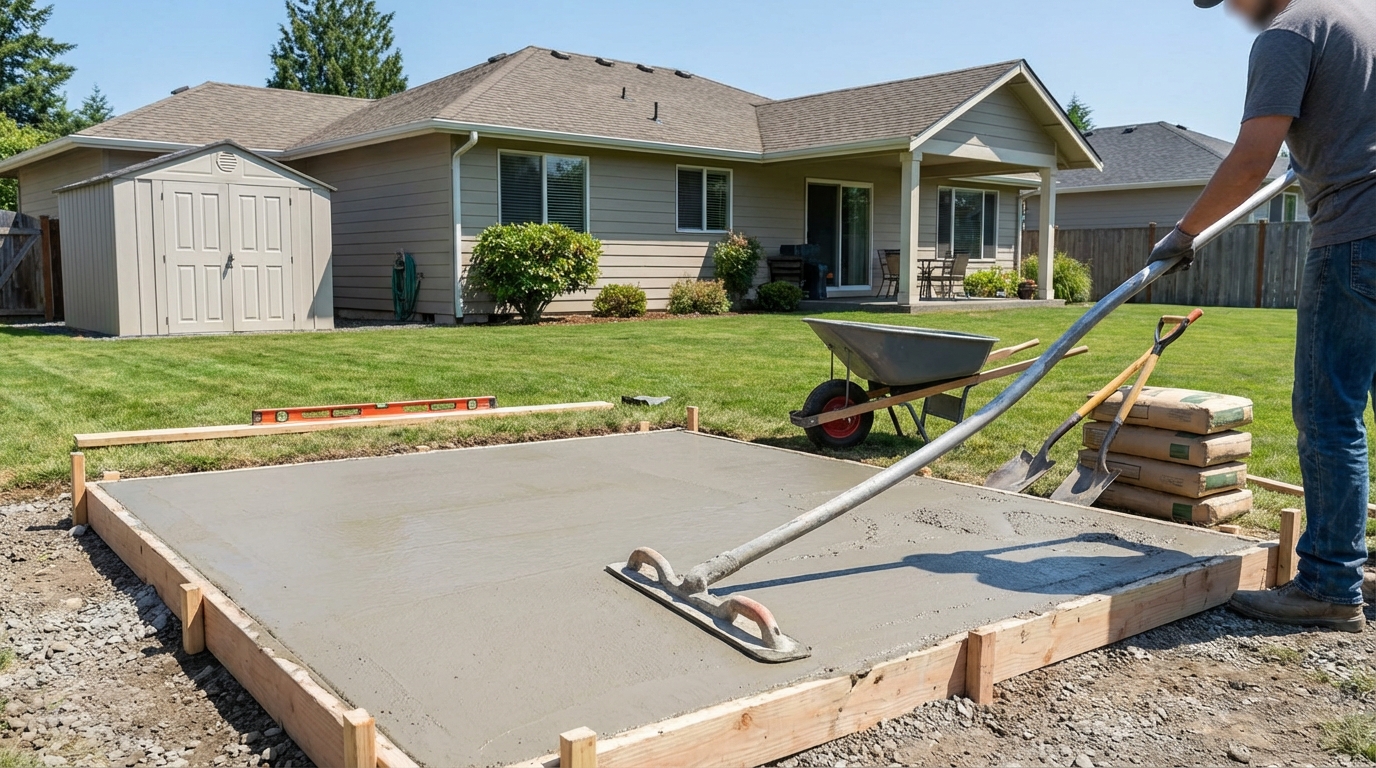
Residential Concrete Costs: What Small Jobs Really Cost
Small concrete projects have different pricing than large pours. Learn why contractors charge minimum fees, what drives small job costs, and how to get fair quotes.
Read Cost Guide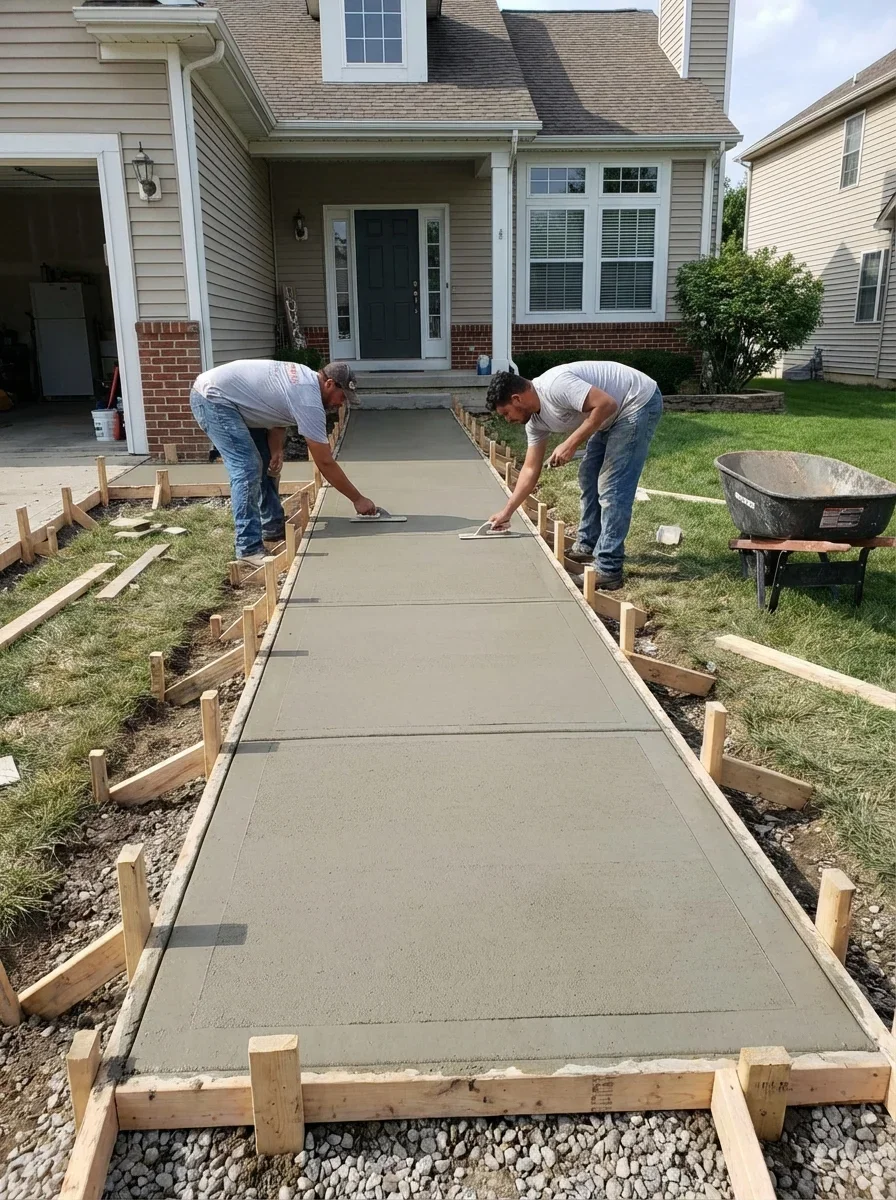
Residential Concrete Contractors: Services, Costs & How to Hire
Connect with licensed residential concrete contractors in Fox Valley. Compare quotes for driveways, patios, sidewalks, and more. Free estimates from vetted pros.
Read Guide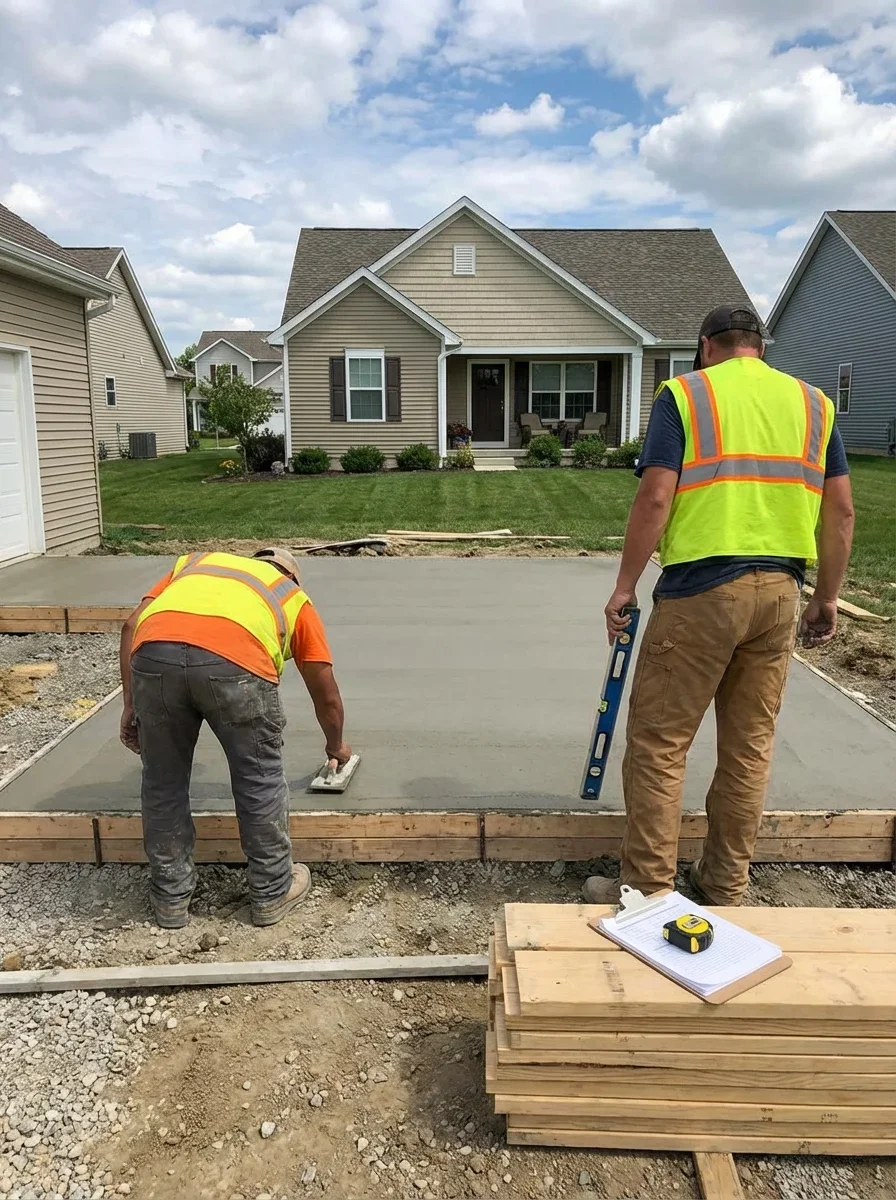
How Much Do Concrete Contractors Cost? Pricing Guide
Understand concrete contractor pricing in Fox Valley. Learn what drives costs, regional price ranges, and how to compare quotes from licensed professionals.
Read Cost Guide
Innovative Techniques and Technologies in Concrete Construction
Discover advanced concrete techniques and technologies available from today's contractors: from self-healing concrete to 3D texturing and eco-friendly mixes.
Read Guide
How to Choose the Right Concrete Contractor for Your Project
Learn what separates quality concrete contractors from the rest. Licensing, insurance, experience, equipment, and questions to ask before hiring for your project.
Read Guide