


Why Fox Valley Homeowners Choose Concrete Curbing
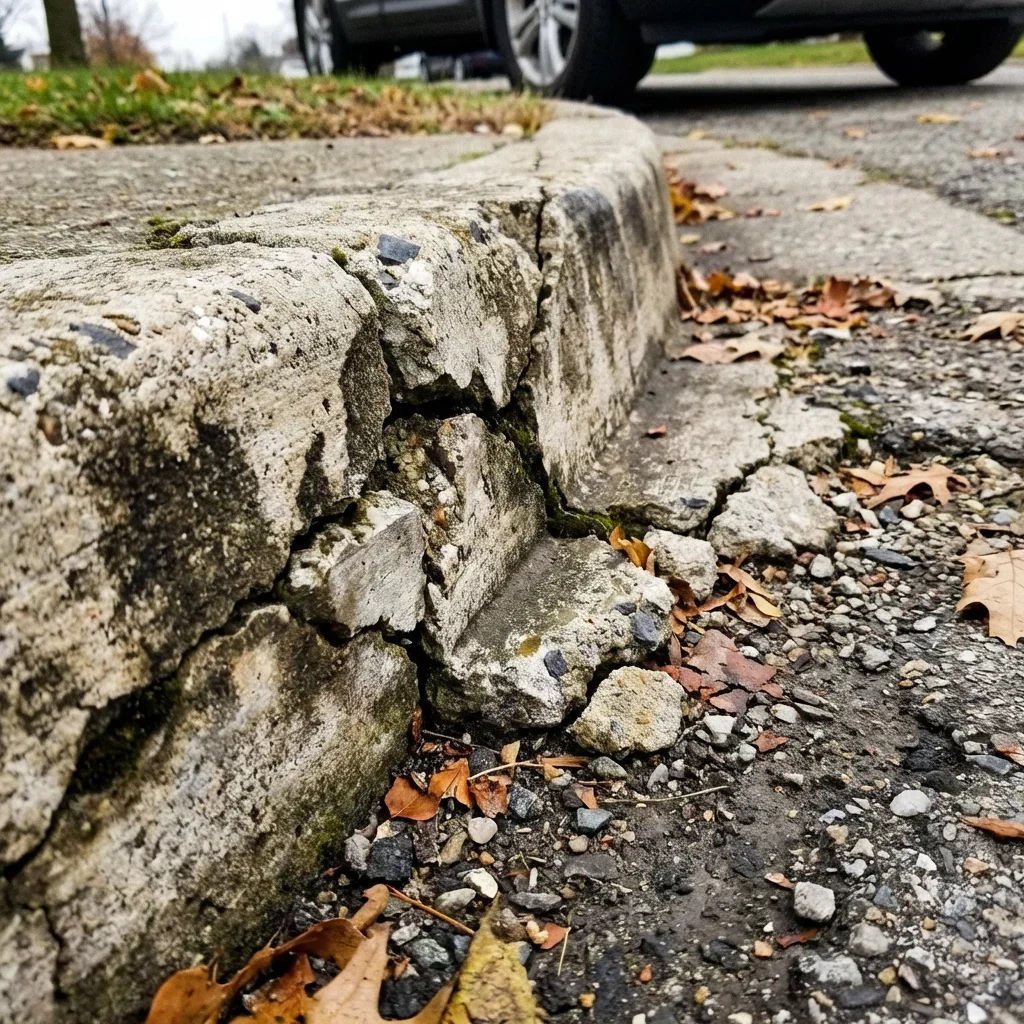
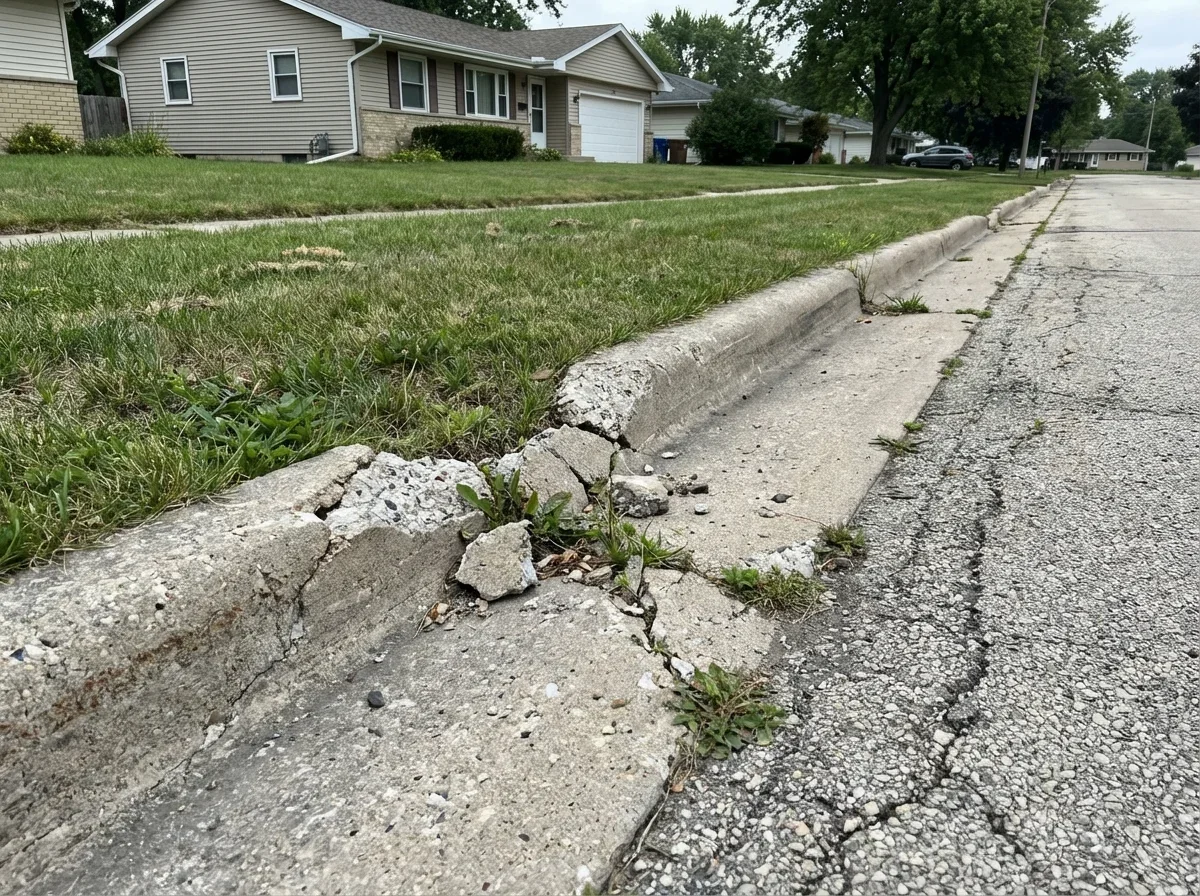
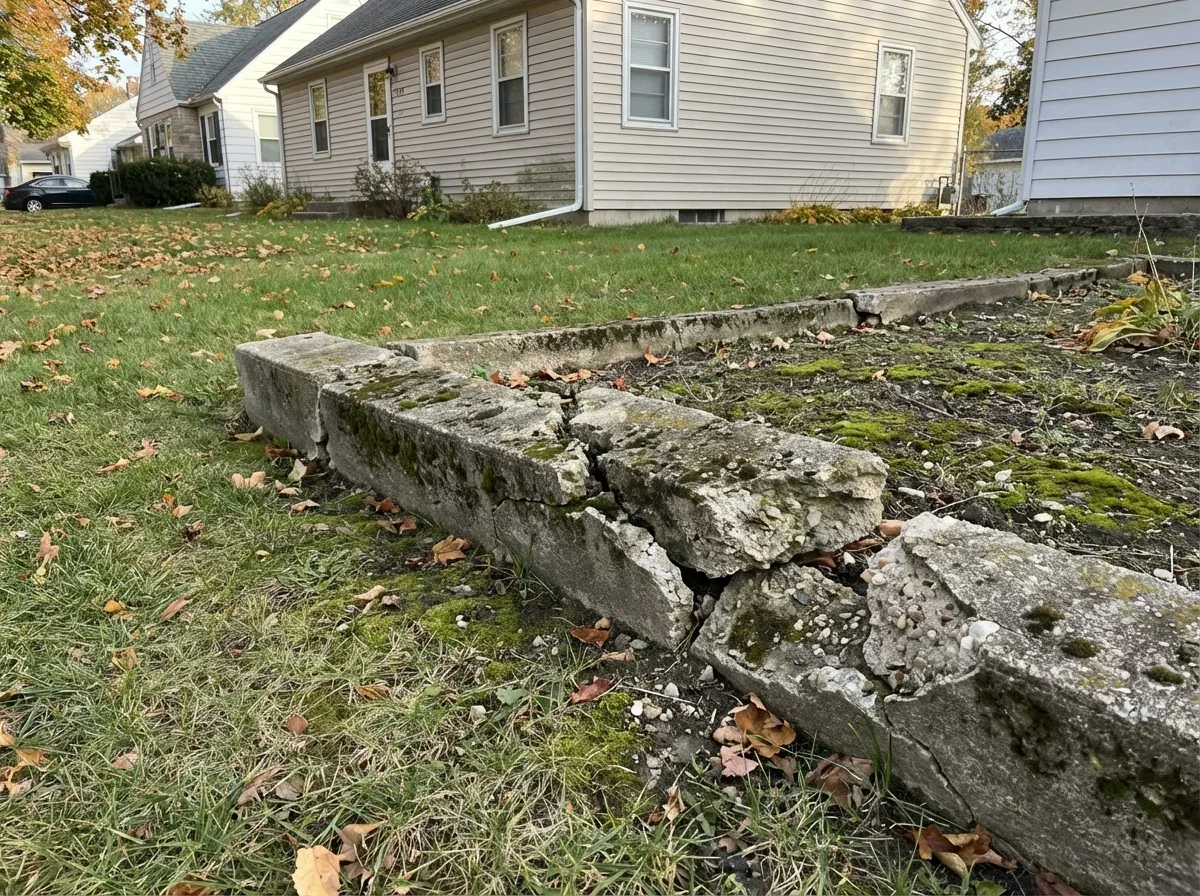
You've replanted those flower bed borders three times. The plastic edging heaves out of the ground every spring. Metal strips bend when you edge the lawn. Landscape timbers rot. Brick pavers shift and settle, leaving gaps that fill with grass and weeds.
The real cost isn't the $40 you spent at the garden center. It's the Saturday mornings every May resetting everything. It's the mulch that migrates into the grass. It's the crisp landscaping that never quite looks finished because the borders are always slightly crooked.
Homeowners in Appleton and Neenah know the freeze-thaw cycle is brutal on temporary edging. What holds up in Georgia doesn't survive a Wisconsin winter. You need something designed for our soil movement, our temperature swings, our snowplow season.
Decorative concrete curbing solves this permanently. One installation. No annual resets. No fighting with materials that were never engineered for our climate.
The ROI is tangible. A defined border makes landscaping look intentional and maintained. Real estate agents in Green Bay consistently note that clean curbing adds perceived value—buyers notice the difference between properties with permanent edging and those without.
This isn't just about function. It's about framing your landscaping investment the way crown molding frames a room. The flower beds you spend money on every spring deserve borders that last as long as the concrete driveway.
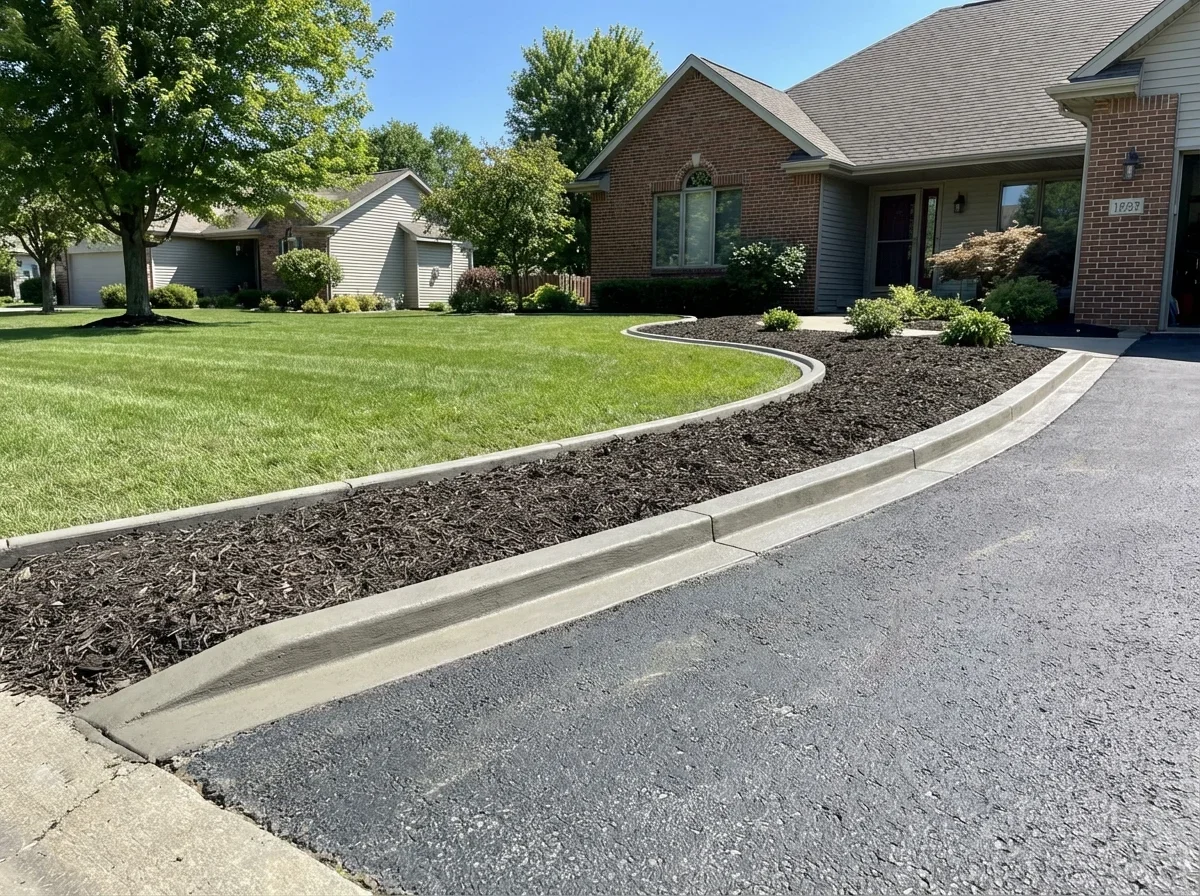
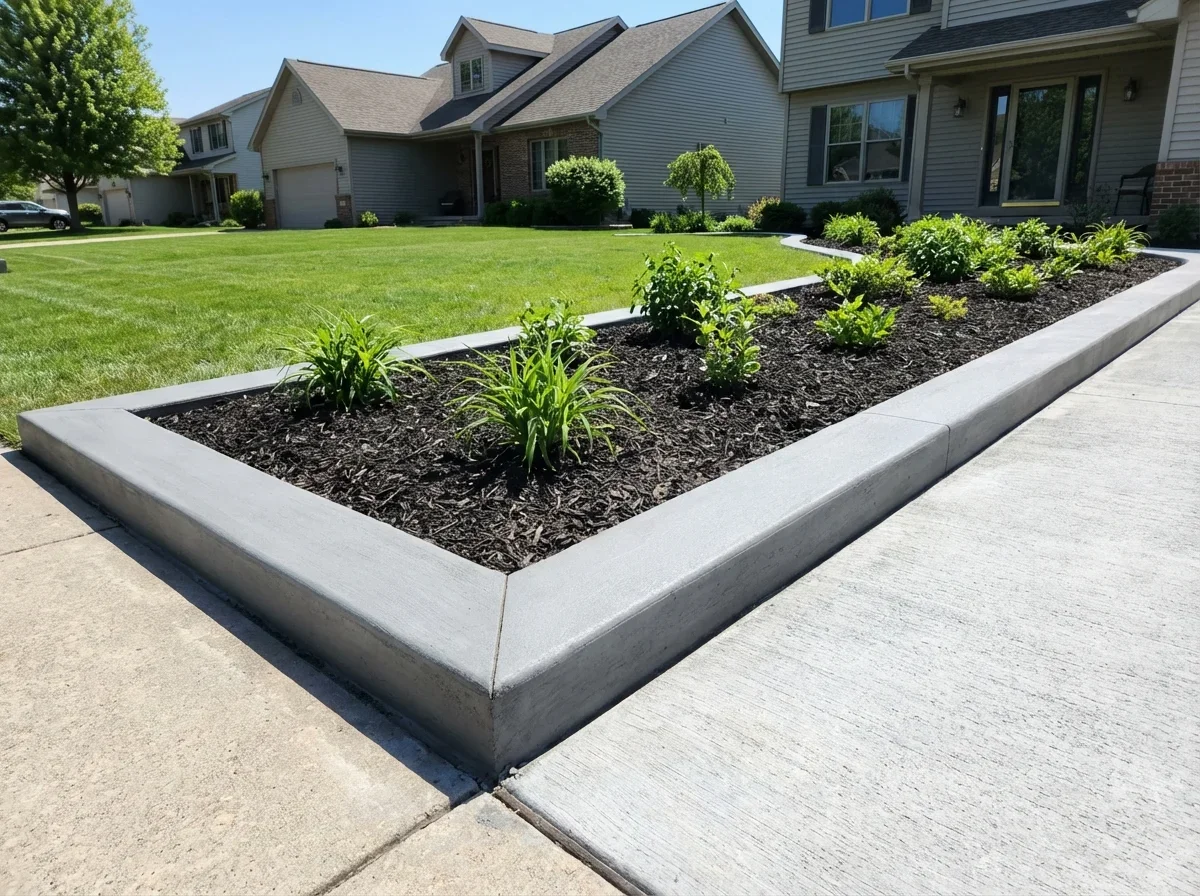
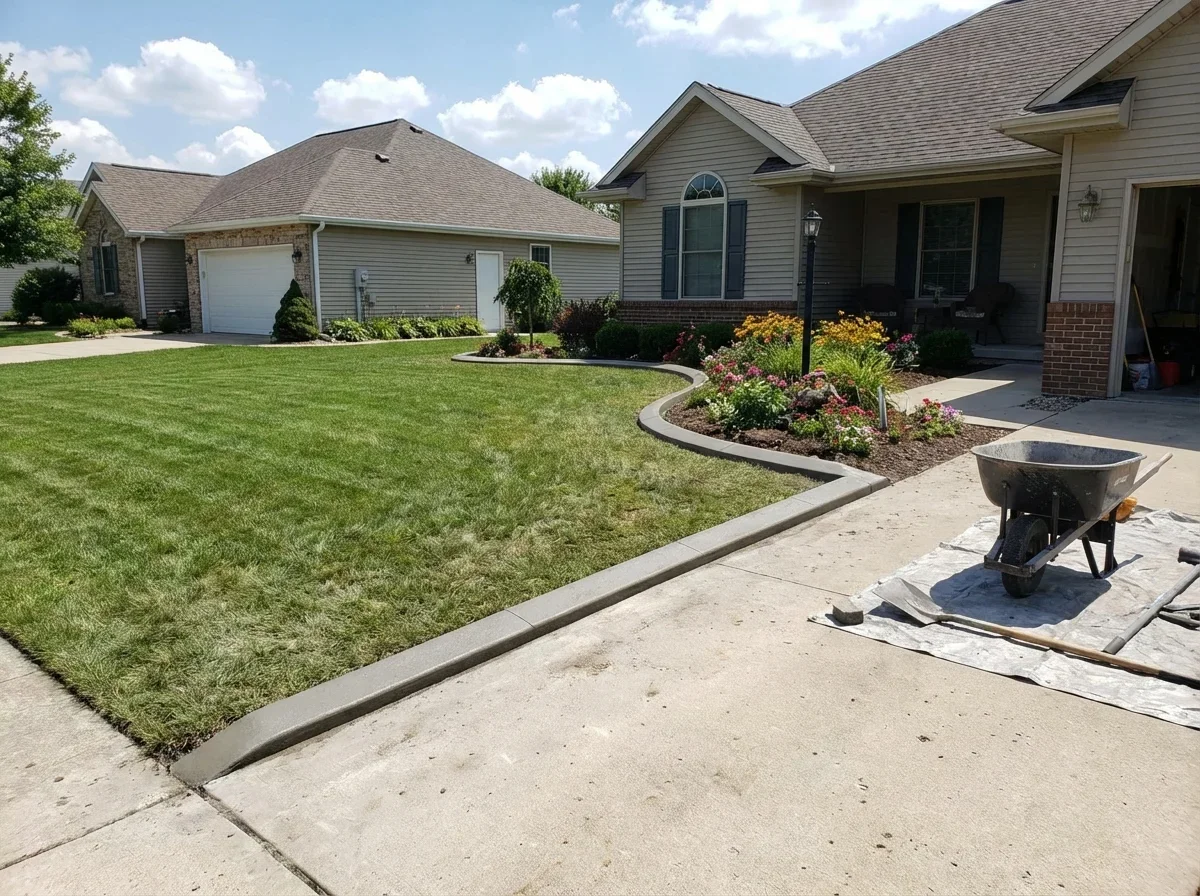
And unlike pavers or bricks, continuous concrete curbing has no joints. Nothing shifts. Nothing separates. Nothing creates gaps for weeds. It's a seamless ribbon that defines your beds, tree rings, and walkway borders with one clean line.
What Does Concrete Curbing Cost in the Fox Valley?
Expect to pay $6 to $12 per linear foot for professional decorative concrete curbing in the Fox Valley area. The typical residential project—100 to 200 linear feet around flower beds and tree rings—runs $800 to $1,800 installed.
That's significantly more than plastic edging. And it's the last time you'll pay for edging.
Linear Footage and Design Complexity
| Project Type | Linear Feet | Cost Range |
|---|---|---|
| Single flower bed border | 30-50 ft | $250-$500 |
| Front yard beds + tree rings | 80-120 ft | $650-$1,200 |
| Full property edging | 200-300 ft | $1,600-$3,000 |
| Driveway border + landscaping | 150-250 ft | $1,200-$2,400 |
Stamped patterns add $1-3 per foot. Integral color adds $0.50-1.50 per foot. Multiple colors or custom staining increases labor costs. The most common choice in Oshkosh and De Pere? Gray or tan continuous curbing with a single trowel finish—clean, classic, and affordable.
Design Upgrades
Standard continuous curbing is extruded on-site using a machine that creates a seamless 4-6 inch ribbon. This is your baseline option and what most Fox Valley contractors specialize in.
Stamped patterns mimic brick, stone, or decorative designs. Common choices include cobblestone look, ashlar slate, and running bond brick. The stamping happens while the concrete is still workable, requiring more time and skill.
Color options include integral pigment (mixed throughout) or surface stains (applied after curing). Earth tones—sandstone, terracotta, charcoal—are most popular in Menasha and Kaukauna because they complement Wisconsin landscapes without screaming "look at me."
The Alternative Cost Comparison
| Material | Cost Per Foot | Lifespan | Maintenance |
|---|---|---|---|
| Plastic edging | $1-2 | 2-4 years | Reset annually |
| Metal edging | $2-4 | 5-8 years | Straighten, replace sections |
| Brick pavers | $8-12 | 8-12 years | Reset settled sections |
| Concrete curbing | $6-12 | 15+ years | None |
When you calculate cost per year, concrete wins. A $1,200 curbing job that lasts 15 years costs $80 annually. Plastic edging at $200 every 3 years costs $67 annually—but you're doing the labor, and it never looks as good.
The Concrete Curbing Installation Process
Professional curbing installation typically takes 1-2 days for an average residential project. Here's what happens from consultation to final walkthrough.
1. Design Layout and Site Prep (Morning, Day 1)
The contractor walks your property with you, marking the curbing path with spray paint or stakes. You'll decide on curves, corners, and how the borders integrate with existing beds and hardscaping. This is when you finalize color and pattern choices.
Site prep involves clearing the marked path—removing old edging, trimming back grass and roots, and creating a level trench about 4-6 inches deep. In Little Chute and Greenville, contractors check for buried irrigation lines or utility flags before trenching.
2. Continuous Extrusion (Afternoon, Day 1)
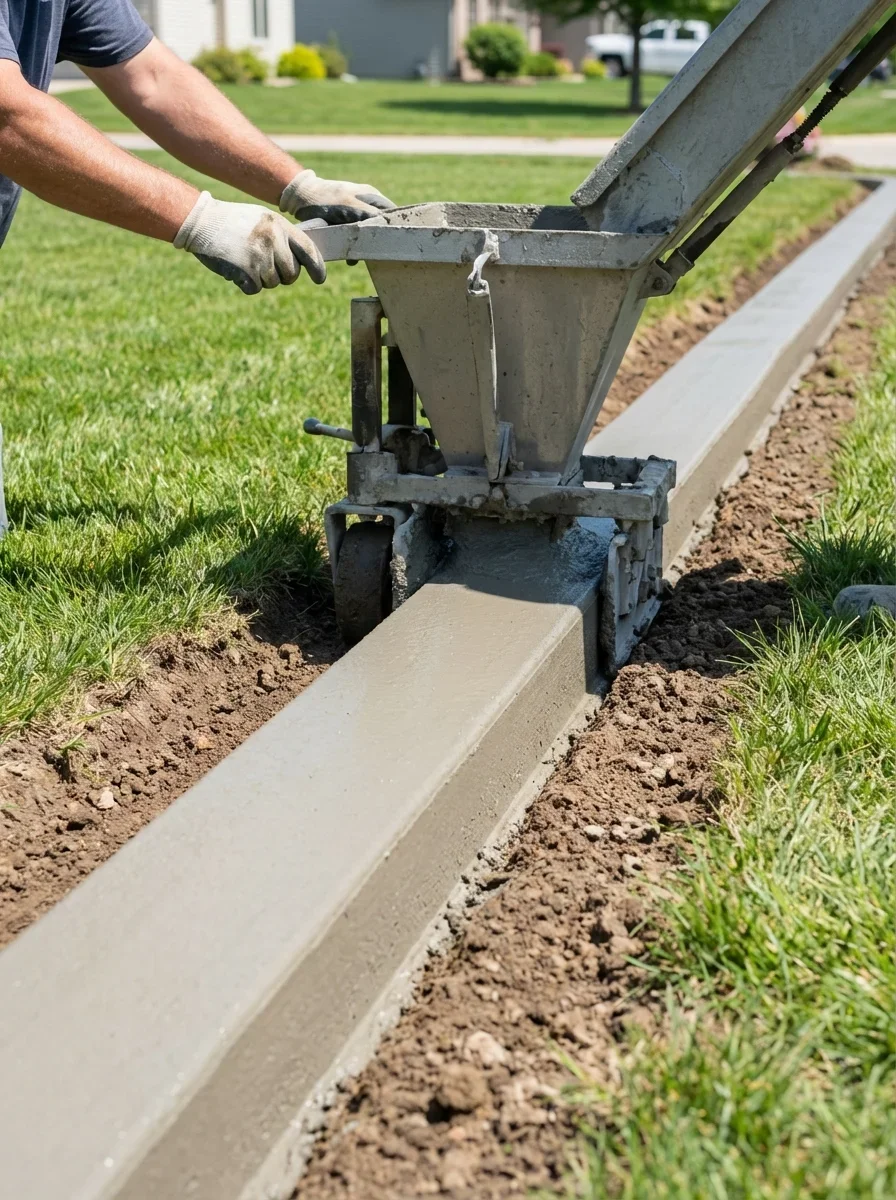
This is the specialized part. A curbing machine extrudes wet concrete in a continuous ribbon along your marked path. The operator guides the machine while a helper feeds concrete mix and monitors the shape. The curbing is formed on-site, creating seamless curves and corners with no joints or gaps.
The concrete mix includes fiber reinforcement and is designed for strength and freeze-thaw durability. The machine creates a consistent height (typically 4-6 inches above grade) and width (4-6 inches depending on design).
3. Finishing and Stamping (Day 1 or Early Day 2)
While the concrete is still workable, the contractor applies the finish. For continuous curbing, this means troweling smooth and defining edges. For stamped patterns, mats are pressed into the surface to create texture and design.
Color can be added as integral pigment (already mixed in), dry-shake color hardener (applied to wet surface), or stain (applied after curing). Integral color is most common in Freedom and Seymour because it's consistent throughout the curbing—chips and wear won't expose gray concrete underneath.
4. Curing and Cleanup (Day 2)
The contractor applies a curing compound to prevent rapid moisture loss. Then they backfill around the curbing, compacting soil on both sides to secure it. Excess concrete and debris are removed.
You'll need to avoid walking on or leaning against the curbing for 24-48 hours. Full cure strength develops over 7 days. Most contractors return after 3-5 days to apply sealant, which protects the finish and enhances color.
Seasonal Considerations
May through October is prime curbing season in Wisconsin. Ground must be thawed and workable. Concrete cures best at 50-80°F. Many contractors in Shawano and Kaukauna book spring installations in late winter because demand peaks in May when everyone's thinking about landscaping.
Fall installations work well—cooler temperatures actually slow curing, which can improve long-term strength. Just avoid anything close to frost dates.
How to Choose a Concrete Curbing Contractor
Not every concrete contractor does decorative curbing. The specialized equipment and technique separate this from typical flatwork. Here's how to find a contractor who'll deliver clean, lasting results.
Equipment and Experience Requirements
Ask what machine they use. Professional curbing contractors own or lease dedicated curbing machines—brands like Curb King, Edge Master, or Lil' Bubba. These aren't cheap DIY rentals. A contractor with their own equipment has skin in the game and experience operating it.
Ask to see recent projects in your area. Good contractors photograph their work and can show you properties in Green Bay, Appleton, or Oshkosh with curbing they installed 5+ years ago. You want to see how it's holding up through Wisconsin winters, not just how it looked the day it was poured.
Portfolio and Design Consultation
Look for variety in their portfolio—different colors, patterns, and applications. A contractor who only does basic gray curbing might struggle with the stamped cobblestone look you want.
Red flags to watch for:
- Reluctance to provide references or show completed work
- Quotes significantly lower than others (material and labor costs are fairly standard—deep discounts usually mean shortcuts)
- No discussion of soil prep or drainage considerations
- Vague timeline or "we'll fit you in when we can" scheduling
- No mention of sealant or curing process
Questions to Ask Before You Hire
"How do you handle corners and tight curves?" This reveals skill level. Corners require shutoff valves and hand-forming. Tight curves need experienced machine operation. You want confidence in their answer, not "we'll figure it out."
"What's your concrete mix design?" It should include fiber reinforcement and be designed for 4000+ PSI strength. If they don't know or say "just standard concrete," walk away.
"Do you guarantee your work?" Most reputable contractors offer 1-3 year guarantees against cracking or settling due to installation defects. They won't guarantee against ground movement or tree root damage—that's beyond their control—but the craftsmanship should be warranted.
"How do you prepare the base?" The trench should be cleared, leveled, and compacted. Some contractors add gravel base for extra stability, especially in areas with clay soil or poor drainage.
Why Local Matters
A curbing contractor familiar with Fox Valley soil conditions knows how our clay-heavy soils shift, where drainage problems crop up, and which neighborhoods have challenging tree roots (looking at you, older areas of De Pere). They understand that what works in sandy soil down south doesn't always work in our heavy Wisconsin clay.
They're also accessible if you have questions during curing or if you want additional curbing added next year. You want someone you can reach, not a crew that blows through town for a week and disappears.
Comparing local contractors means you can check their work in your own neighborhood, talk to their past clients at the hardware store, and know they'll be around if you need them. That's the advantage of working local—and exactly why directories like this exist.
Frequently Asked Questions
Yes, concrete landscape curbing is a worthwhile investment. It provides 20–30+ year durability, enhances curb appeal and property definition, reduces lawn maintenance by containing mulch and soil, increases resale value, and requires minimal upkeep in Wisconsin's climate. The upfront cost ($9–$18/sq ft installed) is offset by longevity and aesthetic benefits.
- Wisconsin Department of Transportation. "Concrete Manual." https://docs.legis.wisconsin.gov/code/admin_code/wisconsin_administrative_code/department_of_transportation/highway__construction_and_technology_/trans_414_/trans_414_07. Accessed February 10, 2026.
Related Articles
Concrete Curbing: Landscape Edging Services & What to Know
Find landscape curbing contractors. Learn about continuous pour edging, decorative options, color systems, and what professional installation involves.
Read Guide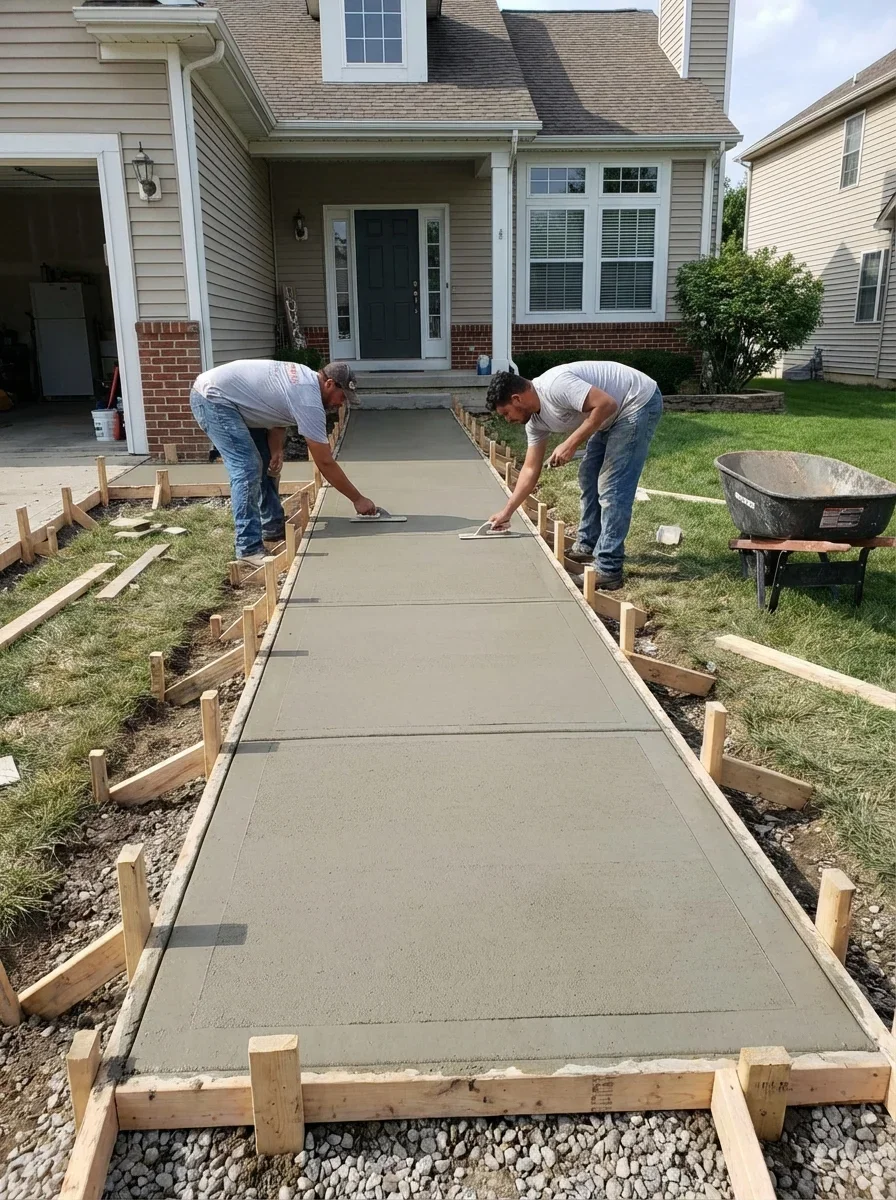
Residential Concrete Contractors: Services, Costs & How to Hire
Connect with licensed residential concrete contractors in Fox Valley. Compare quotes for driveways, patios, sidewalks, and more. Free estimates from vetted pros.
Read Guide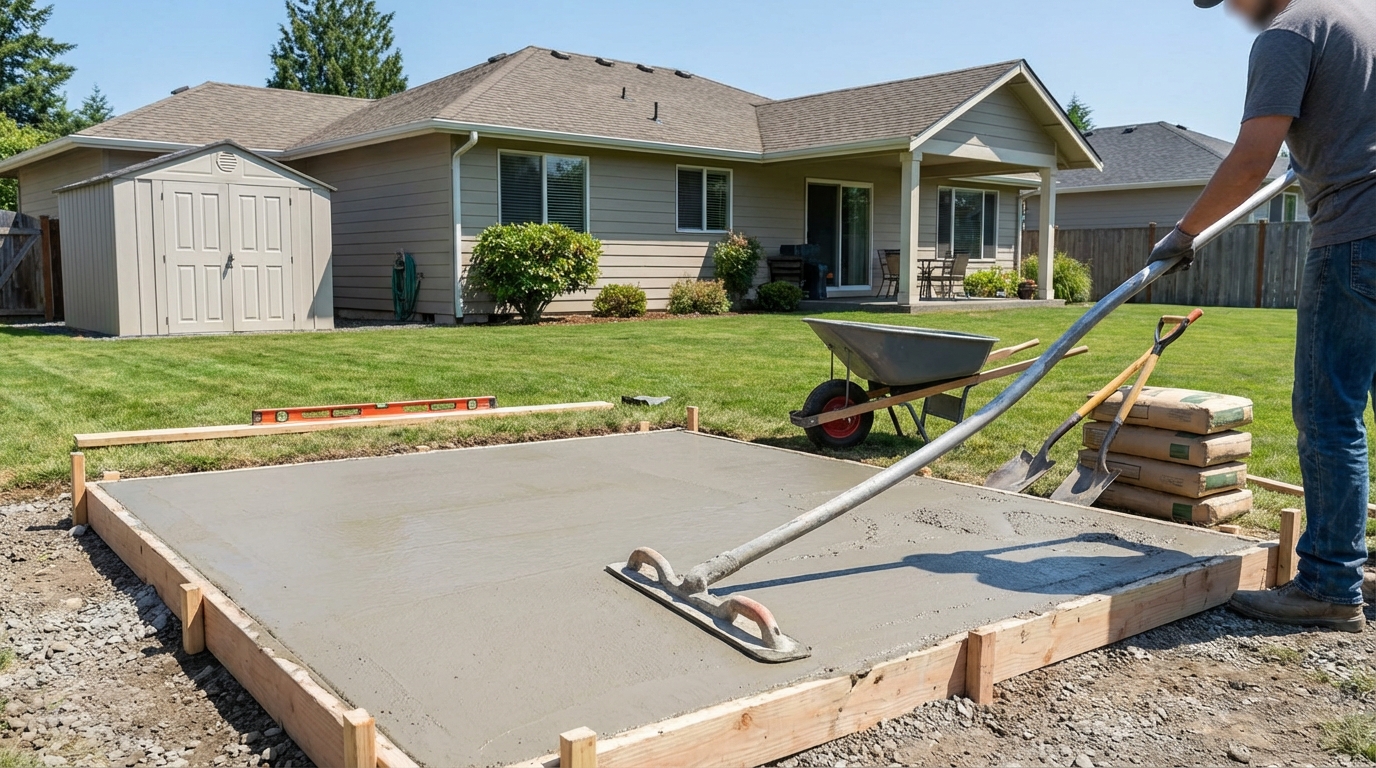
Residential Concrete Costs: What Small Jobs Really Cost
Small concrete projects have different pricing than large pours. Learn why contractors charge minimum fees, what drives small job costs, and how to get fair quotes.
Read Cost Guide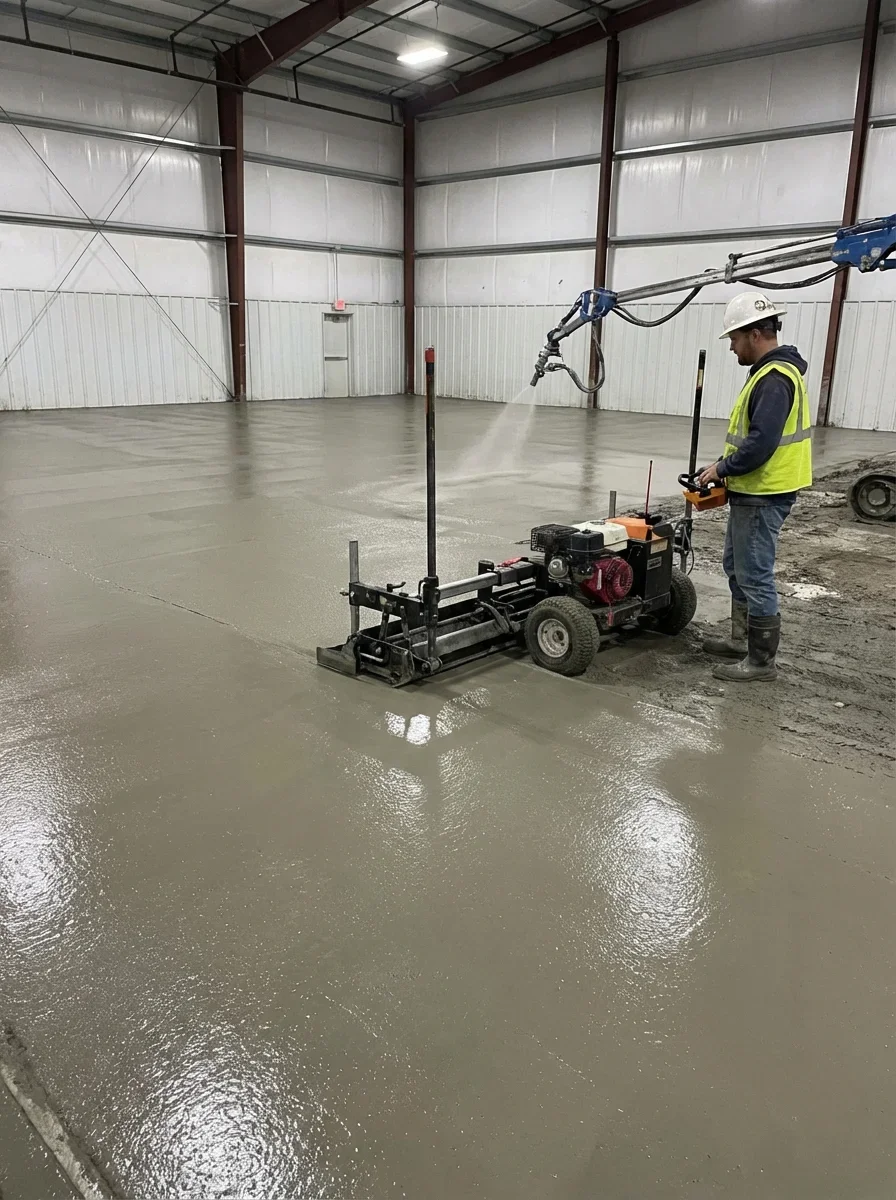
Innovative Techniques and Technologies in Concrete Construction
Discover advanced concrete techniques and technologies available from today's contractors: from self-healing concrete to 3D texturing and eco-friendly mixes.
Read Guide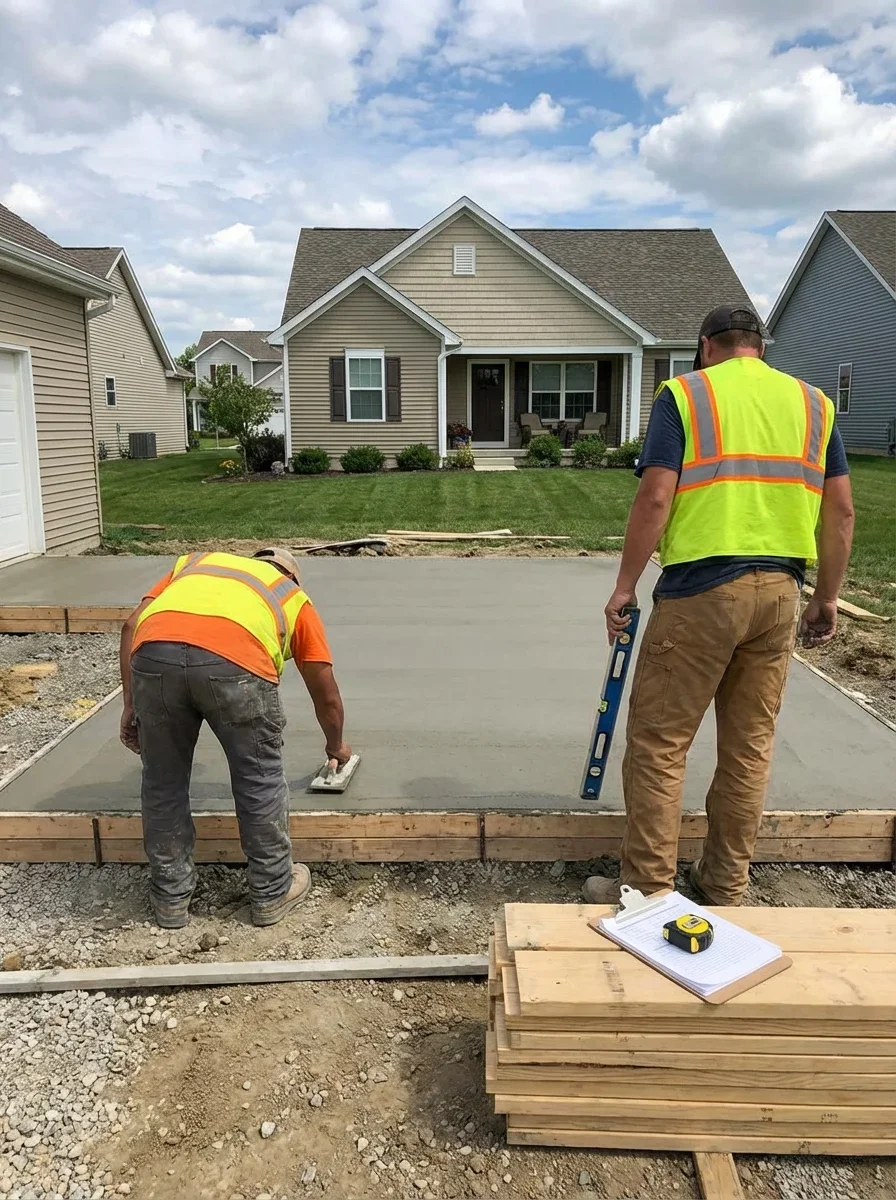
How Much Do Concrete Contractors Cost? Pricing Guide
Understand concrete contractor pricing in Fox Valley. Learn what drives costs, regional price ranges, and how to compare quotes from licensed professionals.
Read Cost Guide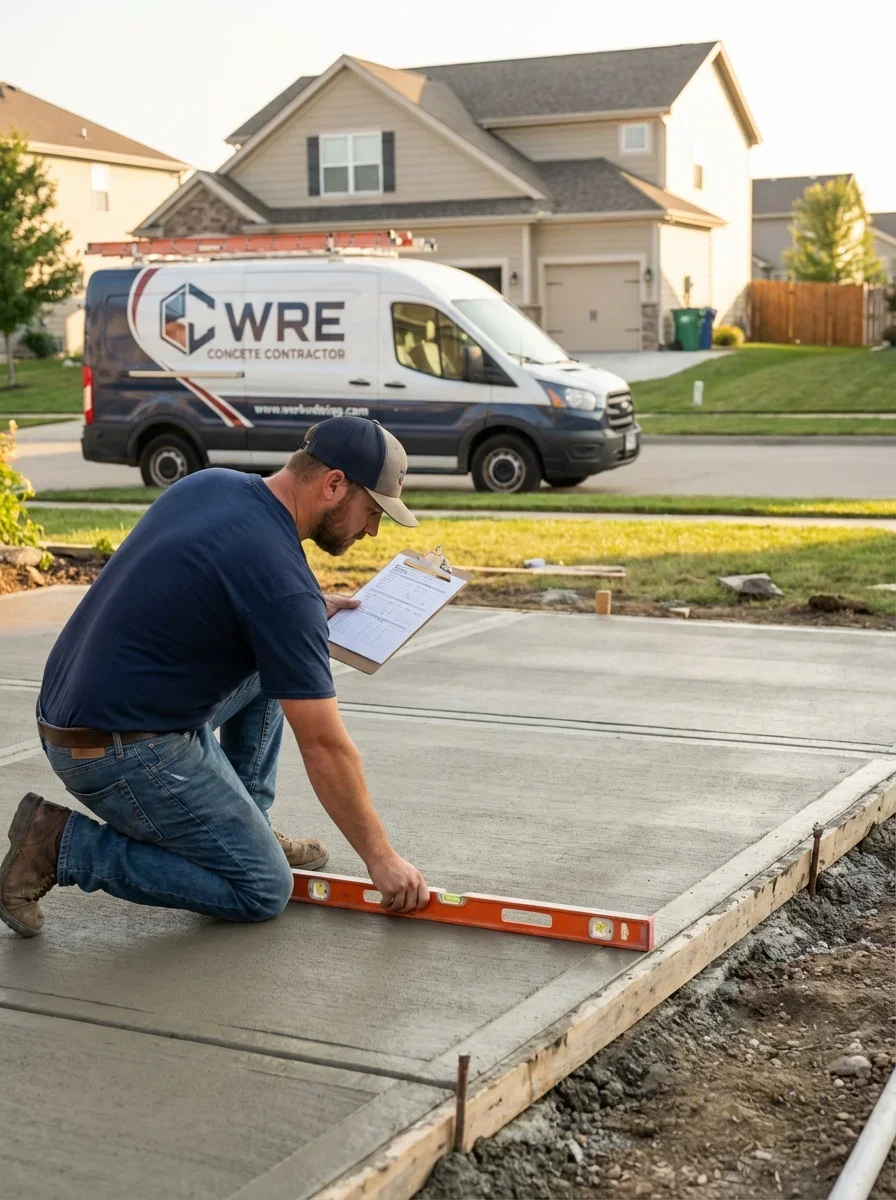
How to Choose the Right Concrete Contractor for Your Project
Learn what separates quality concrete contractors from the rest. Licensing, insurance, experience, equipment, and questions to ask before hiring for your project.
Read Guide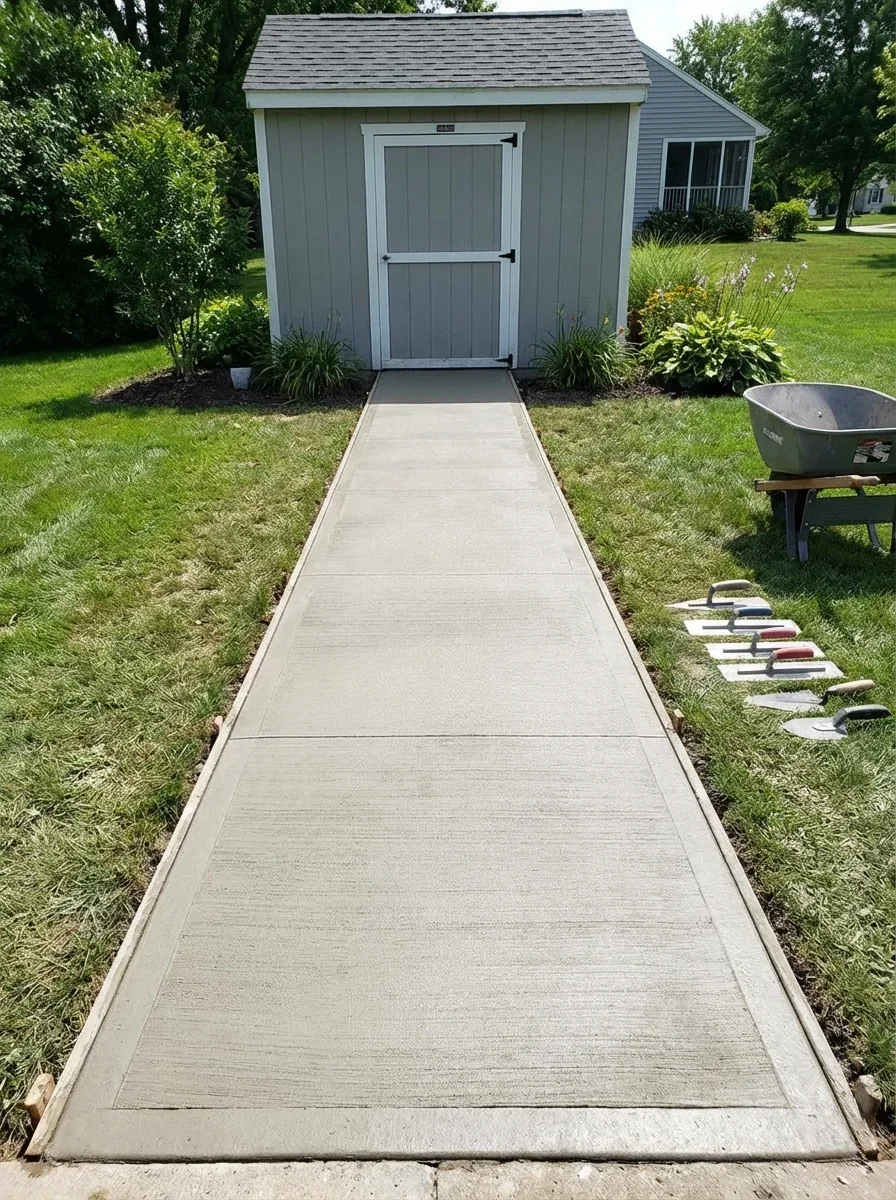
Small Job Concrete Contractors: When You Don't Need a Big Crew
Find contractors who specialize in small concrete jobs—shed pads, steps, walkways, repair work. Compare quotes for projects under 500 sq ft in Fox Valley.
Read Guide