
When Your Concrete Starts Failing
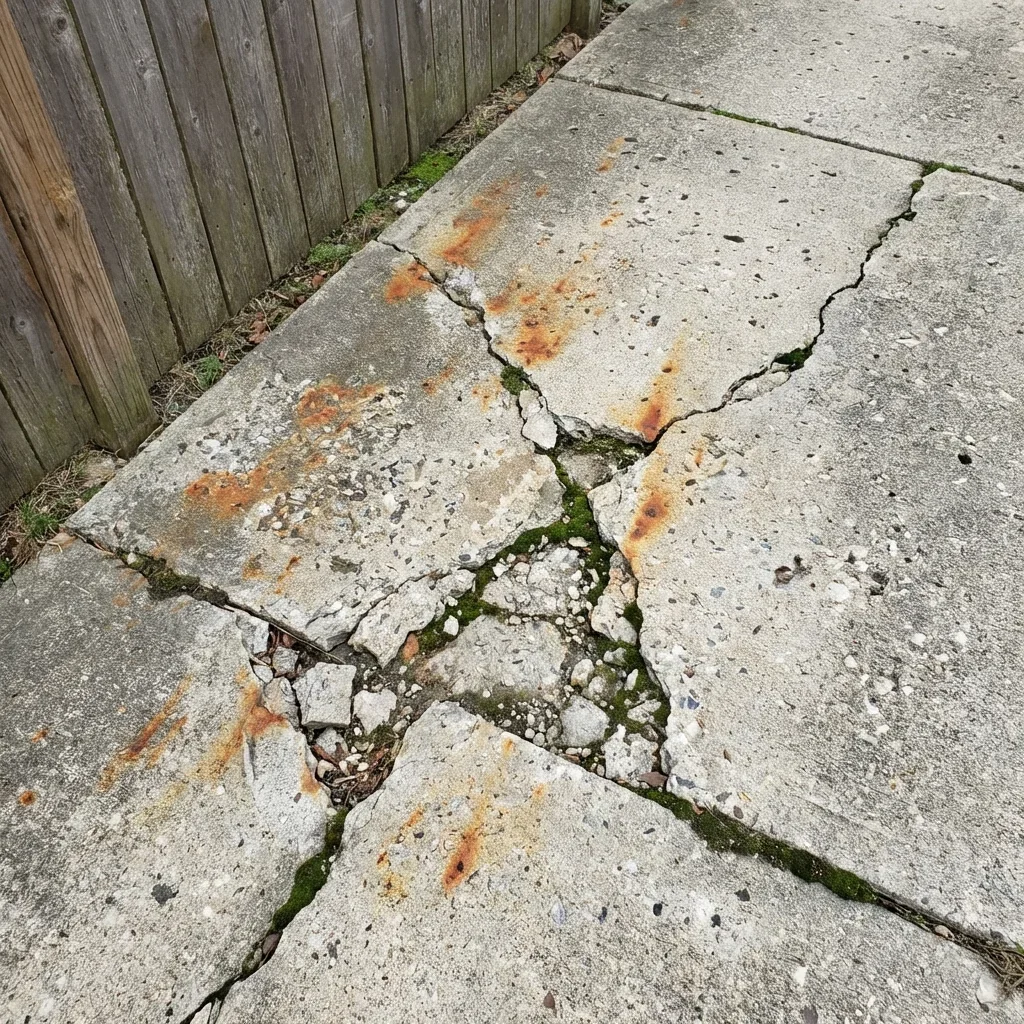
You notice it every time you pull into the driveway. That settled section near the garage. The crack that wasn't there two years ago — now it's a quarter-inch wide and water pools next to your foundation after every rain.
Wisconsin's freeze-thaw cycle is brutal on concrete. With a 48-inch frost line, the ground beneath your slabs moves constantly from October through April. Water seeps into tiny cracks, freezes, expands, and makes those cracks bigger. Then it thaws and the process repeats. Every. Single. Winter.
The Warning Signs You're Past Prevention
Your concrete tells you when it needs help. Hairline cracks you can barely see? Those are cosmetic. But when cracks exceed 1/4 inch width, water penetration accelerates deterioration. That's when surface damage turns structural.
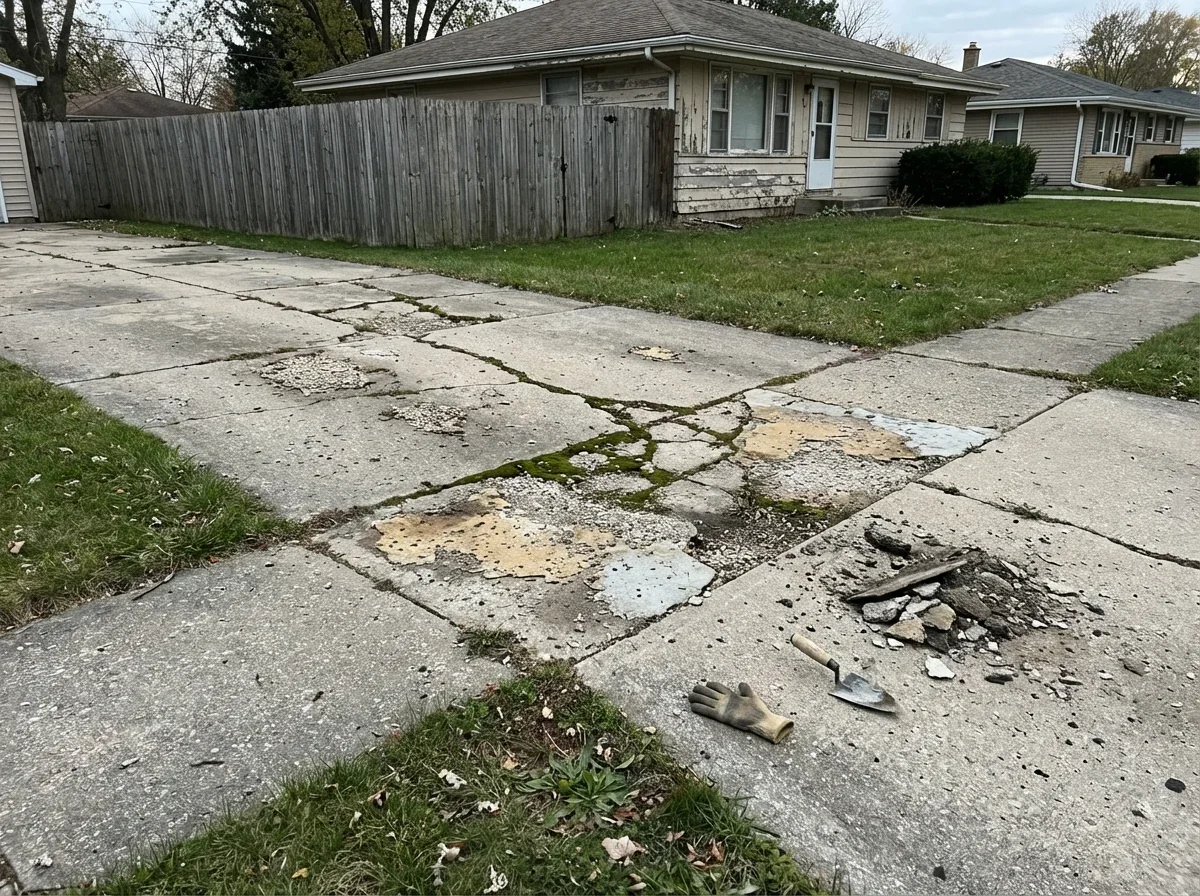
Spalling — those flaky, pitted areas where the surface is literally disintegrating — happens when water gets beneath the top layer and breaks the bond. In Green Bay and Appleton, you see this most on driveways where salt application concentrates. The salt draws moisture, the freeze-thaw cycle does its work, and suddenly you're losing chunks of concrete every spring.
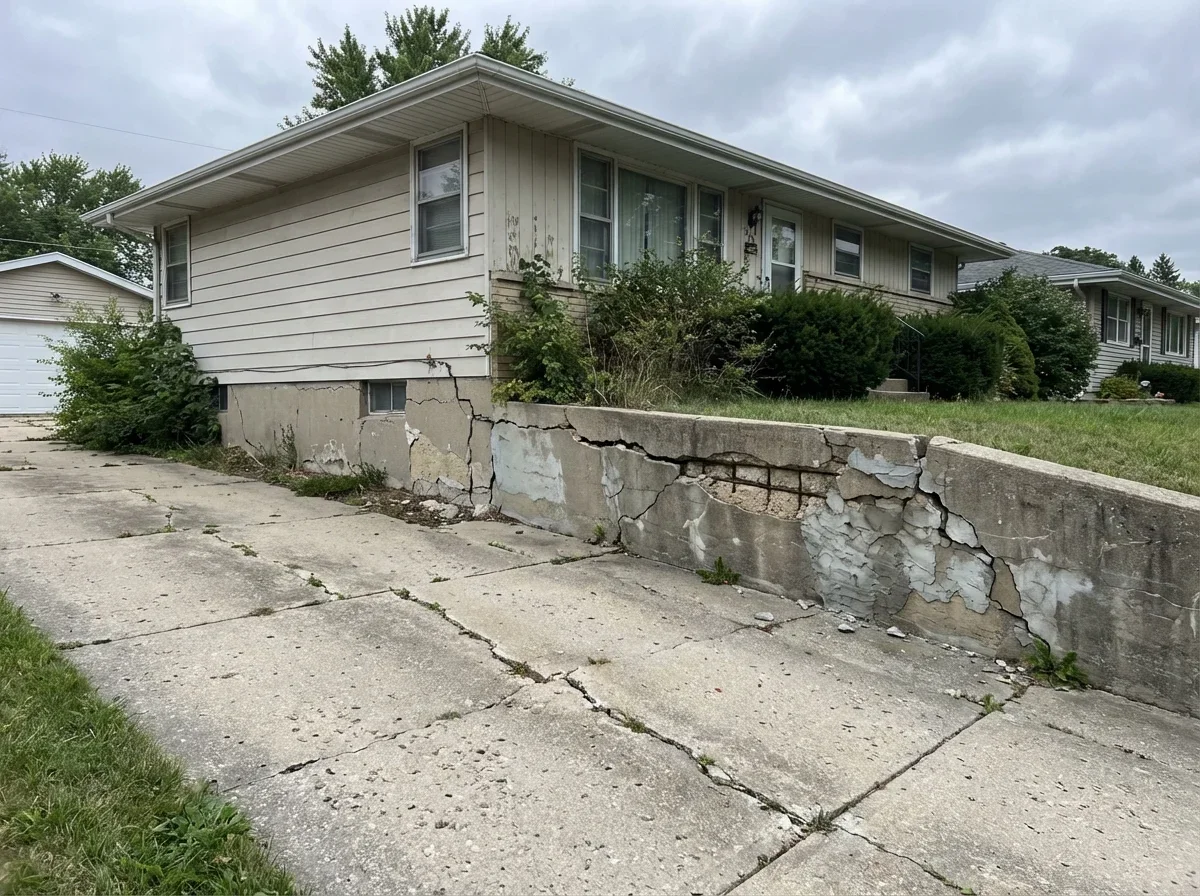
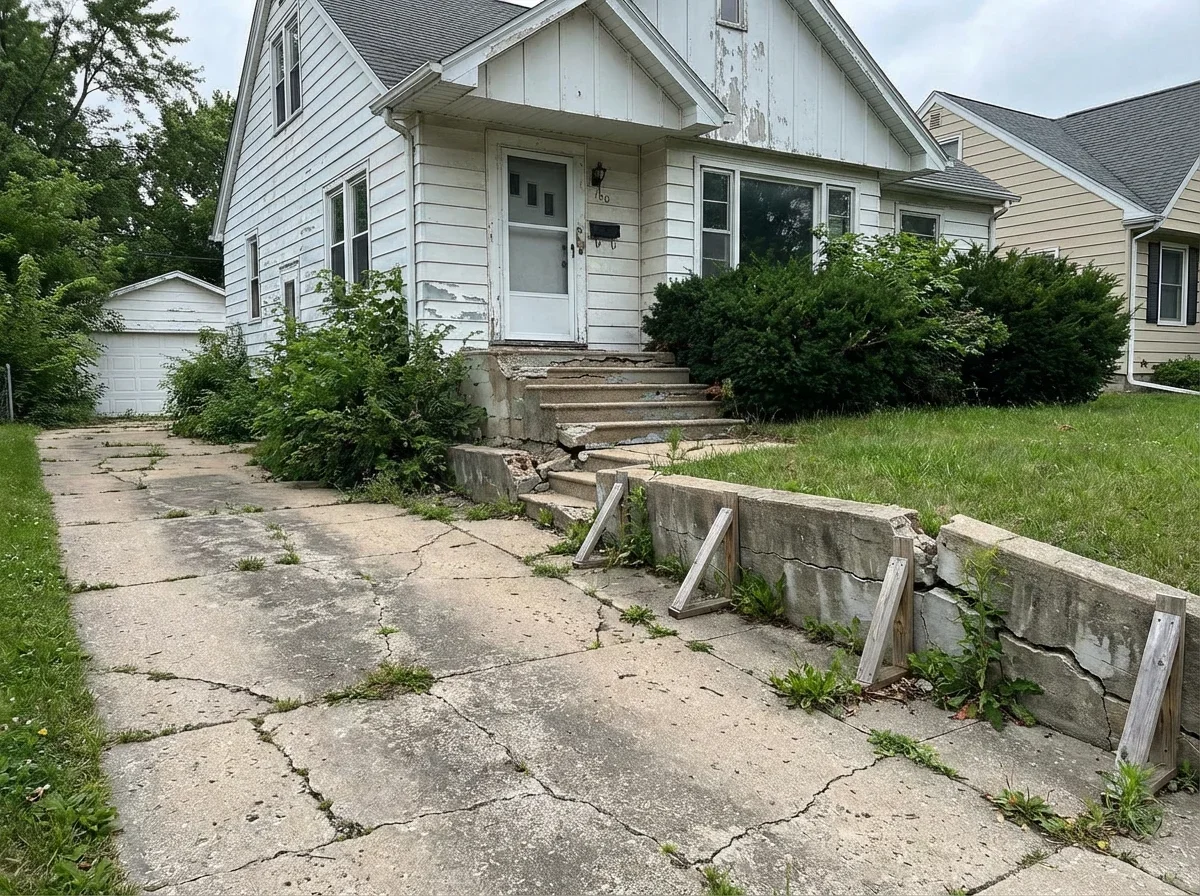
Settling creates its own problems. A two-inch drop between your driveway and garage floor doesn't just look bad — it directs water toward your foundation. Uneven walkways become liability issues. Property managers in Oshkosh know this well: one trip-and-fall claim costs more than fixing ten settled slabs.
Sound familiar? Your driveway settled two inches on one side. You tried filling the gap with patching compound from the hardware store. It lasted six months. Now the crack is back and wider than before.
What Happens When You Wait
Ignoring concrete damage in Fox Valley climate gets expensive fast. A $300 crack seal today becomes a $2,000 leveling job next year, then a $6,000 replacement in three years. The progression is predictable.
Water is the killer. Once it reaches the subbase beneath your slab, it washes away soil, creating voids. The concrete above those voids has nowhere to go but down. One small crack can undermine an entire driveway section within two freeze-thaw seasons.
The cost escalation looks like this: $150-400 for crack sealing → $800-1,500 for slab leveling → $4,000-8,000 for replacement. Every season you delay moves you one step further down that ladder.
What Does Concrete Repair Cost in the Fox Valley?
The honest answer: it depends on the damage extent and repair method. But here are real numbers from projects across Neenah, De Pere, and surrounding areas.
Crack Sealing and Filling
For cracks up to 1/2 inch wide, professional sealing runs $3-8 per square foot depending on crack density and depth. A typical driveway with moderate cracking (10-15 linear feet of cracks) costs $400-700 to seal properly.
The material matters. Polyurethane and epoxy-based sealants flex with temperature changes — critical in Wisconsin where concrete expands and contracts 50+ degrees seasonally. Hardware store crack fillers are rigid and fail within months.
| Crack Width | Repair Method | Cost per Linear Foot | Lifespan |
|---|---|---|---|
| < 1/8" | Routing and sealing | $3-5 | 5-8 years |
| 1/8"-1/2" | Epoxy injection | $8-15 | 8-12 years |
| > 1/2" | Full-depth replacement | $25-40 | 20+ years |
Slab Leveling and Lifting
This is where costs vary significantly based on method. Traditional mudjacking (pumping cement slurry under the slab) costs $5-10 per square foot. Polyurethane foam injection runs $8-15 per square foot.
For a standard two-car driveway section that's settled 2-3 inches, expect:
- Mudjacking: $800-1,400
- Foam injection: $1,200-2,000
Foam costs more upfront but weighs 95% less than mud (which matters when you're lifting concrete that already has soil issues underneath). Foam also cures in 15 minutes versus 24-48 hours for mudjacking.
Resurfacing and Overlay Options
When the surface is shot but the slab underneath is structurally sound, resurfacing costs $3-10 per square foot depending on thickness and finish. A 400-square-foot patio in Kaukauna typically runs $1,400-3,200 for professional resurfacing.
Thin overlays (1/8" - 1/4") handle cosmetic damage. For moderate spalling and pitting, you need 1/2" - 1" overlays with bonding agents and reinforcing fibers. Anything beyond that, you're looking at replacement.
| Repair Type | Cost Range | Best For | Timeline |
|---|---|---|---|
| Crack sealing | $3-8/sqft | Preventive maintenance | 1 day |
| Slab leveling | $5-15/sqft | Settled sections | 1 day |
| Resurfacing | $3-10/sqft | Surface damage | 2-3 days |
| Full replacement | $8-15/sqft | Structural failure | 3-7 days |
DIY vs Professional Reality
The store-bought concrete patch kit costs $25. Seems tempting. Here's what actually happens:
You don't have a pressure washer to properly clean the crack. The patch doesn't bond. It pops out by fall. Now you've wasted money AND the crack is wider because water got behind your failed patch during summer storms.
Professional crack sealing includes:
- Routing the crack to proper depth and width
- Pressure washing and chemical cleaning
- Proper backer rod installation
- UV-resistant polyurethane that flexes with seasonal movement
- Warranty coverage (typically 2-5 years)
The $300 you save doing it yourself gets spent twice over when you have to call a professional to fix your fix.
The Concrete Repair Process
Understanding what happens during professional repair helps you evaluate contractors and know what you're paying for.
Surface Preparation and Cleaning
This step separates lasting repairs from weekend patches. Professionals in Little Chute and Greenville start by routing cracks with diamond blades — widening them to create a reservoir for sealant and ensure proper bonding depth.
Then comes aggressive cleaning. High-pressure washing (3000+ PSI) removes loose concrete, dirt, oil, and contaminants. For oil-stained garage floors and driveways, chemical degreasing precedes the pressure wash. The concrete must be completely clean and dry for sealant adhesion.
For leveling work, technicians drill small access holes (5/8" for mudjacking, 3/8" for foam) and clear out any debris from the void spaces beneath the slab.
Repair Method Application
Crack sealing: Contractors install backer rod (foam tubing) to the proper depth, then apply self-leveling polyurethane or epoxy sealant. The sealant should slightly overfill the crack, then get tooled flush once it begins setting. Proper application takes 30-60 minutes per crack, not the 5-minute slap-and-go you see from fly-by-night operators.
Slab leveling: For mudjacking, a cement-sand-water slurry gets pumped through access holes under hydraulic pressure. The contractor monitors lift in real-time, filling voids systematically until the slab reaches target height. It's part science, part feel — you need experience to know when to stop pumping before you crack the concrete.
Foam injection is more precise. Polyurethane components mix at the nozzle tip, expand 20-30x original volume, and harden in minutes. Technicians can control lift to 1/8" accuracy. The foam fills voids completely and doesn't add weight to already-compromised soil.
Curing and Protection
Crack sealants need 24-48 hours before vehicle traffic in warm weather, 72+ hours in cool spring/fall temperatures. Contractors may apply sand to fresh sealant for texture and UV protection.
Mudjacking requires 24-48 hours curing before heavy loads. You can walk on foam-lifted concrete in 15 minutes — a huge advantage for commercial properties and homeowners who can't shut down their driveway for two days.
Resurfacing cure times depend on temperature and humidity. In Seymour summer conditions (75-85°F, moderate humidity), thin overlays cure in 24-48 hours. Spring and fall repairs may need 3-4 days. Wisconsin contractors know to avoid resurfacing work once overnight temperatures drop below 50°F consistently.
Seasonal Timing Matters
Spring is busy season for concrete repair in the Fox Valley. Everyone discovers damage after snow melts. Smart homeowners schedule work for late May through September when:
- Ground temperatures stabilize above 55°F
- Sealants cure at optimal rates
- Lower humidity reduces cure times
- Contractors have better availability (and sometimes better pricing) in July-August
Winter repairs are possible for emergency situations — polyurethane sealants work down to 20°F — but not ideal for long-term performance.
How to Choose a Concrete Repair Contractor
The concrete repair industry attracts both skilled professionals and quick-buck operators. The difference shows up in warranty claims within two years.
What Separates Good Contractors from Bad
Good contractors show you the damage and explain options. They'll measure crack widths, check slab elevation with levels, and discuss whether you need repair or replacement. Bad contractors tell you everything needs replacing (because that's the most profitable job) or promise to fix anything for cheap (because they're using cheap materials and shortcuts).
In Freedom and Shawano, reputable concrete contractors carry proper liability insurance and workers comp. Ask to see certificates. If they hesitate or claim they "don't need insurance for small jobs," walk away. One injury on your property without proper coverage can cost you tens of thousands.
Questions That Matter
Ask these before signing anything:
What's causing this damage? If they can't explain the underlying issue (soil erosion, frost heave, poor drainage), they're treating symptoms, not problems.
What materials specifically will you use? Product names matter. "Polyurethane sealant" could mean professional-grade Sikaflex or hardware-store caulk. Get specifics.
What's your warranty and what does it cover? Material failure? Labor? Re-settling? A warranty is only as good as the company backing it. Check how long they've been in business.
Do you handle permits? Most residential concrete repair doesn't need permits, but major structural work might. Contractors should know local code requirements.
What's your process for [specific repair method]? Listen for detail. A mudjacking contractor who says "we just pump mud under there until it lifts" doesn't understand soil mechanics or controlled lifting.
Red Flags to Avoid
Run from contractors who:
- Quote over the phone without seeing the damage
- Pressure you to "sign today for this price"
- Only accept cash payment
- Don't provide written estimates with scope of work details
- Can't provide local references from the past two years
- Use residential addresses instead of business locations
The "I'm working in your neighborhood" door-knockers are rarely legitimate professionals. Established concrete contractors in Appleton and Oshkosh don't need to cold-call — they have steady work from referrals and repeat customers.
Comparing Your Options
Get 3-4 quotes for any repair over $1,000. But don't just compare bottom-line numbers — compare scope of work, materials specified, warranty terms, and timeline.
A $600 crack sealing quote using premium polyurethane with 5-year warranty beats an $400 quote using "professional grade sealant" (undefined) with no warranty. You're not saving $200 — you're prepaying for the do-over in two years.
The Fox Valley has dozens of concrete contractors. Some specialize in decorative work, others in structural repair, some in commercial and industrial. Match the contractor's expertise to your project type. The guy who pours beautiful stamped patios might not be your best choice for lifting a settled driveway — different skill sets, different equipment.
Check online reviews, but read them critically. Look for patterns in complaints (missed deadlines, poor communication, warranty issues) rather than isolated incidents. Every contractor has an unhappy customer somewhere — what matters is how they handle problems.
Frequently Asked Questions
Pricing a concrete job requires a systematic approach that accounts for materials, labor, equipment, and overhead. Follow these steps to arrive at an accurate, profitable quote:
- Assess job details and customer expectations — Understand the scope, desired finish quality, timeline, and any special requests (stamped, colored, decorative).
- Calculate how much concrete is needed — Measure the area and depth in square feet and inches, then convert to cubic yards (divide sq ft × depth ÷ 324).
- Evaluate surface prep needs — Account for excavation, grading, base prep, formwork, and removal of existing materials.
- Account for framing, reinforcement, and formwork — Include rebar, wire mesh, concrete forms, stakes, and bracing costs.
- Calculate your labor costs — Estimate hours needed and multiply by your hourly rate or crew cost.
- Include equipment and material costs — Concrete mix, delivery fees, finishing tools, sealing, and any specialty finishes.
- Add your overhead costs — Include truck time, fuel, insurance, and profit margin (typically 15–25%).
A solid markup ensures profitability and covers unexpected expenses.
Related Articles
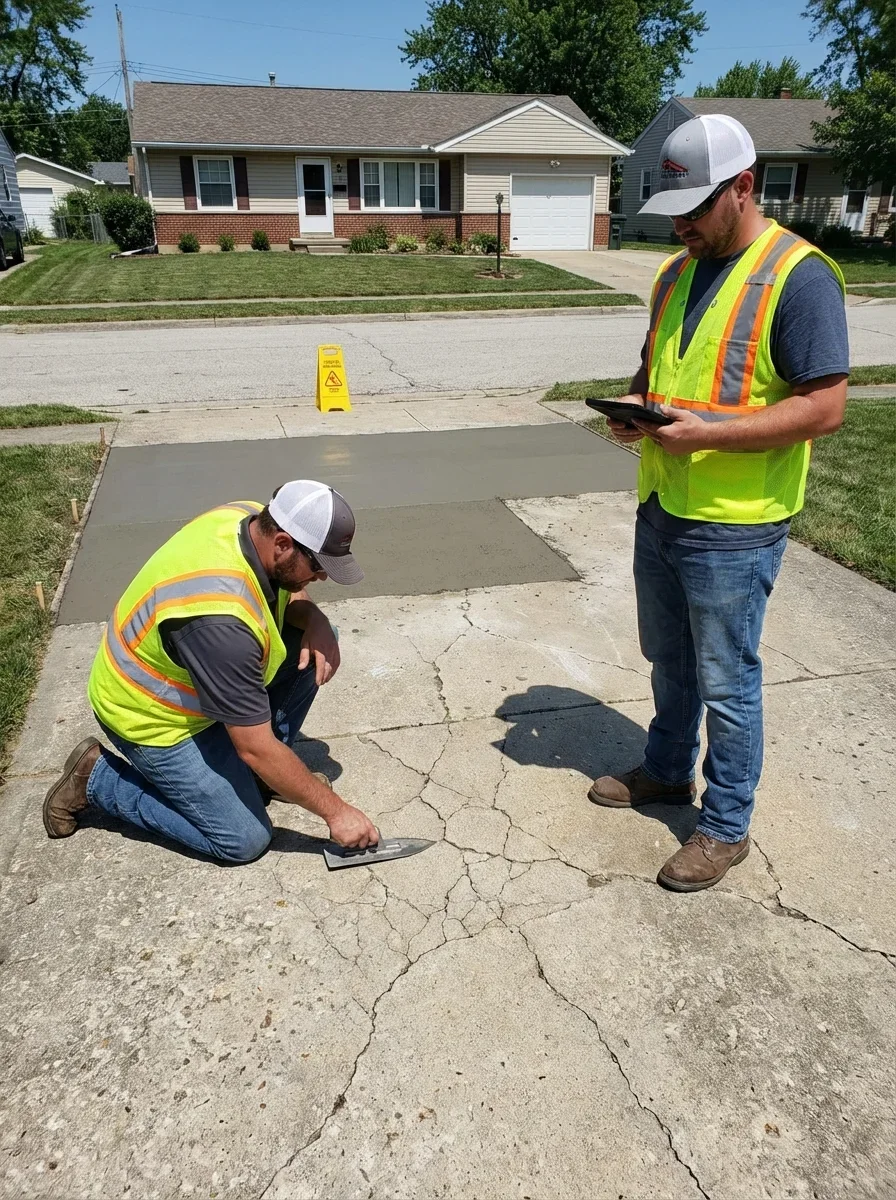
Concrete Repair Services: When to Patch, Resurface, or Replace
Should you patch, resurface, level, or replace damaged concrete? Learn what contractors recommend for different problems and what each repair method costs.
Read Guide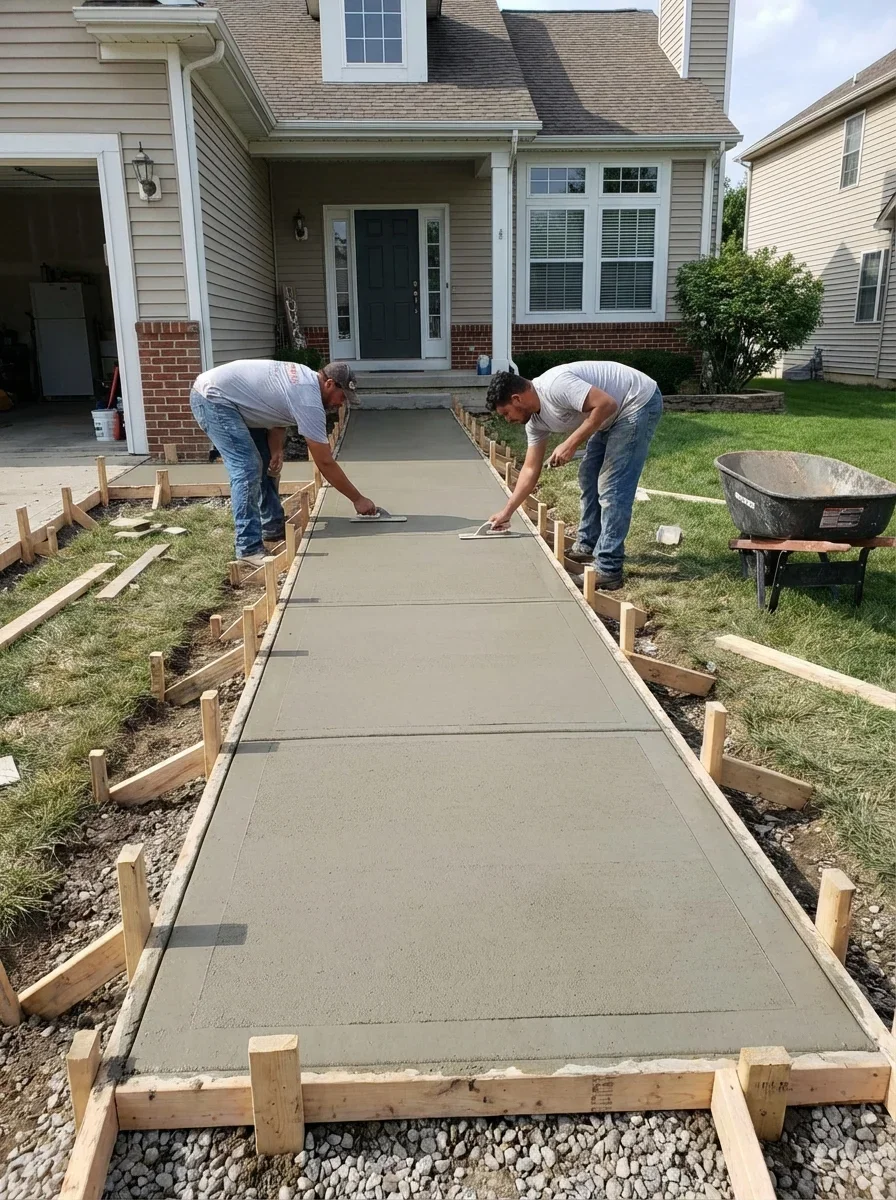
Residential Concrete Contractors: Services, Costs & How to Hire
Connect with licensed residential concrete contractors in Fox Valley. Compare quotes for driveways, patios, sidewalks, and more. Free estimates from vetted pros.
Read Guide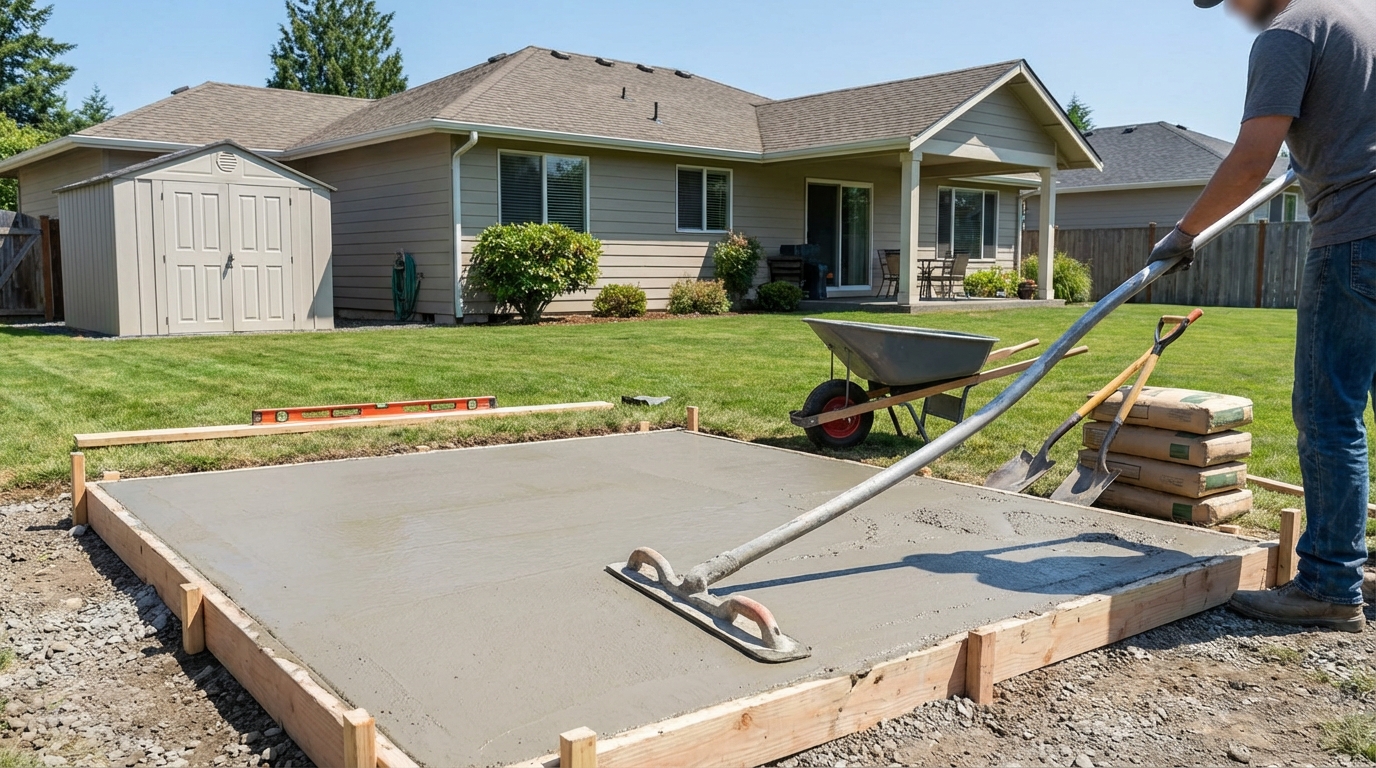
Residential Concrete Costs: What Small Jobs Really Cost
Small concrete projects have different pricing than large pours. Learn why contractors charge minimum fees, what drives small job costs, and how to get fair quotes.
Read Cost Guide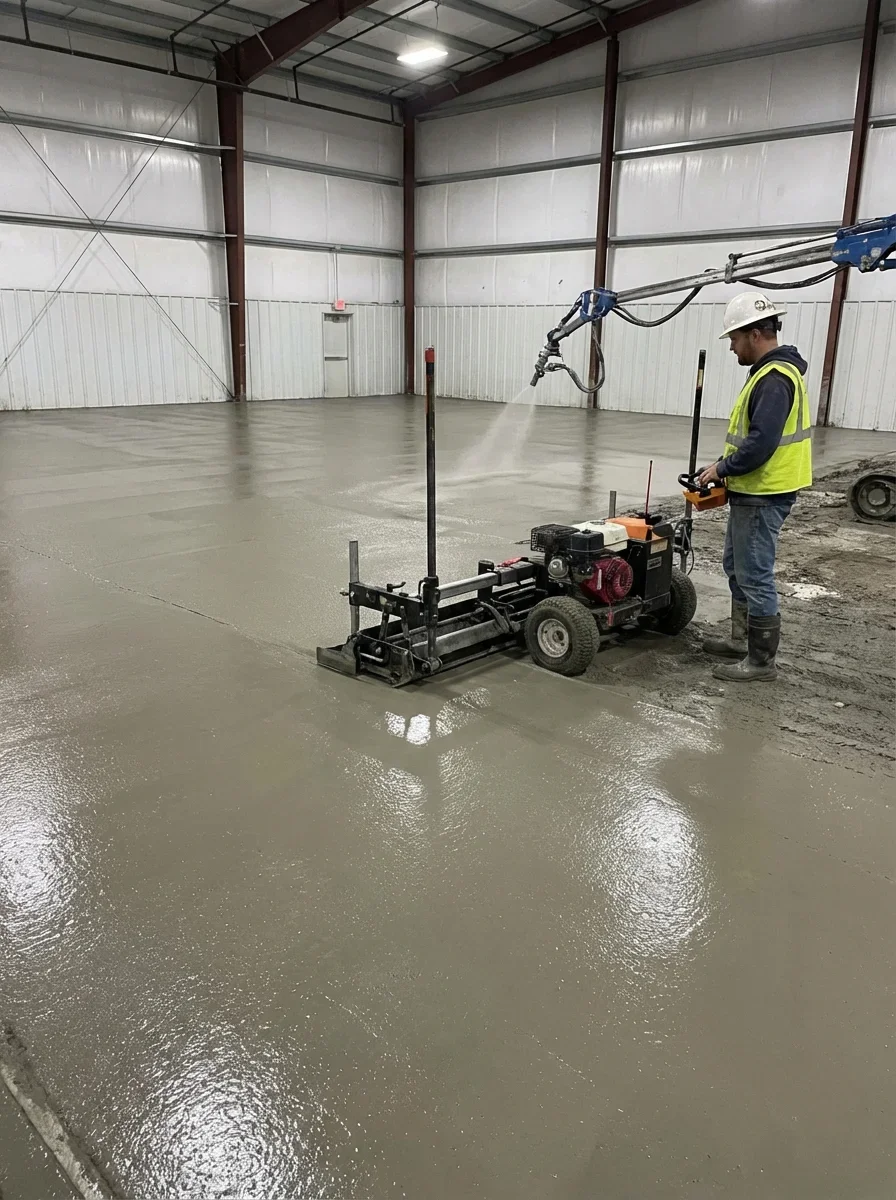
Innovative Techniques and Technologies in Concrete Construction
Discover advanced concrete techniques and technologies available from today's contractors: from self-healing concrete to 3D texturing and eco-friendly mixes.
Read Guide
How Much Do Concrete Contractors Cost? Pricing Guide
Understand concrete contractor pricing in Fox Valley. Learn what drives costs, regional price ranges, and how to compare quotes from licensed professionals.
Read Cost Guide
How to Choose the Right Concrete Contractor for Your Project
Learn what separates quality concrete contractors from the rest. Licensing, insurance, experience, equipment, and questions to ask before hiring for your project.
Read Guide
How to Evaluate Concrete Contractor Reviews and References
Learn to spot authentic reviews, verify references, and identify red flags when researching concrete contractors. What to look for beyond star ratings.
Read Guide