Repair vs Replacement: What Contractors Recommend
The decision between repairing existing steps and complete replacement depends on what's actually failing and whether the underlying problems can be fixed without removing the concrete. Contractors evaluate the extent of damage, the quality of the original installation, and whether repair methods will provide a long-term solution or merely postpone inevitable replacement. Homeowners often assume that visible problems require starting from scratch, but experienced contractors can sometimes extend the life of existing steps by 10 to 15 years with targeted repairs that cost 30 to 50 percent less than replacement.
| Repair Method | Best For | Cost Range | Lifespan Extension |
|---|---|---|---|
| Surface Patching | Minor spalling, hairline cracks, cosmetic issues | $300–$800 | 3–5 years |
| Concrete Lifting | Settlement under 3", structurally sound concrete | $500–$1,500 | 10–15 years |
| Full Replacement | Major cracks, extensive spalling, settlement over 4" | $2,000–$6,000 | 30+ years |
When Concrete Lifting Makes Sense
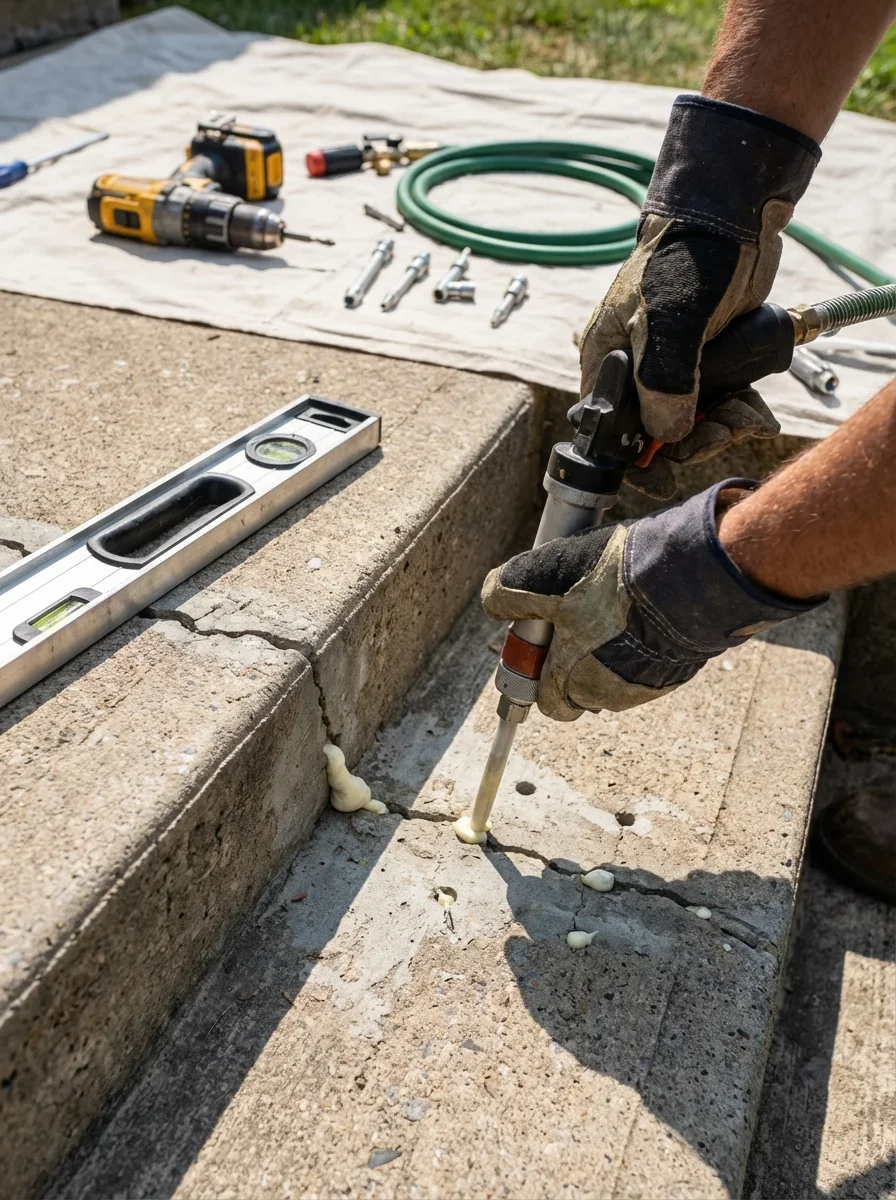
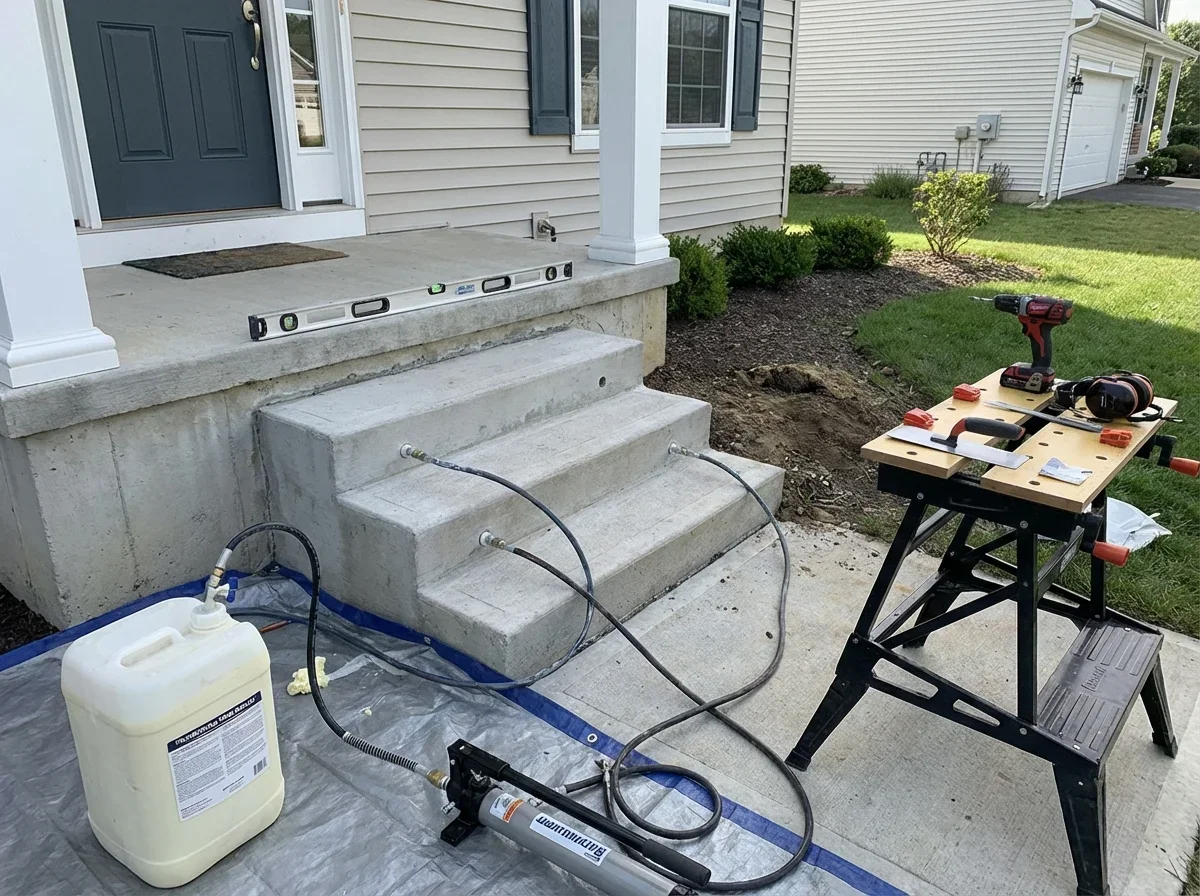
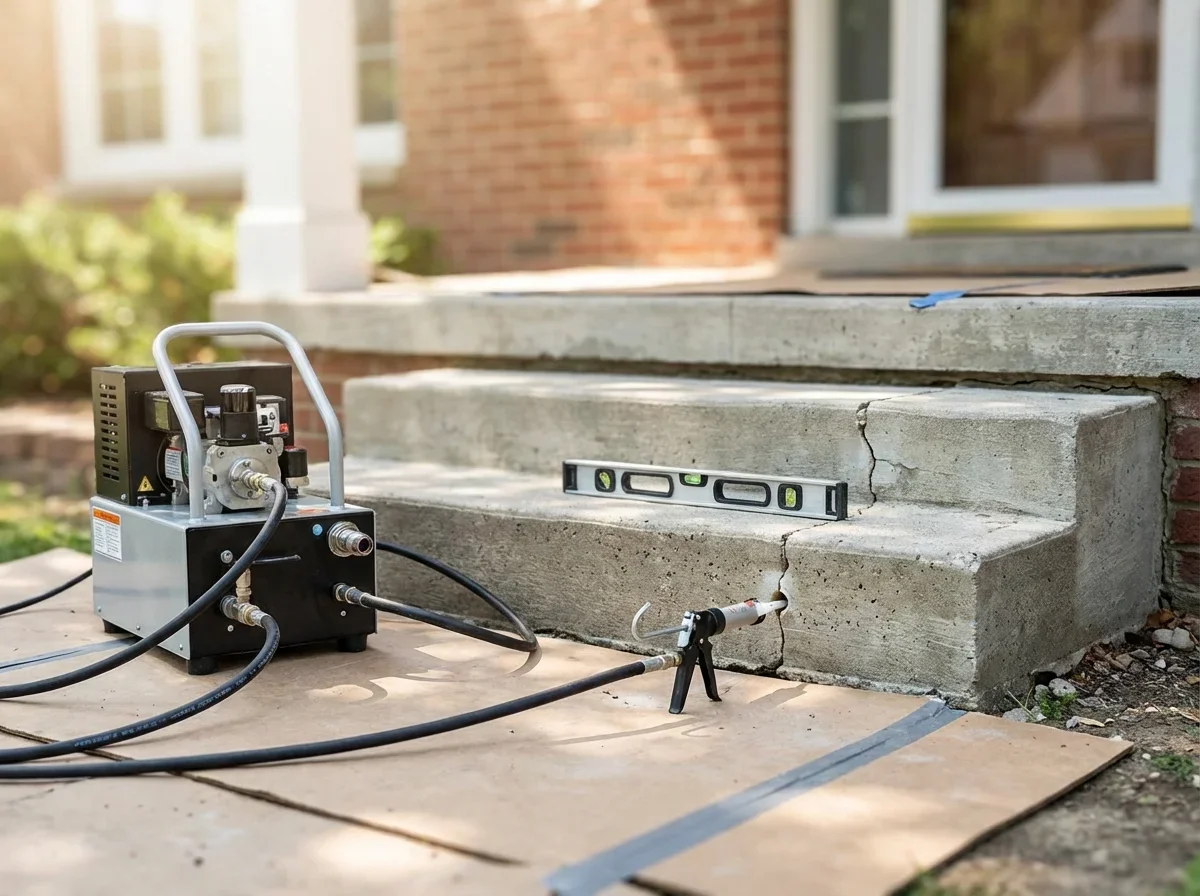
Concrete lifting—also called slabjacking or mudjacking—addresses settlement problems without the cost and disruption of demolition and replacement. Contractors drill small holes through the settled concrete and pump material underneath to raise the steps back to their original position. Two methods dominate the industry: traditional mudjacking uses a cement-based slurry, while polyurethane foam injection uses expanding foam that cures in minutes rather than hours.
This approach works best when the concrete itself remains structurally sound—no major cracks, adequate rebar, no extensive spalling—and the problem is purely settlement.[3] Contractors typically recommend lifting when steps have settled less than 3 inches and the underlying soil hasn't been completely washed away or severely eroded. The process costs $500 to $1,500 for typical residential steps, compared to $2,500 to $5,000 for complete replacement.
Polyurethane foam injection has gained favor because it weighs far less than mudjacking slurry (about 2 pounds per cubic foot versus 100 pounds), reducing the load on already-compromised soil. The foam cures in 15 minutes and homeowners can walk on the steps within an hour. However, lifting only addresses the settlement—it doesn't fix cracks, spalling, or other deterioration, and it requires adequate soil conditions to prevent future settlement from inadequate base compaction.[3] If water erosion caused the original settling, contractors must address drainage issues or the steps will settle again.
When Full Replacement Is Necessary
Complete replacement makes sense when structural integrity has been compromised, when lifting would only provide a temporary fix, or when the original installation was so poorly constructed that repairs can't correct the underlying problems. Contractors recommend replacement when they find extensive rebar corrosion, cracks wider than ½ inch that extend through the full depth of treads, multiple steps with severe spalling, or settlement exceeding 4 inches that indicates complete base failure.
Steps built without proper footings—poured directly on grade with no depth below frost line—will continue settling regardless of lifting attempts. Similarly, installations with inadequate or no rebar reinforcement can't be strengthened through surface repairs. Some older steps were built with incorrect riser-tread ratios that create tripping hazards; these need replacement to meet current building codes, especially if you're selling your home or pulling permits for other work that triggers code compliance reviews.
Replacement also makes sense when you're addressing multiple problems simultaneously. If your steps have settled, show extensive surface deterioration, and no longer match your home's updated appearance, the incremental cost of replacement over repair becomes more justifiable. New installations come with warranties (typically 1 to 3 years for workmanship, though the concrete itself should last 30+ years) and allow you to upgrade to decorative finishes, improved drainage systems, and proper code-compliant dimensions.
What Do Concrete Steps Cost to Install or Repair?
Concrete step pricing varies significantly based on whether you're repairing existing steps or installing new construction, and what level of finish and structural work the project requires. Understanding the cost factors helps you evaluate contractor quotes and recognize when a bid seems too low to include proper preparation or too high compared to regional norms.
Basic surface repairs—filling cracks, patching spalled areas, applying new finish coatings—typically run $300 to $800 for a standard 3-to-4-step residential installation. These repairs extend the life of structurally sound steps but don't address underlying settlement or major deterioration. Contractors clean damaged areas, apply bonding agents, and use high-strength repair mortars designed for exterior exposure. This work makes sense when you're planning to sell within a few years and need to improve curb appeal without the investment of full replacement.
Concrete lifting for settled steps costs $500 to $1,500 depending on how much material contractors need to inject and whether they're using traditional mudjacking ($5 to $8 per square foot) or polyurethane foam ($10 to $15 per square foot). The higher cost of foam reflects its advantages: less weight on compromised soil, faster curing time, and more precise control of lift amounts. Most lifting jobs on residential steps take 2 to 4 hours and the steps are usable the same day.
Complete step replacement with proper excavation, footings, rebar, and standard broom finish runs $2,000 to $3,500 for a basic 3-step installation (36 to 48 inches wide). Wider steps, additional height, or complex configurations with landings increase costs proportionally. Decorative finishes add $500 to $1,500: integral color adds $150 to $300, stamped patterns run $400 to $800, and exposed aggregate finishes cost $300 to $600. Steps requiring extensive base repair, connection to existing foundations, or work in difficult access areas can push totals to $4,000 to $6,000.
Pro Tip: Regional variations affect pricing significantly. Contractors in major metro areas charge 20 to 40 percent more than rural areas, and northern climates requiring deeper frost footings add excavation and concrete costs. Get at least three detailed quotes that specify excavation depth, rebar size and placement, concrete PSI rating, and finish options. Unusually low bids often indicate shortcuts: inadequate footings, no rebar, or lower-grade concrete that will deteriorate faster.
How to Choose a Concrete Step Contractor
Selecting a contractor for concrete step work requires looking beyond general concrete experience to find specialists who understand the specific challenges of stepped installations, building code requirements, and the structural connections that prevent settlement and separation. The contractor who pours great driveways or patios may lack the formwork skills and code knowledge that step construction demands.
Start by verifying that contractors hold proper licensing for concrete work in your jurisdiction and carry both liability insurance and workers' compensation coverage. Ask for certificates of insurance and verify coverage directly with the insurance carrier—some contractors let policies lapse between jobs. Check contractor references with your state licensing board and look for complaint histories, license suspensions, or unresolved disputes. A contractor operating for less than three years may lack the experience to handle complex repairs or unusual site conditions.
Request multiple references for step-specific projects completed within the past two years, and actually visit these sites if possible. Look for installations that remain level with no separation from foundations, no cracks wider than hairline, and surfaces that show minimal wear. Talk to homeowners about their experience: Did the contractor show up on schedule? Was the site left clean? Have any problems emerged since completion? The best contractors readily provide 8 to 10 references because they're confident in their work quality.
What Quality Contractor Quotes Should Include:
- Concrete PSI rating and air entrainment specifications
- Rebar size, spacing, and placement details
- Footing depth and width measurements
- Foundation connection method (epoxy dowels for attached steps)
- Finish type and surface treatment
- Removal and disposal costs for existing steps
- Site preparation and base compaction specifications
- Building permit and inspection fees
- Payment schedule tied to project milestones
Ask specific questions about building code compliance: Will the contractor pull required permits? What riser height and tread depth will the new steps use? How do they ensure uniform dimensions between risers? Where will handrails mount if required, and are mounting points reinforced during the pour? Contractors who seem annoyed by these questions or provide vague answers likely don't work to code standards.
Warranty terms matter more than many homeowners realize. Quality contractors warranty their workmanship for at least one year, covering problems like settlement, separation from foundation, or structural cracks that emerge from installation defects. The warranty should be in writing and specify what's covered, how long coverage lasts, and what voids the warranty (like your failure to maintain proper drainage). Some contractors offer extended warranties of 3 to 5 years, reflecting their confidence in their work. Be wary of contractors who refuse to provide written warranties or who blame any future problems on "soil conditions" or "weather."
Find Qualified Step Installation Contractors
Locating contractors who specialize in stepped concrete work—rather than general concrete contractors who occasionally pour steps—gives you access to professionals who understand the structural and code requirements that keep installations stable and compliant. Start with your local building department's list of permitted concrete contractors; these businesses have demonstrated willingness to work within code requirements and submit to inspections. Many building departments also maintain records of code violations or failed inspections that help you avoid contractors with poor track records.
Concrete lifting specialists often belong to industry associations like the Concrete Raising Association or train specifically in polyurethane foam injection systems from manufacturers like AP Fill or HMI. These contractors typically focus on repair and leveling work rather than new installation, so if your primary problem is settlement, seeking out lifting specialists often provides more cost-effective solutions than replacement-focused contractors.
Online contractor directories and review platforms provide starting points but require careful evaluation. Look beyond star ratings to read actual review content—what specific problems did the contractor solve, and how did they handle unexpected complications? Reviews mentioning precise dimensions, code compliance, and long-term performance carry more weight than generic praise. Be skeptical of contractors with exclusively five-star reviews (possible review manipulation) or those who respond defensively to any criticism.
Request quotes from at least three contractors with verifiable step-specific experience, and schedule site visits during which you can ask detailed questions about their approach to your specific problems. The best contractors spend 20 to 30 minutes evaluating your steps, measuring dimensions, checking for level, and discussing what they see before providing a quote. Contractors who provide instant estimates without careful examination often miss complications that lead to change orders and cost overruns. Taking the time to find qualified specialists who understand both structural requirements and code compliance protects your investment and ensures your steps provide safe, stable access for decades.
Frequently Asked Questions
- International Code Council. "Chapter 10 Means of Egress." https://codes.iccsafe.org/content/IRC2021P2/chapter-10-means-of-egress. Accessed February 07, 2026.
- American Wood Council. "Prescriptive Residential Wood Deck Construction Guide." https://www.awc.org/pdf/codes-standards/publications/design-aids/AWC_DCA6-15-DeckGuide_2022.pdf. Accessed February 07, 2026.
- U.S. Environmental Protection Agency. "Concrete Slab Lifting." https://www.epa.gov/lead/concrete-slab-lifting. Accessed February 07, 2026.