Understanding Your Patio Material Options
Before comparing costs and performance, you need to understand what you're actually choosing between. Standard concrete is the poured gray surface you see on most driveways and sidewalks—functional, durable, and straightforward. Stamped concrete takes that same material but adds color and texture before it fully cures, creating patterns that mimic stone, brick, or tile. Pavers are individual units (concrete, brick, or natural stone) installed piece-by-piece over a prepared base.
The fundamental difference isn't just aesthetic. These materials behave differently under stress, require different installation expertise, and respond to Wisconsin's freeze-thaw cycles in distinct ways. Standard concrete is a monolithic slab that moves as one unit. Stamped concrete is also monolithic but with a decorative surface layer that can separate from the base if not properly installed. Pavers are modular—individual units that can shift independently, which sounds problematic but actually provides flexibility in challenging soil conditions.
Understanding these structural differences matters because they determine what happens when things go wrong. A crack in stamped concrete affects the entire decorative surface and often requires professional color-matching for repairs. A cracked paver gets pulled out and replaced with a new unit in ten minutes. Standard concrete cracks get patched with gray filler that never quite matches. Each approach has maintenance implications that contractors should explain during your estimate, but often don't until you specifically ask.
| Material | Typical Cost/Sq Ft | Repair Difficulty | Winter Performance | Best For |
|---|---|---|---|---|
| Standard Concrete | $8-12 | Visible patches | Cracks within 3-5 years | Functional areas, tight budgets |
| Stamped Concrete | $12-18 | Requires color-matching | Same as standard + delamination risk | Visual appeal, stable soil |
| Pavers | $15-25 | Individual unit replacement | Shifts vs. cracks | Problem soils, future flexibility |
Cost Comparison: Stamped Concrete vs. Pavers vs. Regular Concrete
Installation Costs by Material Type
Expect to pay $8-12 per square foot for standard concrete installation, which includes site preparation, formwork, pouring, and basic finishing. This baseline price assumes straightforward access, minimal grading requirements, and standard 4-inch thickness suitable for foot traffic. For a 300-square-foot patio, you're looking at $2,400-3,600 before any upgrades.
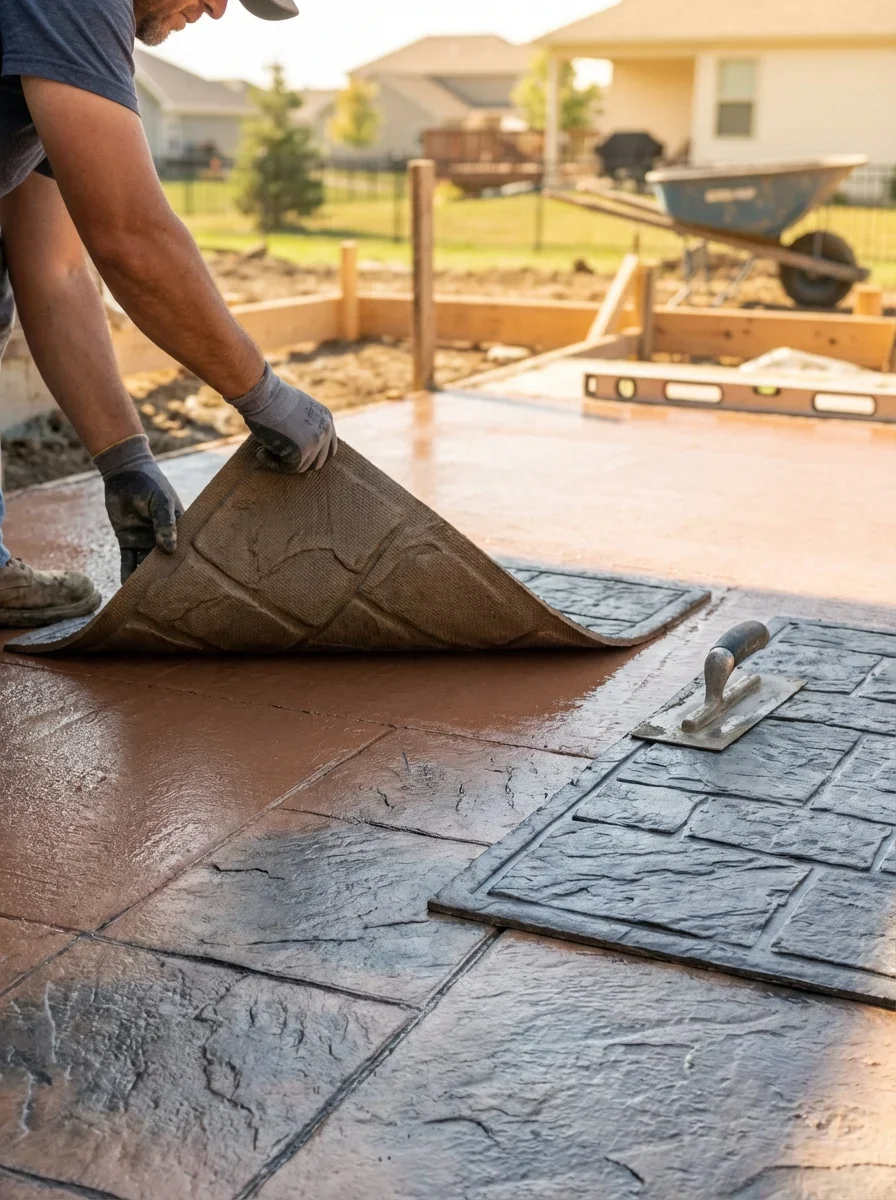
Stamped concrete typically runs $12-18 per square foot, adding 50-80% to your base concrete cost for the decorative process. This premium covers the color hardener or integral color, release agent, stamping labor, and initial sealing. Contractors need to work quickly during a narrow window while concrete is still plastic but firm enough to hold patterns—this timing requirement increases labor costs compared to standard finishing. The same 300-square-foot patio would cost $3,600-5,400.
Pavers represent the highest upfront investment at $15-25 per square foot for most projects. This range accounts for concrete pavers on the lower end and natural stone on the upper end, with costs driven by material selection, pattern complexity, and base preparation requirements. Paver installation is more labor-intensive than any concrete option because each unit requires individual placement and leveling. That 300-square-foot patio now costs $4,500-7,500—potentially double your standard concrete investment.
Long-Term Cost Considerations
The upfront price gap narrows when you factor in maintenance and lifespan costs. Standard concrete typically needs crack repair within 3-5 years in Fox Valley freeze-thaw conditions, with patching costing $200-400 per repair visit. Over a 20-year lifespan, budget for $800-1,600 in repair costs plus potential resurfacing at year 15-20 ($3-5 per square foot).
Stamped concrete requires professional resealing every 2-3 years at $1-2 per square foot to maintain appearance and weather resistance. For that 300-square-foot patio, you'll spend $300-600 every few years—adding $2,000-4,000 over two decades. When cracks appear (and they will), color-matched repairs run $300-600 per incident since contractors must match both the concrete and the decorative surface.
Pavers have lower ongoing maintenance costs but higher repair frequency. Budget $100-200 for re-leveling sunken sections every few years and occasional sand replacement for joints. The modular nature means damaged units get swapped individually without professional color-matching—you can keep spare pavers from installation for perfect replacements. Over 20 years, expect $1,000-2,000 in maintenance, primarily for re-sanding and occasional releveling, but virtually nothing for repairs if you maintain proper base drainage.
How Each Material Performs in Fox Valley Winters
Wisconsin's freeze-thaw cycles test every outdoor surface. When water penetrates material, freezes, expands, and thaws repeatedly, something has to give. Standard concrete typically cracks within the first few winters, especially if the contractor cut corners on base preparation or didn't include proper control joints. These cracks aren't necessarily structural failures—they're the material responding to internal pressure from frozen water. Expect surface cracks within 3-5 years and plan for them rather than being surprised.
Stamped concrete faces the same freeze-thaw pressure as standard concrete, but with an added vulnerability: the decorative surface layer can separate from the base slab (called delamination) if moisture gets trapped between layers. This happens when contractors apply color hardener to concrete that's too wet or stamp before adequate curing. Once delamination starts, sections of your decorative surface will flake away, exposing plain gray concrete underneath. Proper sealing prevents this by keeping water out, which is why contractors who understand local climate emphasize the resealing schedule.
Pavers handle freeze-thaw cycles differently because they're not monolithic. When ground movement occurs, individual pavers shift rather than crack. This flexibility is an advantage in areas with poor drainage or high water tables—conditions common in parts of the Fox Valley. However, this same flexibility means pavers can become uneven over time, creating trip hazards if the base wasn't properly compacted. The ideal paver installation includes 4-6 inches of compacted aggregate base with proper drainage consideration, not just sand over dirt as some less experienced contractors attempt.
Pro Tip: Keep 5-10 spare pavers from your installation in the garage. When one stains or cracks years later, you'll have perfectly weathered replacements that match your patio exactly—something impossible with any concrete option.
Maintenance Requirements: What You'll Need to Do
Standard concrete demands the least routine maintenance but offers the fewest repair options. You'll need to clean stains promptly (oil, rust, and organic matter penetrate porous concrete quickly) and reseal every few years if you want stain resistance. When cracks appear, you can fill them with concrete patch compound, but the repair will always be visible. Most homeowners accept the low-maintenance, low-appearance-expectation trade-off that comes with standard concrete—it's functional flooring that won't win aesthetic awards but won't demand much attention.
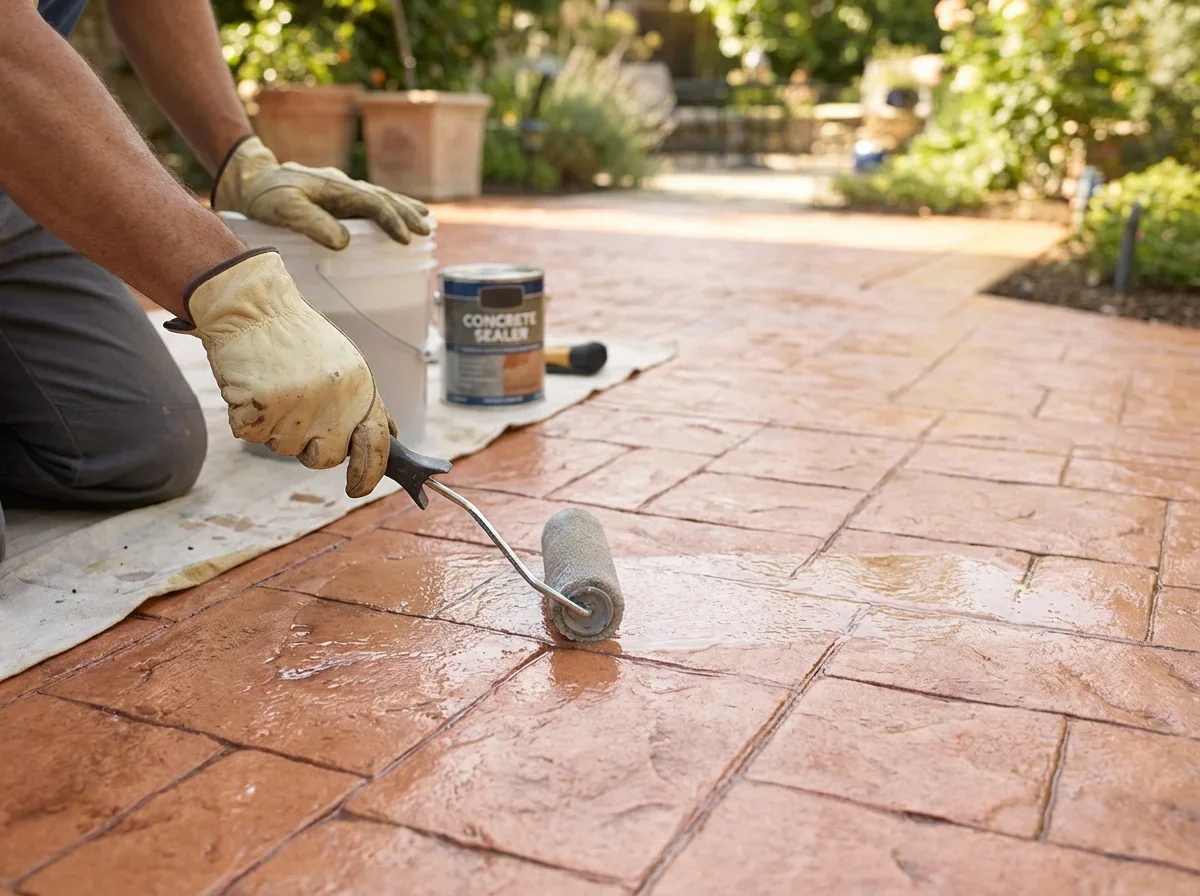
Stamped concrete requires consistent attention to maintain its appearance advantage. Seal the surface every 2-3 years using a quality concrete sealer (contractors recommend acrylic or polyurethane sealers designed for exterior use). Between sealings, wash the surface with a mild concrete cleaner and avoid harsh chemicals that can damage the decorative layer. Power washing works but requires care—too much pressure can erode color hardener or damage stamped texture. The maintenance isn't difficult, but it's mandatory if you want your stamped concrete to continue looking better than standard concrete.
Pavers need different but equally important maintenance. Sweep polymeric sand into joints every 2-3 years to prevent weed growth and maintain interlock between units. When sections settle or become uneven, lift the affected pavers, add base material, recompact, and reinstall—a DIY project if you're handy or a $200-300 contractor visit if you're not. The key advantage: when a paver stains (oil, wine, rust), you can pull that specific unit, flip it over, or replace it entirely. You can't do this with any concrete option.
When Contractors Recommend Stamped Concrete
Stamped concrete makes sense when you want decorative appeal without the highest price tag and your site conditions are favorable. "Favorable" means good drainage, stable soil, and proper base preparation—the same conditions where standard concrete performs well. If your yard already has successful concrete installations that haven't cracked extensively, stamped concrete will likely perform similarly while offering significantly better appearance.
Budget-conscious homeowners who want something beyond plain gray often land on stamped concrete as the middle-ground option. You get custom colors, patterns that mimic expensive materials (slate, flagstone, brick), and a finished look that complements landscaping—all for 40-60% less than comparable paver installations. Contractors particularly recommend stamped concrete for larger areas where paver costs become prohibitive. A 600-square-foot patio in pavers might cost $9,000-15,000, while stamped concrete delivers visual interest for $7,200-10,800.
Stamped concrete also works well when you need a uniform, relatively smooth surface for furniture placement. Unlike pavers with their inherent texture and joint lines, stamped concrete provides a flat plane where tables sit steadily and chairs don't catch on edges. For covered patios or areas under roof overhangs where weather exposure is limited, stamped concrete's maintenance requirements decrease substantially—you're getting the aesthetic benefit with fewer of the ongoing obligations.
When Pavers Are the Better Choice
Choose pavers when your site has drainage challenges, nearby tree roots, or soil that's prone to settling. The modular nature of pavers turns these problems from installation nightmares into manageable situations. When a tree root lifts a section of your patio, you lift the affected pavers, address the root issue, adjust the base, and reinstall the same pavers. Attempting this with stamped concrete means saw-cutting, removing, and replacing a section where the new concrete will never quite match the weathered existing surface.
Areas with poor drainage actually perform better with pavers than concrete because water can permeate between joints rather than pooling on the surface. Permeable paver systems take this further by using special units and base materials designed to let water flow through the entire installation. In heavy clay soils common around Fox Valley, this drainage capability prevents the freeze-thaw damage that destroys concrete installations. Contractors who understand local soil conditions will often recommend pavers for sites where concrete would require extensive—and expensive—drainage solutions.
Pavers also make sense when you're phasing a project or know future changes are likely. If you're installing a patio now but planning to add an outdoor kitchen or fire pit in two years, pavers can be lifted and reinstalled to accommodate new features without leaving obvious repair patches. This flexibility extends to utility access—if you have water lines, electrical conduit, or drainage pipes under your patio, paver installations allow future access without jackhammering concrete.
When Standard Concrete Makes the Most Sense
Standard concrete is the right choice when function matters more than form or when budget constraints are real. High-traffic areas like workshop entrances, equipment pads, or utility areas don't need decorative finishes—they need durable surfaces that handle loads and abuse without concern for appearance. A plain concrete pad costs 30-50% less than stamped alternatives and performs identically for purely functional applications.
Budget-conscious projects where appearance isn't a priority benefit from standard concrete's efficiency. If you're installing a patio primarily for furniture placement and outdoor dining rather than visual appeal, spending an extra $2,000-4,000 for decorative finishing may not align with how you'll actually use the space. Standard concrete can receive basic color treatments (integral color or acid staining) for a few dollars more per square foot if you want something beyond contractor-gray without full stamped concrete costs.
Standard concrete also makes sense when you plan to cover the surface with rugs, outdoor carpeting, or other materials. Some homeowners install basic concrete as a foundation and add decorative elements seasonally or as budget allows. This approach front-loads structural costs while deferring aesthetic investments, giving you a functional space immediately with upgrade options later.
Annual Maintenance Checklist by Material:
- Standard Concrete: Clean stains immediately, reseal every 3-4 years ($150-300), fill cracks as they appear ($200-400/visit)
- Stamped Concrete: Wash with mild cleaner, reseal every 2-3 years ($300-600), avoid harsh chemicals and high-pressure washing
- Pavers: Sweep joints clean, replace polymeric sand every 2-3 years ($100-200), re-level sunken sections as needed ($200-300)
Questions to Ask Contractors About Material Selection
Start with site-specific questions that reveal whether a contractor truly understands your property: "Based on my soil conditions and drainage, which material do you recommend and why?" Experienced contractors will reference site observations rather than giving generic answers. They should discuss slope, soil type, existing drainage patterns, and how these factors affect each material option. If they push one material without acknowledging site-specific considerations, keep looking.
Ask about installation timeline differences: "How long will installation take for each option, and what determines the schedule?" Standard concrete typically goes in faster—excavate, build forms, pour, finish, cure. Stamped concrete adds 2-4 hours of stamping work while concrete is at the right consistency. Pavers require more labor time for base preparation and individual unit placement. Understanding these timelines helps you plan around weather windows and contractor availability.
Get specific about maintenance: "What will I need to do annually to maintain each option, and what happens if I don't?" This question separates contractors who understand long-term performance from those focused only on installation. Quality contractors will explain sealing schedules for concrete options, joint sand maintenance for pavers, and realistic expectations for repair frequency. They should provide maintenance cost estimates—contractors who can't or won't discuss long-term costs probably don't track their past installations.
Ask about their experience with each material in Fox Valley conditions specifically: "How have each of these materials performed in installations you completed 5-10 years ago in this area?" Contractors with long-term local experience can reference specific projects and whether they're holding up, what issues arose, and how site conditions affected performance. This historical perspective is invaluable—it's the difference between theoretical knowledge and practical experience with local freeze-thaw cycles.
Find Contractors Who Offer Multiple Patio Options
The best material guidance comes from contractors who install all three options competently and don't have financial incentives to push one over others. Specialists who only install pavers will recommend pavers regardless of whether they're optimal for your situation. Concrete contractors who haven't invested in stamping equipment and training will steer you toward standard concrete. Look for established contractors with portfolios showing successful installations of multiple materials—they can provide objective comparisons based on your specific needs.
During initial consultations, evaluate whether contractors are listening to your priorities or reciting sales pitches. Quality contractors ask questions before making recommendations: What's your budget range? How do you plan to use the space? What's your timeline? Do you have drainage concerns? Are you willing to perform regular maintenance? Your answers should influence their material recommendation—if they're suggesting the same solution to every homeowner, they're not truly customizing their advice.
Check whether contractors offer material warranties and stand behind their work long-term. Standard concrete should come with at least a one-year warranty against defects. Stamped concrete warranties often cover delamination issues for 2-3 years if properly maintained. Paver installations should include warranties on both materials and installation—reputable contractors warranty their base preparation and will address settling issues within the first few years. These warranties indicate contractor confidence in their work and provide recourse if problems develop.