What Is Stamped Concrete and How Do Contractors Install It?
Stamped concrete uses rigid mats or flexible stamps to press patterns and textures into freshly poured concrete before it fully hardens. The result mimics natural stone, brick, tile, or wood — delivering the aesthetic of premium materials at a fraction of the cost and maintenance.
The installation follows the same initial steps as any concrete pour: site excavation, gravel base, reinforcement (rebar or wire mesh), and the concrete pour itself. What changes is what happens immediately after the pour.
Once the concrete reaches the right consistency — firm enough to hold an impression but soft enough to accept the stamp — contractors apply color hardeners, press pattern mats into the surface, then apply release agents and sealers. Timing is everything. Wait too long and the stamps won't leave a clean impression. Rush it and the concrete is too soft, causing the pattern to sink or blur.
The Stamping Process and Timing Requirements
After the concrete is poured and leveled, contractors broadcast a color hardener across the surface. This powder-based pigment integrates into the top layer of concrete, providing the base color and increasing surface durability. The hardener gets worked in with hand floats or power trowels.
Next comes the release agent — a powder or liquid that prevents stamps from sticking to the concrete. Release agents also create subtle color variations that enhance the natural stone look.
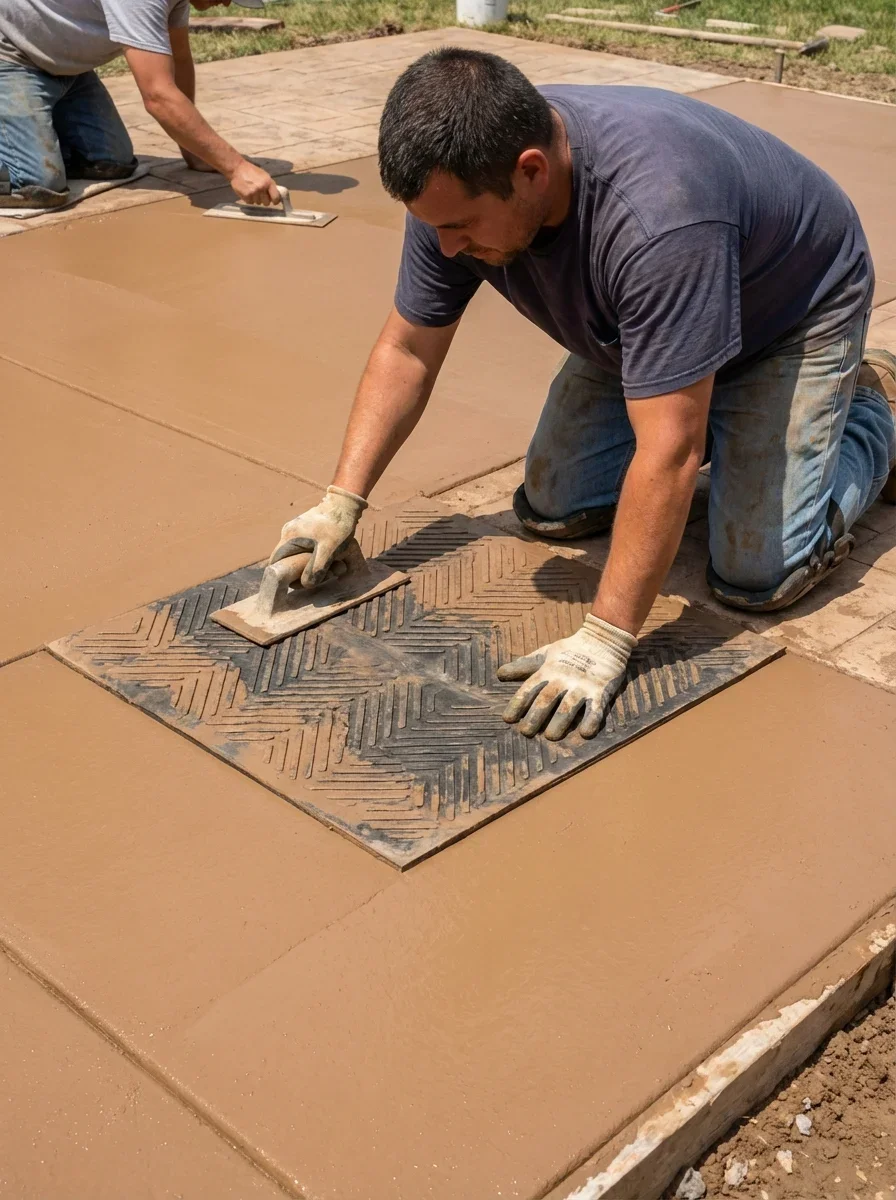
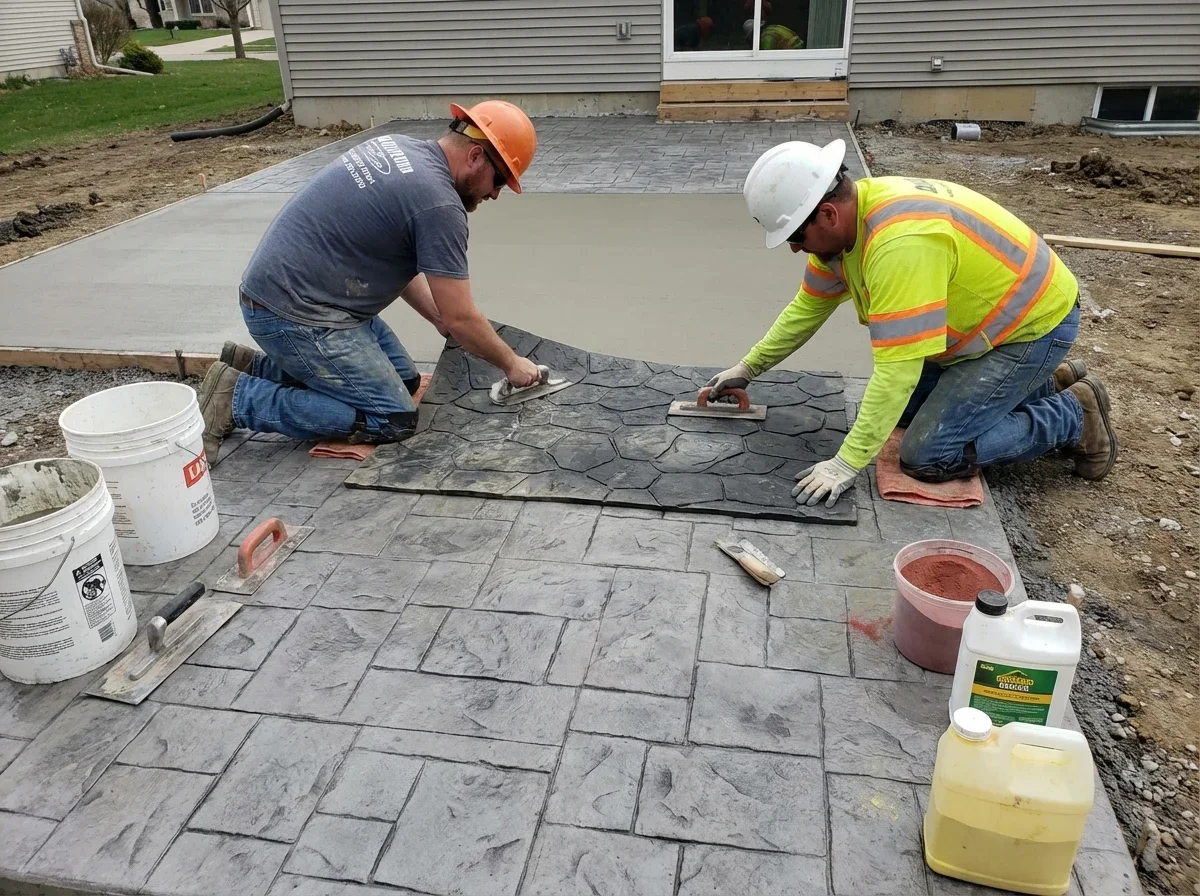
Once applied, contractors press rigid or flexible stamp mats into the surface, working methodically to align patterns and avoid repetition that looks obviously artificial. The concrete needs to be firm enough to support a person's weight without leaving deep footprints, but soft enough to accept a deep, crisp impression.
Most contractors have a 30–60 minute window after the pour to complete all stamping.
Weather, concrete mix design, and ambient temperature all affect this window. That's why stamped work requires crew coordination and experience that standard pours don't.
Color Systems and Release Agents
Contractors use two coloring methods: integral color (mixed into the wet concrete before pouring) and color hardeners (broadcast on the surface after pouring). Integral color provides uniform color throughout the slab, so any chips or wear won't expose gray concrete underneath. Color hardeners deliver more vibrant, varied tones and strengthen the surface, but they only penetrate the top layer.
Most quality stamped work uses both — integral color as a base and hardeners for depth and contrast.
Release agents add a third color layer. Powder releases create antiquing effects with darker accent tones settling into stamp grooves and texture lines. Liquid releases provide more uniform color but less visual depth.
The color combination you choose affects both appearance and cost. Single-color systems are straightforward but can look flat. Multi-tone systems with contrasting release agents create realistic stone effects but require more material and labor precision.
| Color Method | Application Timing | Visual Effect | Durability Benefit |
|---|---|---|---|
| Integral Color | Mixed before pour | Uniform throughout slab | Chips won't show gray concrete |
| Color Hardener | Broadcast after pour | Vibrant surface tones | Strengthens top layer |
| Powder Release | Applied before stamping | Antiquing with contrast | Prevents stamp adhesion |
| Liquid Release | Applied before stamping | Uniform color layer | Cleaner stamp separation |
Popular Stamped Concrete Patterns and Textures
Ashlar slate is the most requested pattern — rectangular stones in random sizes that mimic natural slate or cut flagstone. It works for patios, walkways, and pool decks because the pattern looks organic without being overly busy. Contractors can align grout lines to match home architecture or run patterns diagonally for visual interest.
Cobblestone patterns recreate old European streets with rounded, irregular stones. They're popular for driveways and front entries where you want a classic, established look.
The pattern requires careful stamp alignment to avoid obvious seams. That's why it typically costs more than simpler designs.
Wood plank stamps replicate hardwood decking or barn wood, complete with grain texture and knot details. You see this pattern on covered patios and porches where the stamped concrete stays dry enough to maintain the wood illusion. It's a fraction of the cost of real wood and eliminates rot, splinters, and annual staining.
Random stone patterns (fieldstone, limestone, sandstone) mimic natural stone without defined shapes. These work well for pool surrounds and outdoor living areas because they hide dirt and wear better than geometric patterns. The randomness also makes it easier for contractors to work around curved edges or irregular spaces without the pattern looking forced.
Why Stamped Concrete Requires Specialized Contractors
Stamping demands skills and equipment that standard concrete work doesn't. Contractors need a full set of pattern mats (which can cost thousands of dollars per set), color hardener application tools, and the crew coordination to complete all stamping before the concrete sets.
You can't pause halfway through or come back the next day to fix mistakes.
Pattern alignment separates mediocre work from quality installations. Stamps need to overlap slightly without creating obvious seams, and contractors have to plan ahead for edges, corners, and obstacles like drains or light posts. Poor alignment creates repetitive patterns that look manufactured or seams that crack because the concrete wasn't properly consolidated underneath.
Color consistency is the other skill barrier. Broadcast color hardeners by hand and you risk streaks or blotches where coverage was uneven. Apply release agents inconsistently and you get dark splotches instead of subtle antiquing.
Experienced stamped concrete contractors know how to adjust application rates based on concrete moisture, air temperature, and humidity — variables that change throughout the workday. Even the best stamping can fail if the base concrete work is substandard.
Inadequate site prep, poor compaction, or skipped control joints lead to cracks that telegraph through the decorative surface. Quality stamped contractors don't just specialize in the stamping itself — they also understand structural concrete fundamentals that prevent the failures DIY attempts or general contractors often miss.
Pro Tip: The 30-60 minute stamping window means weather delays can ruin an entire pour. Professional contractors monitor forecasts closely and won't start a stamped project if rain or temperature drops are expected mid-day — even if it means rescheduling your project.
What Does Stamped Concrete Cost?
Stamped concrete typically runs $12–18 per square foot installed, compared to $8–12 for standard flatwork.[2] The premium covers specialized materials (color hardeners, release agents, sealers), pattern mats, and the additional labor time stamping requires.
A 12×12 foot stamped patio costs around $1,730 on average, though prices vary based on site conditions and pattern complexity.[2] Larger projects bring per-square-foot costs down because setup time and equipment mobilization spread across more area.
Smaller projects — walkways under 100 square feet, for example — often carry higher per-square-foot rates. That pricing assumes basic site prep on level ground. Add excavation, base material, or grade corrections and costs increase. Demolition and removal of existing concrete or asphalt adds $2–4 per square foot before the new pour even starts.
Cost by Pattern Complexity and Color Options
Simple patterns like ashlar slate or basic stone fall toward the lower end of the cost range. These use repeating mats that contractors can apply quickly without extensive customization.
Random stone and cobblestone patterns take more time to align properly, adding $1–2 per square foot. Wood plank and custom patterns cost the most because they require precise alignment and more deliberate stamp placement to maintain the illusion.
Borders, inlays, or pattern transitions (where two different stamps meet) also increase labor time and material costs. Multi-color systems with contrasting base colors, hardeners, and release agents add $2–3 per square foot over single-color installs. You're paying for additional materials and the skill to blend colors naturally.
Integral color throughout the slab adds another $0.50–1.00 per square foot but prevents gray concrete from showing through if the surface gets chipped or worn.
Stamped Concrete Cost Breakdown:
- Basic stamped surface: $12–18 per square foot
- Standard concrete (comparison): $8–12 per square foot
- 12×12 patio average: $1,730 installed
- Pattern complexity premium: +$1–2 per square foot
- Multi-color systems: +$2–3 per square foot
- Integral color upgrade: +$0.50–1.00 per square foot
- Demolition/removal: +$2–4 per square foot
- Resealing maintenance: Every 3–4 years
Stamped Concrete in Fox Valley: Climate Considerations
Wisconsin's freeze-thaw cycles are stamped concrete's biggest long-term threat. Water infiltrates surface pores, freezes, expands, and eventually spalls (flakes off) the decorative layer if the concrete isn't properly sealed.
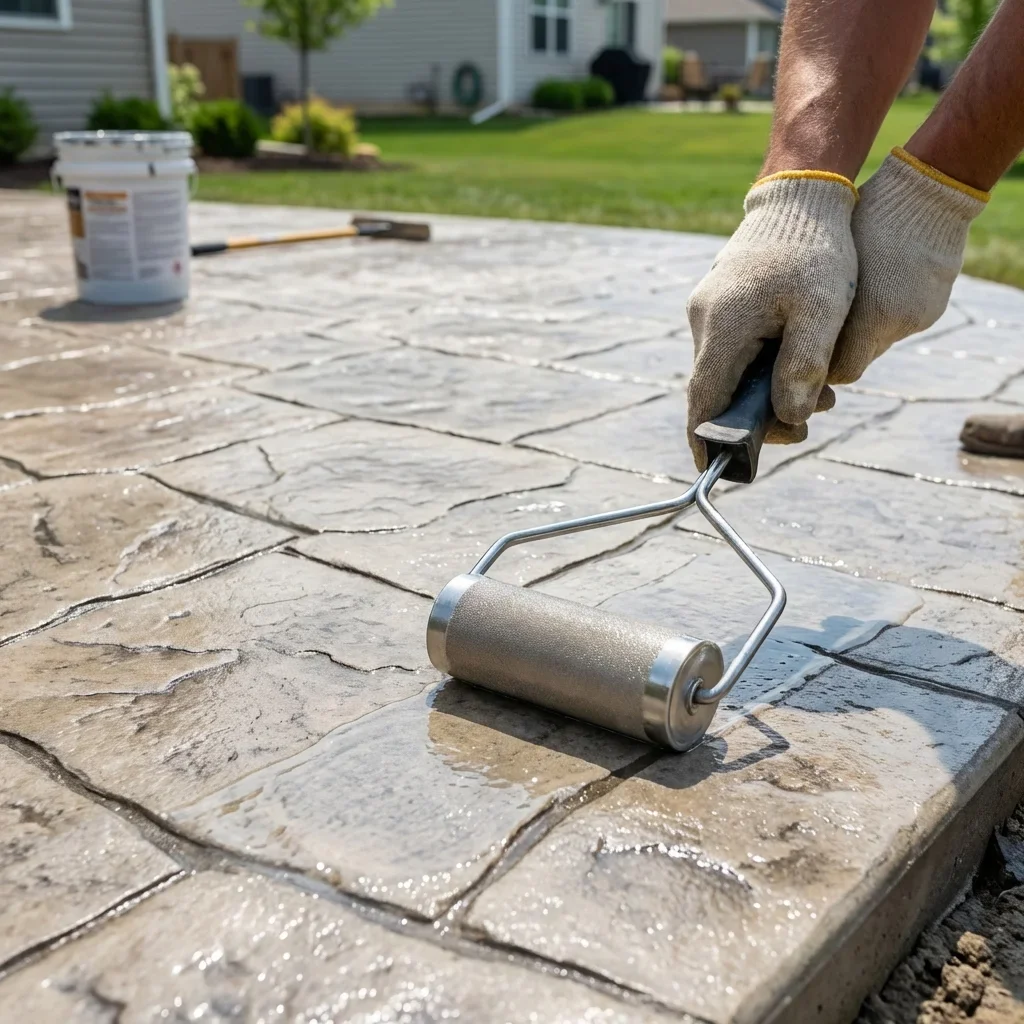
Professional installations use penetrating sealers that protect against moisture intrusion without creating a slippery film — critical for pool decks and walkways.
Quality contractors in the Fox Valley apply sealers 28 days after installation, once the concrete has fully cured. Resealing every 3–4 years maintains protection and refreshes the surface sheen.[2]
Skip resealing and you'll see color fade, surface dusting, and eventually spalling that exposes aggregate underneath. Snow removal is gentler on stamped concrete than on pavers because there are no individual units to shift or sink. But deicing salts are harsh on decorative surfaces.
Rock salt accelerates surface deterioration and leaves white residue in texture lines. Contractors who work regularly in cold climates recommend calcium chloride or magnesium chloride deicers, which are less corrosive but still effective below 20°F.
Site drainage matters more for stamped concrete than you'd think. Standing water accelerates sealer breakdown and increases freeze-thaw damage. Quality contractors slope stamped surfaces at least 1/8 inch per foot away from structures and install control joints every 8–10 feet to manage cracking from seasonal ground movement.
How to Find a Qualified Stamped Concrete Contractor
Start by asking to see a physical portfolio of completed projects, not just website photos. Contractors who specialize in stamped work will have dozens of projects to show and should be able to walk you through pattern choices, color systems, and how they handled site-specific challenges.
If they can't produce recent local work or hesitate to provide references, that's a red flag.
Ask about their stamping process specifically. Quality contractors will explain their color hardener application method, how they manage timing with crew coordination, and what sealers they use. Vague answers or claims that "all stamped concrete is pretty much the same" indicate limited experience with the nuances that separate durable installations from early failures.
Verify they use proper reinforcement and base preparation. Stamped concrete needs the same structural foundation as any other concrete work — compacted aggregate base, rebar or wire mesh, and control joints.
Contractors focused only on the decorative finish sometimes skimp on the structural elements. That leads to cracking that ruins the appearance within a few years.
Check if they offer or recommend a maintenance plan. Stamped concrete requires periodic resealing, and contractors familiar with Wisconsin's climate should explain when and how to maintain the surface. If they claim stamped concrete is "completely maintenance-free," they're either inexperienced or not being honest about long-term care requirements.
Get multiple quotes and compare what's included. The lowest bid often cuts corners on base prep, uses cheaper sealers, or skips integral color.
Mid-range quotes from contractors with strong local portfolios and clear explanations of their process typically deliver the best value. The highest bids sometimes reflect premium services, but not always — make sure you're paying for quality work, not just higher overhead.
Connect with Stamped Concrete Specialists Near You
Stamped concrete done right delivers decades of durability with minimal maintenance — 40+ years is realistic when properly installed and sealed.[2]
But that longevity depends entirely on contractor expertise during the narrow window when the concrete accepts the stamp. You need contractors who've mastered the timing, understand Wisconsin's climate demands, and have the portfolio to prove they consistently deliver clean patterns and lasting color.
Whether you're replacing an old patio, adding a decorative driveway, or creating a pool surround that mimics natural stone, the right contractor makes stamped concrete a long-term investment rather than a repair project waiting to happen.