What Is Considered a Small Concrete Job?
A small concrete job typically involves under 500 square feet of pour area, requires minimal heavy equipment, and can often be completed in a single day.[1] These projects don't need massive crews or specialized machinery—a small truck, a wheelbarrow, hand tools, and one or two experienced workers usually get the job done.
The defining characteristic isn't just size. It's scope.
Small jobs involve straightforward pours without complex forming, extensive excavation, or multi-stage work. If a contractor can show up in the morning, pour by noon, and finish by late afternoon, you're probably in small-job territory.
Common Small Job Projects
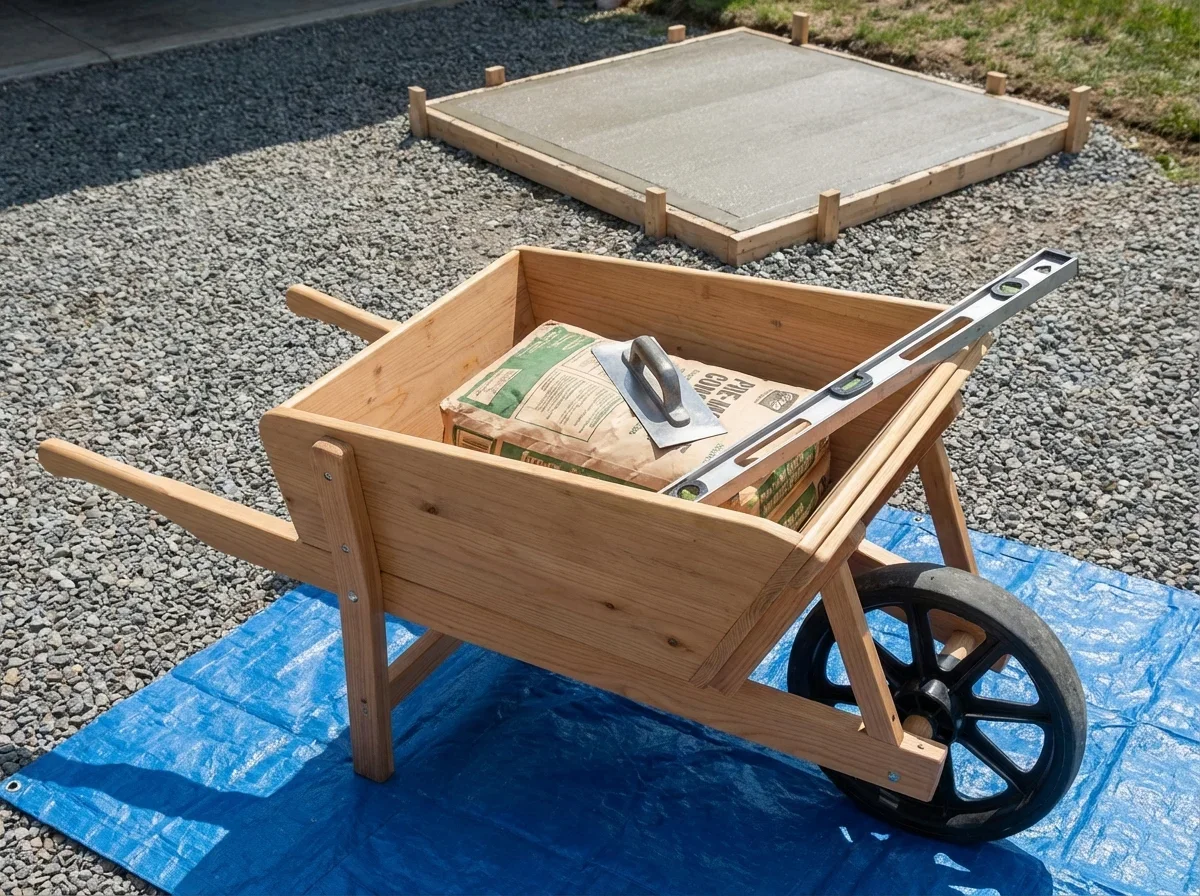
Shed pads and equipment pads are classic small jobs—typically 8x10 or 10x12 slabs poured on a gravel base. Front or back steps (three to five risers) fall into this category, as do short walkways connecting a driveway to a side door or backyard gate. Small patios under 200 square feet, concrete aprons at garage entrances, and RV parking pads also qualify.
Repair work represents another major segment: patching cracked driveways, replacing a single damaged sidewalk section, or resurfacing a small deteriorated slab. Many small-job contractors build their schedules around these quick repairs between larger projects.
Square Footage and Scope Guidelines
Most contractors consider anything under 300 square feet a small job, with 300-500 square feet falling into a gray zone depending on complexity. A 400-square-foot patio with simple forming might still count as small, while a 250-square-foot decorative patio with stamped patterns and borders might not.
Thickness and reinforcement matter less for classification than total area and logistics.
A 6-inch-thick shed pad is still a small job if it's 100 square feet. A 4-inch walkway stretching 60 feet with multiple access challenges might feel larger to a contractor than the square footage suggests.
Quick Reference: Small Job Criteria
- Size threshold: Under 300-500 square feet
- Completion time: Single day or less
- Crew size: 1-2 workers typically sufficient
- Equipment needs: Minimal—small truck, wheelbarrow, hand tools
- Complexity level: Straightforward pours without multi-stage work
- Common minimum charge: $500-$1,500 regardless of square footage
Why Use a Small Job Specialist Instead of a General Contractor?
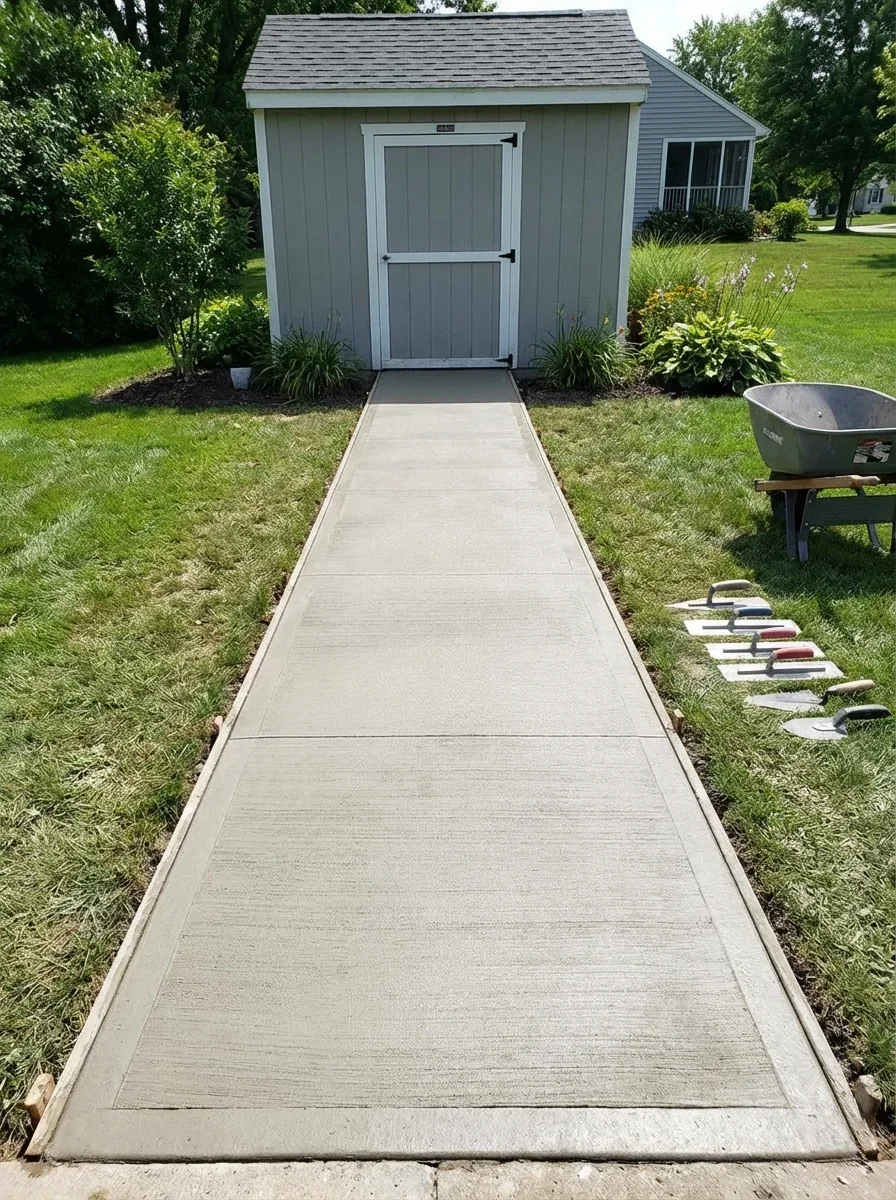
Small-job specialists operate with lower overhead. They often run one- or two-person crews, own modest equipment, and don't maintain large yards full of machinery. This lean structure lets them profit on projects that larger contractors can't justify scheduling.
You'll also get faster scheduling.
Big concrete companies juggle commercial jobs, subdivision work, and major residential projects—your shed pad might wait weeks for an opening. Small-job contractors often have gaps between bigger work or intentionally structure their business around quick turnarounds. Many can start within days, not weeks.
The attention to detail tends to be higher, too. When a contractor or small crew handles your entire project—forming, pouring, finishing—they're accountable for every aspect. There's no finger-pointing between subteams. Homeowners report that contractors who enjoy small residential projects, like walkways and patios, often deliver meticulous work because their reputation depends on neighborhood referrals.
What Do Small Concrete Jobs Cost?
Expect to pay $500 to $1,500 as a minimum for most small concrete jobs, even if the actual square footage would calculate lower. Typical per-square-foot rates for small jobs run $6 to $14, depending on site prep, access, and thickness—noticeably higher than the $4 to $8 you'd pay per square foot on a large driveway.
Repairs follow different math.
Patching cracks or replacing a small sidewalk section often costs $0.10 to $0.15 per linear foot for sealing, or $600 to $1,400 for resurfacing a 100-square-foot driveway section. Trip fees occasionally apply if you're outside a contractor's core service area, typically $75 to $150.
Why Per-Square-Foot Rates Are Higher
The cost to mobilize a crew and equipment is nearly the same whether you're pouring 100 square feet or 1,000. The truck still has to arrive. The mixer still gets loaded. The crew still spends time setting up forms and cleaning tools afterward.
Material waste also factors in. Concrete trucks have minimum loads, often a full cubic yard. If your shed pad needs half a yard, you're paying for concrete that gets dumped back at the plant or used as fill. Small-batch trucks mitigate this but cost more per yard.
Labor doesn't scale down proportionally, either.
Finishing a small slab takes nearly as much skill and time per square foot as finishing a large one—you're still screeding, floating, edging, and jointing. The setup and breakdown time represents a higher percentage of total labor on small jobs.
Typical Price Ranges by Project Type
A 10x10 shed pad typically runs $600 to $1,200, including excavation, gravel base, and 4-inch pour. Front steps with three to five risers cost $800 to $2,000 depending on width and whether you need railings embedded. A 4-foot-wide, 20-foot-long walkway usually falls between $500 and $1,000.
Small patio slabs under 200 square feet range from $1,200 to $2,800 for basic broom-finish concrete. Stamped or colored concrete adds $3 to $8 per square foot.
Repairs vary widely: $200 to $600 for crack sealing and patching on a 50-square-foot section, $800 to $1,500 for removing and replacing a badly damaged sidewalk panel.
Removal of old concrete adds $1 to $6 per square foot if the contractor handles it. Some homeowners save money by breaking up and hauling away old concrete themselves before the pour, though contractors still charge for base prep.
| Project Type | Typical Size | Price Range | Timeline |
|---|---|---|---|
| Shed/Equipment Pad | 10x10 ft (100 sq ft) | $600–$1,200 | 1 day |
| Front Steps | 3-5 risers | $800–$2,000 | 1 day |
| Walkway | 4 ft wide × 20 ft long | $500–$1,000 | 1 day |
| Small Patio (basic) | Under 200 sq ft | $1,200–$2,800 | 1-2 days |
What to Look for in a Small Job Concrete Contractor
The fact that your project is small doesn't mean you should accept lower standards. Concrete is structural work, not cosmetic repair. Contractors must follow proper mix design and curing standards regardless of project size, ensuring durability and safety.[1]
Licensing and Insurance Still Matter
Verify your contractor holds proper state and local licensing before signing anything. Many municipalities require separate permits even for small slabs or walkways.
Insurance is non-negotiable.
General liability protects you if the work damages your property, and workers' compensation covers injuries on your site.[2]
Unlicensed handymen sometimes offer to pour small slabs cheaply. The liability risk isn't worth the savings. If the concrete fails—cracks, settles, or doesn't bond properly—you have no recourse. If someone gets hurt, your homeowner's insurance may not cover it.
The Federal Trade Commission explicitly warns against hiring contractors who won't provide proof of licensing and insurance, particularly for structural work like concrete.[3] This applies whether you're pouring a 50-square-foot step or a 500-square-foot patio.
Questions to Ask About Minimums and Scheduling
Ask upfront about minimum project charges. Some contractors set minimums at $1,000 or $1,500, which means your $600 shed pad suddenly costs more. Others have no minimums but factor trip fees into small jobs. Clarify this before getting an estimate.
Request a written estimate that breaks out labor, materials, site prep, and any additional charges.
Verbal agreements lead to disputes, especially around "extras" like additional gravel, thicker pours, or extra finishing work. A written estimate protects both parties.
Ask about the crew size and timeline. Will the same person who writes the estimate supervise the pour? How much notice do they need to schedule? What happens if weather delays the job? Contractors who primarily handle small jobs usually have clear answers because they've refined their process around quick turnarounds.
Verify what base material they'll use (gravel or crushed stone), the concrete thickness they recommend (4 inches is standard for light-duty slabs, 5-6 inches for vehicle traffic), and whether they'll include rebar or wire mesh for reinforcement. Small jobs still require proper subbase and reinforcement to prevent cracking.
Request photos of similar completed projects and a couple of references.
A contractor who's proud of their small-job work will happily show you finished walkways, shed pads, or steps. If they hesitate or only show you large projects, they may not focus on smaller work.
Pro Tip: Always get written estimates from at least two contractors and compare not just price, but also timeline, warranty terms, and what's included in the base price. The lowest bid may exclude critical items like proper base preparation or reinforcement—items that ensure your concrete lasts decades, not years.
When to Hire a Handyman vs. Licensed Concrete Contractor
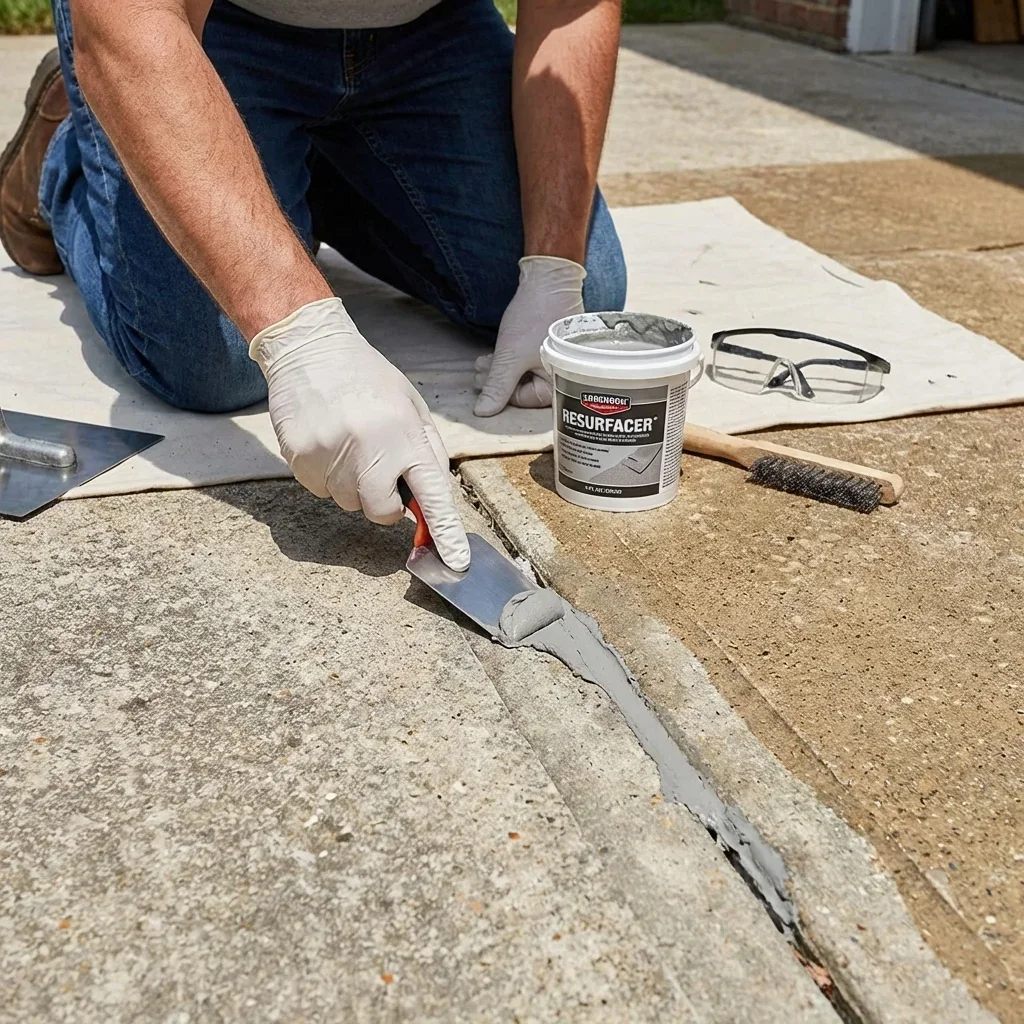
Handymen can handle cosmetic concrete repairs: sealing small cracks, applying resurfacer to worn slabs, or patching minor spalling. These are maintenance tasks, not structural work. If the repair doesn't involve pouring new concrete or cutting into existing slabs, a skilled handyman might suffice.
Anything involving new pours, structural repairs, or load-bearing surfaces requires a licensed concrete contractor.
Replacing a cracked walkway section, pouring a new shed pad, or rebuilding deteriorated steps all fall into this category. The liability differences are significant—if a handyman's work fails and causes injury or property damage, your insurance coverage may be limited or nonexistent.
When in doubt, hire the licensed contractor. The cost difference on a small job may only be $200 to $400, and the assurance is worth it. Concrete work done wrong doesn't just look bad—it can create safety hazards or require expensive removal and replacement within a few years.
Find Small Job Concrete Contractors in Fox Valley
Contractors who explicitly welcome small residential projects—shed pads, walkways, steps, and repairs—are working throughout Fox Valley. Many have built their businesses around neighborhood work, offering free estimates and flexible scheduling that larger companies can't match.
Look for contractors with specific experience in the type of project you need. A contractor who regularly pours shed pads understands proper base prep and drainage for small slabs. One who specializes in decorative walkways knows how to form curves and integrate borders efficiently.
Verify their licensing, request proof of insurance, and get written estimates from at least two contractors.
Compare not just price but also timeline, warranty terms, and responsiveness. The best small-job contractors return calls promptly, show up on time for estimates, and communicate clearly about what your project needs.
Your small concrete project deserves the same professionalism as a large one—just with a contractor whose business model is built for it.
- Portland Cement Association. "Concrete Construction Best Practices." https://www.cement.org/docs/default-source/fc_concrete_technology/is236-best-practices-for-concrete-construction.pdf. Accessed February 09, 2026.
- American Concrete Institute (ACI). "Guide to Residential Concrete Construction." https://www.concrete.org/publications/technicaldocuments?categoryid=47. Accessed February 09, 2026.
- Federal Trade Commission (FTC). "Hiring a Contractor: What to Know Before You Buy." https://www.consumer.ftc.gov/articles/hiring-contractor-what-know-you-buy. Accessed February 09, 2026.