Enhanced Content with Engagement Widgets
What Does Professional Retaining Wall Installation Require?
Professional retaining wall construction involves coordinated engineering, drainage planning, and structural execution. You're not just building upward—you're managing soil pressure, water movement, and frost heave in a region where clay soils expand and contract with moisture changes. Contractors must calculate footing dimensions based on wall height and soil bearing capacity, design drainage systems that prevent hydrostatic pressure buildup, and follow code requirements that vary by municipality.
In Wisconsin, the engineering threshold starts at relatively modest heights. Walls exceeding four feet of exposed vertical surface typically require detailed plans stamped by a civil engineer licensed in the state[1]. Some jurisdictions set even stricter limits—walls over 48 inches may need professional engineering unless they follow manufacturer specifications exactly, and walls exceeding seven feet can require a structural engineer on site during construction[2]. This isn't bureaucratic excess—it's recognition that retaining walls are structural elements where failure means property damage, erosion, and expensive repairs.
Engineering and Structural Requirements
Engineering calculations determine whether your wall will stand or collapse. A civil engineer analyzes soil type, slope angle, surcharge loads (like driveways or structures above the wall), and seismic factors to design appropriate footing dimensions and reinforcement. For highway projects, WisDOT requires iterative collaboration between regional teams, structural designers, and geotechnical engineers, with all design and shop drawings approved by the Bureau of Structures before construction begins[3]. While residential projects operate under different oversight, the principle remains: engineered walls account for forces that aren't visible until something fails.
Footing depth and width scale with wall height. A general rule places footings at least as deep as the wall is tall, with width equal to half to two-thirds the height. In Fox Valley clay soils prone to frost heave, footings must extend below the frost line—typically 48-60 inches in Wisconsin—to prevent seasonal movement. Contractors who skip engineering for walls approaching code thresholds gamble with your investment. You want someone who brings an engineer into the conversation early, not someone who treats four-foot walls as "close enough" to avoid permit requirements.
Drainage Systems Contractors Must Install
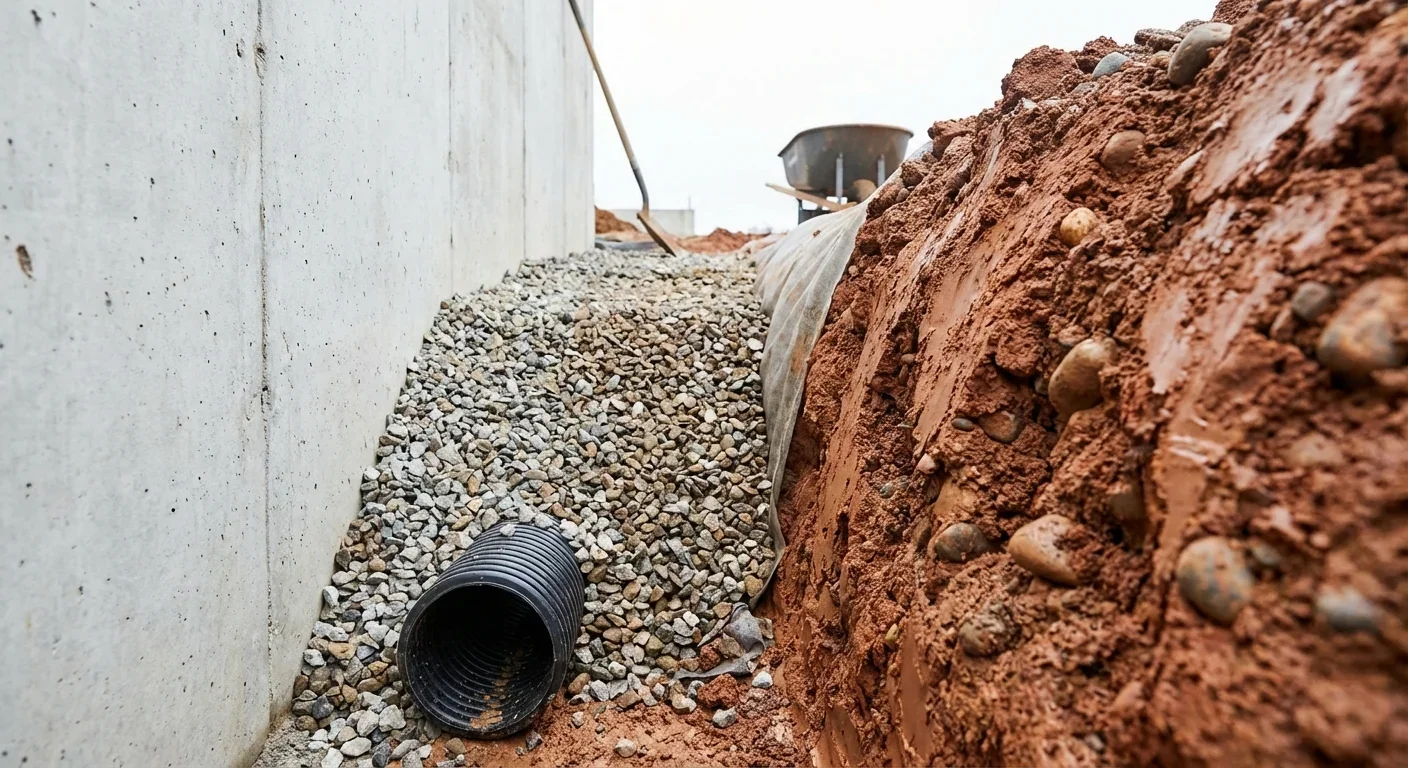
Water is the enemy of every retaining wall. Without proper drainage, hydrostatic pressure builds behind the wall, adding thousands of pounds of lateral force the structure wasn't designed to handle. Professional contractors install layered drainage systems that move water away before pressure accumulates: weep holes spaced every 4-6 feet at the base, gravel backfill that creates a drainage zone, and perforated pipe (French drains) that channels water to daylight or storm drains.
The backfill material matters as much as the wall itself. Crushed stone or gravel allows water to percolate downward instead of pooling behind concrete. Filter fabric separates this drainage layer from native soil, preventing fine particles from clogging the system over time. Contractors who backfill with clay or don't include drainage pipes create time bombs—walls that look fine initially but bow, crack, or lean after a few heavy rain events. Homeowners who've worked with experienced concrete contractors emphasize choosing pros with warranties and documented structural expertise, recognizing that proper installation prevents the water damage and erosion issues that plague poorly built walls.
Essential Drainage Components Every Retaining Wall Needs:
- Weep holes — Spaced every 4-6 feet at wall base to release water pressure
- Gravel backfill — 12-18 inches of crushed stone behind wall for drainage zone
- Filter fabric — Separates drainage layer from soil to prevent clogging
- Perforated pipe — French drain at footing level channels water away
- Proper outlet — Drainage must daylight or connect to storm system
- No clay backfill — Native clay traps water; only use free-draining materials
Types of Concrete Retaining Walls
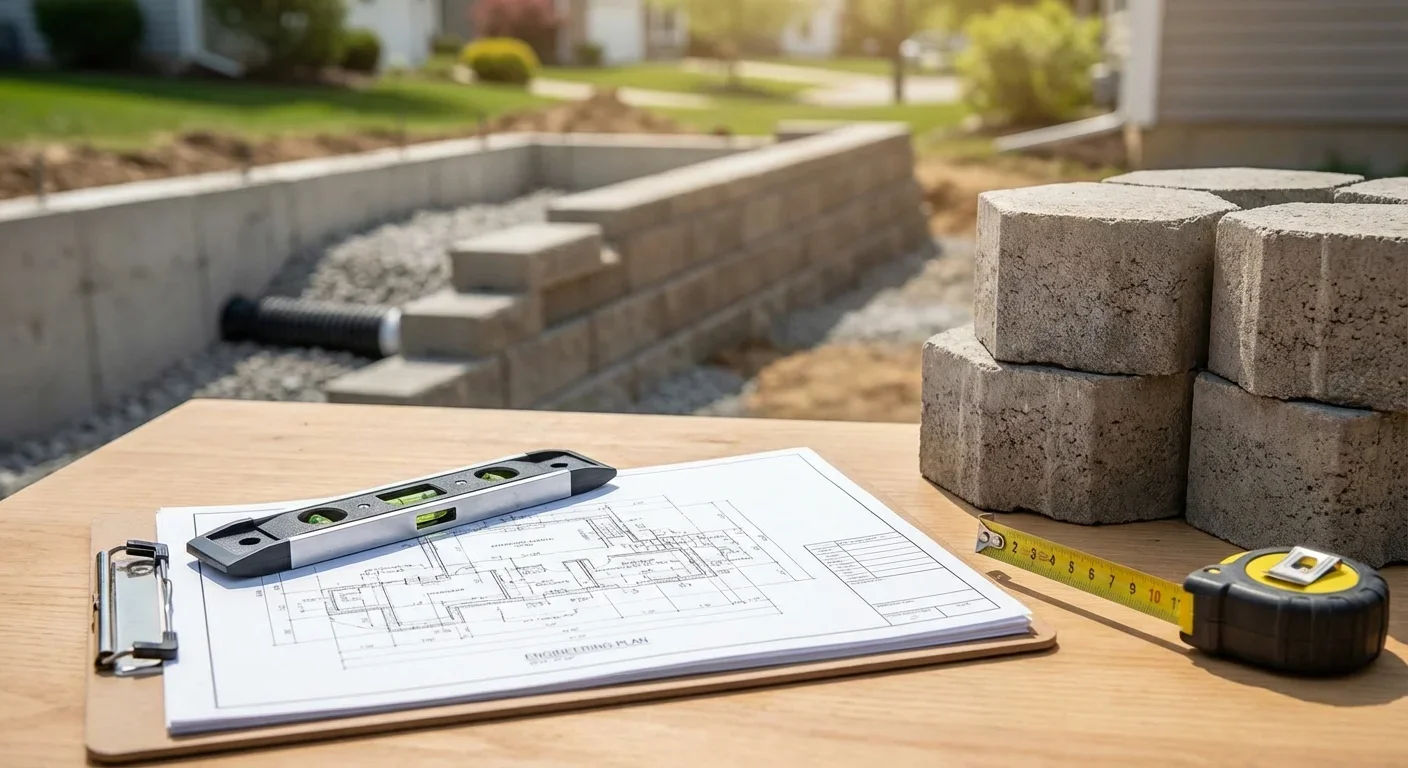
Concrete retaining walls fall into three main categories, each with distinct installation methods, cost profiles, and structural characteristics. Your choice depends on wall height, site access, aesthetic preferences, and whether you need custom engineering or can work within standardized systems. Understanding these differences helps you communicate with contractors and recognize when a proposal matches (or misses) your project's structural demands.
Poured Concrete Walls
Poured-in-place concrete walls offer maximum strength and design flexibility. Contractors build formwork, place rebar reinforcement according to engineering specifications, and pour concrete in a continuous monolithic structure. This method excels for tall walls (over six feet), complex curves, or situations where you need custom dimensions. The result is a solid, reinforced wall without joints or seams—critical when retaining significant soil loads.
The tradeoffs involve labor and time. Formwork construction adds days to the schedule and requires skilled carpentry. Concrete must cure properly (typically 7-14 days before backfilling), and you're paying for the contractor's expertise in forming, rebar placement, and finishing. Costs run $40-65 per square foot for poured walls, but you're getting a structure engineered for your specific site conditions. Access matters—if equipment can't reach the wall location, forming and pouring become significantly more challenging.
Concrete Block Systems
Concrete block retaining walls (often called segmental retaining walls or SRWs) use interlocking modular units that stack without mortar. Manufacturers engineer these systems with specific setback angles and connection methods, providing load tables and installation guides that contractors follow. Blocks come in various faces—split-face stone texture, smooth modern finishes, or tumbled looks—giving you aesthetic options while maintaining structural integrity.
These systems work well for walls up to four feet (sometimes six with geogrid reinforcement). Installation moves faster than poured concrete since you're not waiting for curing, and blocks handle curves more easily than poured walls. Costs range from $25-45 per square foot depending on block quality and wall height. The key is following manufacturer specifications exactly—block walls derive their engineering approval from documented installation methods. Contractors who improvise setbacks or skip recommended drainage practices void those engineering certifications, leaving you with an unapproved structure.
Geogrid reinforcement extends the capability of block walls. Contractors embed horizontal layers of geotextile fabric into the wall, extending back into the soil mass behind it. This creates a reinforced soil zone that shares the load, allowing block systems to safely retain taller walls. Engineered geogrid installations can handle walls up to 12 feet or more, though at that height you're approaching the cost and complexity of poured walls.
Precast Concrete Walls
Precast panels arrive at the job site already formed and cured, ready for installation with a crane. This method works for commercial projects, large residential applications, or situations where speed matters. Panels are cast in controlled factory conditions with precise reinforcement, then transported and set onto prepared footings. Installation takes days instead of weeks, minimizing site disruption.
The limitations are logistical. You need crane access, which rules out tight backyards or sites with overhead power lines. Precast panels work best for straight runs—curves require custom fabrication that erases cost advantages. Panel joints must be detailed carefully to maintain waterproofing and structural continuity. For residential projects, precast makes sense when you're building 50+ linear feet of wall at heights where poured concrete or block systems become labor-intensive. Costs vary widely ($35-70 per square foot) based on panel size, finish, and installation complexity.
| Wall Type | Best For | Cost Range | Installation Time | Height Limit |
|---|---|---|---|---|
| Poured Concrete | Tall walls (6+ ft), custom curves, maximum strength | $40-65/sq ft | 2-3 weeks (includes curing) | 12+ feet with engineering |
| Concrete Block (SRW) | Walls up to 4-6 ft, faster projects, aesthetic variety | $25-45/sq ft | 3-7 days | 4-6 ft (12+ ft with geogrid) |
| Precast Panels | Long straight runs, commercial projects, speed priority | $35-70/sq ft | 1-3 days | 8+ feet |
Fox Valley Soil Conditions and Wall Design
Fox Valley soils present specific challenges that qualified contractors account for during design. The region's heavy clay soils—glacial till deposited during the last ice age—have high plasticity and expand significantly when wet. This expansion creates lateral pressure against retaining walls beyond the static soil load, a force that increases during spring thaws and wet periods. Clay's low permeability also means water doesn't drain quickly, compounding hydrostatic pressure issues.
Soil bearing capacity determines footing size. Clay soils in the Fox Valley typically offer 1,500-2,500 pounds per square foot (psf) bearing capacity when properly compacted and dry, but this drops when saturated. Contractors should reference geotechnical reports or conduct on-site testing rather than assuming values. Undersized footings settle or tip forward as soil beneath them compresses unevenly. The water table depth also affects wall design—sites with high water tables need more robust drainage systems and may require pumping during footing excavation.
Frost depth requirements in Wisconsin mean footings must extend 48-60 inches below grade to avoid heave. When frozen ground expands, it lifts anything in its path. Shallow footings rise during winter, then settle irregularly during thaws, cracking walls and destroying structural integrity. Experienced concrete contractors in the region automatically design to frost depth, but this is worth confirming in your contract. Walls built to Wisconsin's environmental realities last decades; those designed for generic conditions fail within years.
When Do You Need a Building Permit?
Wisconsin municipalities regulate retaining walls through building permits, with requirements varying by jurisdiction but following similar principles. Height thresholds trigger permit requirements because taller walls pose greater risk if they fail. Most communities require permits for walls over three to four feet in exposed height[1]. "Exposed height" means the vertical face from finished grade at the base to the top—not the total wall height including buried portions.
Elm Grove, for example, mandates that retaining walls over four feet in vertically exposed surface must include detailed plans designed by a civil engineer licensed in Wisconsin, with Building Board review and stamped approval before construction[1]. New Berlin specifies walls shouldn't exceed 48 inches unless designed by a professional engineer or installed per manufacturer specs, and walls over seven feet require a structural engineer on site[2]. These aren't suggestions—they're code requirements tied to certificate of occupancy and property transfers.
Setback requirements also factor into permits. Walls near property lines often need engineer certification regardless of height to ensure they don't affect neighboring properties. Walls that support structures (like driveways, patios, or buildings) face stricter scrutiny than those retaining simple landscape beds. The permitting process involves plan submission, engineering stamp verification, inspection during footing excavation, and final inspection after completion. Contractors who suggest "skipping the permit" on a five-foot wall aren't saving you time—they're exposing you to stop-work orders, fines, and the cost of demolishing and rebuilding to code.
Permit Warning: Contractors who suggest "skipping the permit" on walls near code thresholds aren't doing you a favor—they're exposing you to stop-work orders, municipal fines, and the expensive requirement to demolish and rebuild. Unpermitted walls can also block property sales and void homeowner's insurance if they fail and cause damage.
What Should a Concrete Retaining Wall Cost?
Concrete retaining wall costs range from $25-65 per square foot depending on wall type, height, site conditions, and drainage complexity. This pricing encompasses materials, labor, engineering (when required), and drainage system installation. A four-foot-tall, 20-foot-long block wall (80 square feet) runs $2,000-3,600, while the same dimensions in poured concrete cost $3,200-5,200. Height drives costs exponentially—doubling wall height more than doubles the price since footing dimensions, reinforcement, and drainage requirements all increase.
Soil conditions add cost when sites require additional excavation, over-excavation and engineered fill, or dewatering for high water tables. Rocky soils increase excavation expenses. Poor bearing capacity soils demand larger footings or deep foundations, sometimes adding $10-20 per square foot. Accessibility affects pricing too—if equipment can't reach the wall location, contractors resort to hand-digging and manual material transport, potentially doubling labor costs. Curved walls cost 15-30% more than straight runs due to forming complexity or specialized block cutting.
Engineering fees add $800-2,500 to projects requiring stamped plans. For walls at permit thresholds, this isn't optional—it's a line item you'll pay whether included in the contractor's bid or separately. Drainage systems represent 20-30% of total wall costs. Full French drain systems with perforated pipe, gravel zones, and proper daylighting cost $15-25 per linear foot installed. Contractors who provide suspiciously low bids often omit adequate drainage, leaving you with a cheaper wall that fails expensively.
Get itemized quotes that separate wall construction from drainage, engineering, permits, and site prep. This transparency lets you compare contractors accurately and understand what you're paying for. Price alone shouldn't drive selection—structural experience, engineering relationships, and proper drainage installation matter more for long-term performance. Homeowners consistently advise choosing contractors with documented warranties and 30+ years experience, recognizing that concrete work is permanent; getting it right the first time costs less than repairs or replacement.
How to Choose a Qualified Retaining Wall Contractor
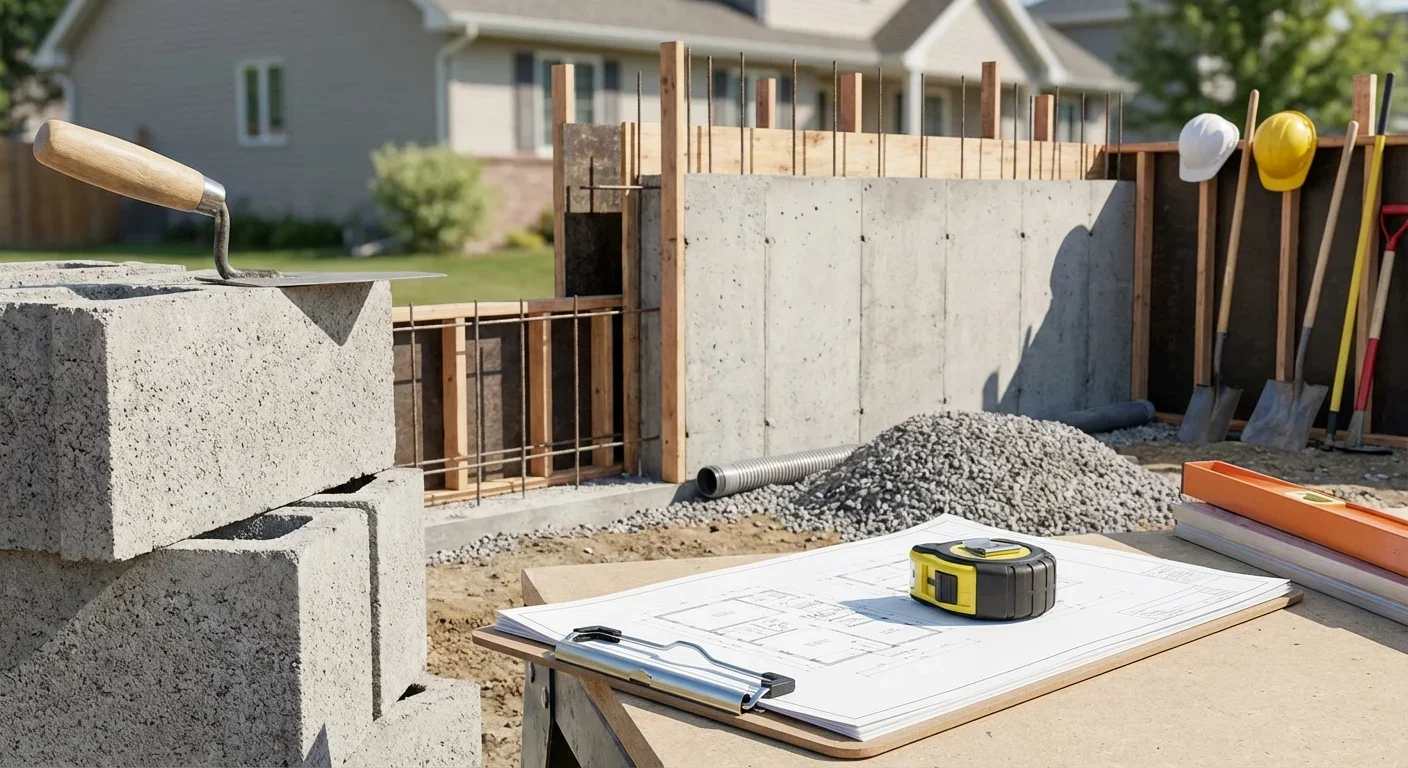
Qualified retaining wall contractors demonstrate structural expertise that separates them from landscape companies who occasionally build walls. Start with licensing verification—contractors should hold appropriate licenses for structural concrete work in Wisconsin, not just general contracting or landscaping licenses. Check bonding and insurance independently rather than accepting claims at face value, as coverage can lapse between when contractors advertise it and when you hire them. The Wisconsin Department of Safety and Professional Services maintains contractor license databases you can search by name or license number.
Engineering relationships indicate structural competency. Ask contractors which engineers they work with regularly and request examples of stamped plans from recent projects. Contractors who routinely handle engineered walls have established partnerships with civil engineers; those who scramble to find engineering resources when your project requires it lack that experience. Review portfolios showing wall heights, soil conditions, and drainage solutions similar to your project. Photos alone don't prove quality—ask for references from projects completed 5-10 years ago to assess long-term performance.
Drainage system details reveal contractor sophistication. Qualified pros discuss weep hole spacing, backfill material specifications, filter fabric installation, and French drain routing without prompting. They explain how they'll handle water and why their approach prevents hydrostatic pressure. Contractors who minimize drainage importance ("we'll put in some weep holes") don't understand the forces that destroy retaining walls. Ask specifically: What's your backfill material? Where does drainage water discharge? How do you prevent clogging? Detailed answers indicate experience; vague responses suggest problems ahead.
Verify permit handling and code knowledge. Contractors should know your municipality's height thresholds and engineering requirements without researching them. They should offer to handle permit applications, plan submissions, and inspection scheduling. Anyone suggesting you can "probably skip the permit" for a wall near code limits doesn't protect your interests. Similarly, contractors should discuss soil testing, bearing capacity, and frost depth considerations specific to your site—not generic wall designs copied from other projects.
Contract details matter as much as contractor credentials. Ensure agreements specify wall dimensions (height, length, thickness), materials by brand and model (particularly for block systems), drainage system components, engineering provisions, and inspection milestones. Payment schedules should tie to completion stages: deposit at contract signing (typically 10-25%), payment after footing inspection, payment after wall completion, final payment after final inspection and site cleanup. Never pay in full before work completes. Warranties should cover structural integrity for at least 3-5 years and specify what repairs the contractor will perform if issues arise.
Find Licensed Retaining Wall Contractors Near You
Selecting the right retaining wall contractor protects your property investment and ensures structural safety for decades. You need professionals who understand that concrete retaining walls are engineered structures requiring precise calculations, proper drainage design, and code-compliant installation. The contractors in our directory serve Fox Valley homeowners with the structural expertise and engineering relationships these projects demand.
When you connect with qualified contractors, you're getting more than quotes—you're accessing professionals who know Wisconsin soil conditions, municipal permit requirements, and the difference between walls that perform and walls that fail. Start your project with contractors who bring engineers to the table, install drainage systems correctly, and stand behind their structural work with meaningful warranties.
Frequently Asked Questions
- Village of Elm Grove, WI - Official Website. "Retaining Walls." https://elmgrovewi.org/827/Retaining-Walls. Accessed February 07, 2026.
- City of New Berlin, WI. "Retaining Walls." https://www.newberlinwi.gov/DocumentCenter/View/22179/Retaining-Walls. Accessed February 07, 2026.
- Wisconsin Department of Transportation (WisDOT). "WisDOT Bridge Manual Chapter 14 – Retaining Walls." https://wisconsindot.gov/dtsdManuals/strct/manuals/bridge/ch14.pdf. Accessed February 07, 2026.