Enhanced Content with Engagement Widgets
What Do Residential Concrete Contractors Do?
Residential concrete contractors handle concrete installation, repair, and replacement for homeowners — everything from driveways and patios to sidewalks, steps, and foundation work. Their scope focuses on projects that serve single-family homes, duplexes, and small multi-family properties, rather than the large-scale industrial or infrastructure work that defines commercial concrete contracting. While some general contractors hold licenses that permit concrete work as part of broader construction projects[1], specialized residential concrete contractors dedicate their business exclusively to flatwork, decorative concrete, and structural repairs for homes.
Most residential contractors maintain smaller crews — typically two to six workers — and operate equipment scaled for neighborhood access: smaller mixers, compact excavators, and hand tools that fit through side yards and narrow driveways.
You'll notice this when they show up without the massive pump trucks and commercial-grade machinery used on parking structures or highway projects.
Common Residential Concrete Services
Driveways are the bread-and-butter project for most residential contractors. A standard two-car driveway takes 3-5 days from excavation to final cure, depending on soil conditions and whether you're adding decorative finishes like stamping or color. Patios follow close behind, usually requiring 2-4 days for layout, forming, pouring, and finishing.
These timelines assume dry weather — many contractors work quickly to beat forecast rain, sometimes finishing large slabs in a single day when conditions cooperate.
Sidewalks and front walkways typically wrap up in 1-2 days for straightforward installations. Steps and stoops require more precision work due to riser height codes and handrail anchoring, often adding a day to account for careful forming. Foundation repairs and garage floors round out common residential services, with repair specialists focusing specifically on issues like settling, cracking, or moisture infiltration that affect existing slabs.
Some contractors coordinate additional services beyond just concrete. You might find companies that handle both asphalt driveways and concrete patios, or those offering complementary hardscaping like paver borders or retaining walls. This can simplify project management if you're tackling multiple exterior upgrades at once.
Typical Residential Concrete Project Timelines:
- Driveways (2-car standard): 3-5 days from excavation to final cure
- Patios: 2-4 days for layout, forming, pouring, and finishing
- Sidewalks/Walkways: 1-2 days for straightforward installations
- Steps and Stoops: 2-3 days (extra time for code compliance and precision)
- Foundation Repairs: Variable based on severity (simple crack injection: same day; slab leveling: 1-2 days)
- Weather delays: Can add 1-7+ days depending on rain and temperature
How Residential Work Differs From Commercial Projects
Equipment scale creates the most visible difference. Commercial projects deploy concrete pumps, large transit mixers, and heavy vibratory screeds that require significant site access and staging areas. Residential jobs rely on wheelbarrows, smaller portable mixers, and hand screeds that navigate tight spaces.
Contractors regularly pour patios accessible only through a 36-inch side gate.
Crew size and timelines shift accordingly. Where a commercial parking lot might keep a dozen workers on-site for weeks, your driveway gets a crew of three for a few days. Permitting requirements tend to be simpler for residential work, though you'll still need permits for driveways that alter public sidewalks or for structural foundation work. Many municipalities allow homeowners to skip permits for simple patio slabs or walkway replacements that don't affect drainage patterns or property lines.
The personal stakes differ too. Commercial contractors answer to project managers and engineers. Residential contractors answer directly to you, standing in your driveway while you point out concerns.
This direct accountability explains why communication responsiveness ranks as one of the most valued traits homeowners mention when recommending contractors — especially when working with companies based outside your immediate area who go the extra mile to stay accessible throughout the project.
What Should Residential Concrete Cost?
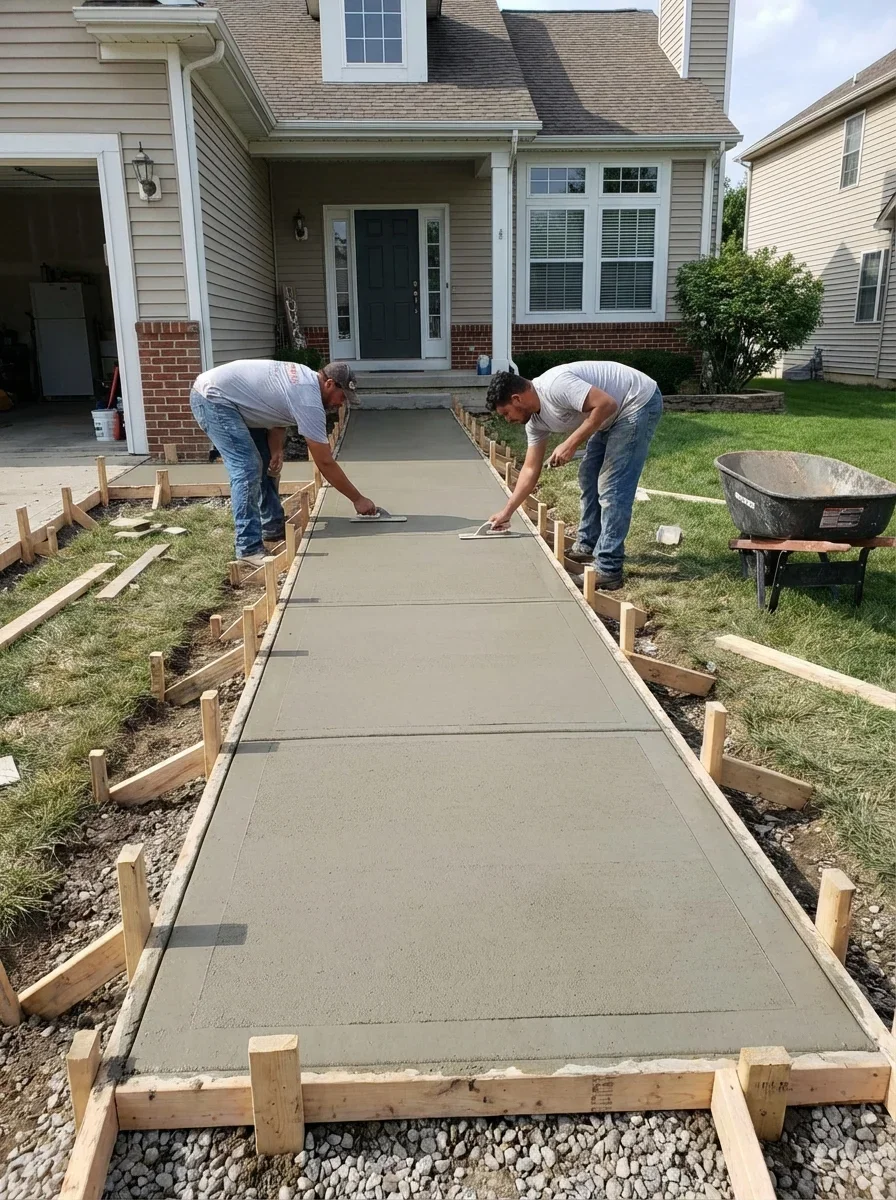
Concrete costs frustrate homeowners because quotes for seemingly identical projects can vary by 200% or more. That $3,000 driveway estimate from one contractor and the $9,500 quote from another aren't always comparing the same scope, materials, or professional standards.
Understanding what drives these price differences helps you evaluate whether you're getting a fair deal or just a cheap job that'll need redoing in five years.
Cost Breakdown by Project Type
Standard driveways run $4–$15 per square foot installed, putting a typical 400-square-foot two-car driveway in the $1,600–$6,000 range before decorative options. Basic patios cost $6–$12 per square foot for plain broom-finish concrete, while stamped or stained decorative patios jump to $12–$18 per square foot. Sidewalks and walkways average $8–$14 per square foot, with the higher end reflecting curved designs or integration with existing landscaping.
These ranges assume you're working with licensed, insured contractors who pull permits and follow code.
Foundation repairs vary wildly based on the solution — simple crack injection might cost $500–$1,500, while comprehensive slab leveling using polyurethane foam injection can run $2,000–$6,000 depending on how much lifting your slab needs. Specialized repair companies often provide warranties (some offer 5-year guarantees on foam lifting work) that factor into their pricing but deliver long-term value compared to cheap patches that fail within a year.
| Project Type | Basic Cost Range | Premium/Decorative | Typical Size | Total Project Cost |
|---|---|---|---|---|
| Driveway | $4-8/sq ft | $10-15/sq ft (stamped) | 400 sq ft (2-car) | $1,600-$6,000 |
| Patio | $6-12/sq ft | $12-18/sq ft (stamped/stained) | 200-400 sq ft | $1,200-$7,200 |
| Sidewalk | $8-12/sq ft | $12-14/sq ft (curved/decorative) | 50-100 sq ft | $400-$1,400 |
| Foundation Repair | $500-1,500 (crack injection) | $2,000-6,000 (foam leveling) | Varies by damage | $500-$6,000 |
Factors That Affect Your Final Price
Site access impacts costs immediately. If the only route to your backyard patio requires hauling concrete through your house or hand-carrying it 200 feet from the street, expect labor costs to spike. Contractors assess this during estimates, and it's why two identical patios can have drastically different quotes based purely on location within your property.
Soil conditions drive hidden costs that don't appear until work begins. Unstable or poorly draining soil requires additional base preparation — thicker gravel layers, compaction, or even geotextile fabric to prevent settling. Reputable contractors evaluate soil during estimates and account for necessary prep work upfront.
Less scrupulous operators skip this assessment, deliver a lowball quote, then hit you with change orders once they've torn up your yard.
Removal and disposal of existing concrete adds $2–$4 per square foot to most projects. Decorative options multiply quickly: basic broom finish costs nothing extra, while stamped patterns add $3–$8 per square foot, and custom staining or scoring adds $2–$5 per square foot. These aesthetic upgrades aren't just about looks — properly applied decorative finishes can improve traction and hide minor imperfections better than plain concrete.
Some homeowners report feeling quotes are "greedily high," particularly when decorative elements push totals into five figures. But pricing that seems excessive sometimes reflects proper methodology — adequate base preparation, appropriate concrete thickness, proper reinforcement, and protective sealants that cheaper competitors skip.
Get at least three detailed estimates that break down labor, materials, and specific methods so you can compare apples to apples rather than choosing solely on the bottom-line number.
How to Choose a Residential Concrete Contractor
Hiring a concrete contractor based on price alone creates the perfect conditions for disaster — unlevel slabs, premature cracking, or worse, uninsured workers injured on your property leaving you liable.
The contractors who deliver beautiful results at quoted prices with minimal hassle share specific credentials and behaviors you can verify before signing anything.
Required Licenses and Insurance Coverage
Check licensing first. Requirements vary by state, but most jurisdictions require either a general contractor license or a specialty concrete contractor license for residential work. Your state's contractor licensing board maintains public databases where you can verify active licenses, check for disciplinary actions, and confirm the contractor's classification matches your project type. Some contractors hold specialty licenses specifically for concrete work, while others operate under broader general engineering or building contractor licenses that permit concrete as part of larger projects[1].
Insurance matters as much as licensing.
Legitimate contractors carry both general liability insurance (typically $1 million minimum) and workers' compensation coverage for their crews. Ask for certificates of insurance and verify they're current — not expired policies from two years ago. If a contractor balks at providing proof of insurance or suggests you don't really need to see it, end the conversation.
Bonding provides additional protection, though not all residential contractors carry surety bonds unless required by local code. In areas where bonding is optional, it signals a contractor's financial stability and willingness to stand behind their work through third-party accountability.
Questions to Ask During Estimates
Experience with projects like yours matters more than years in business. A contractor with 20 years of driveway experience might struggle with decorative patio work requiring intricate stamping. Ask to see photos of completed projects that match your scope — not just their best work, but specifically examples of driveways, patios, or repairs similar to what you need.
Better yet, ask for addresses of recent local projects where you can drive by and see results firsthand.
Warranty terms vary significantly between contractors. Some offer one-year workmanship guarantees, others provide five-year structural warranties, and many provide nothing in writing at all. Get warranty coverage spelled out in your contract, including what's covered, what voids the warranty, and how long coverage lasts. Specialized repair contractors who offer multi-year warranties on techniques like foam slab lifting demonstrate confidence in their methods.
Payment schedules reveal a contractor's financial health and professionalism. Standard practice involves a deposit (usually 10-25%), a progress payment when work reaches a defined milestone, and final payment upon completion.
Red flags include demanding full payment upfront, asking for large cash deposits, or refusing to provide payment terms in writing.
Contractors who pressure you to pay everything before they start often lack the working capital to fund materials and labor — a warning sign of financial instability.
Permit handling tells you whether a contractor operates above board. Ask who's responsible for pulling permits and what the timeline looks like. Legitimate contractors either pull permits themselves or work with you to obtain them through proper channels. Contractors who suggest skipping permits "to save money" or claim permits aren't necessary are inviting code enforcement headaches that become your problem, not theirs.
Response time during the estimate phase previews communication throughout the project. Contractors who return calls promptly, show up on time for site evaluations, and answer questions thoroughly tend to maintain that professionalism during construction.
Those who ghost you for days or show up hours late without calling are unlikely to improve once they have your deposit.
Pro Tip: The lowest bid often excludes crucial elements that mid-range bids include as standard. A contractor quoting $3,000 for a driveway may be skipping base preparation, using substandard thickness, or planning to work without permits. Get itemized estimates from at least three contractors showing exactly what's included — proper base prep, adequate concrete thickness (minimum 4 inches for driveways), reinforcement, and finishing work. The "expensive" $5,500 quote might actually be the fair price for quality work.
Red Flags When Hiring Residential Contractors
No written contract sits atop the red flag list. Verbal agreements and handshake deals evaporate the moment a dispute arises. Insist on detailed written contracts that specify materials, timeline, payment schedule, warranty terms, and what happens if either party needs to modify or cancel the agreement.
Cash-only operations should trigger immediate skepticism. While paying cash doesn't automatically indicate fraud, contractors who refuse checks or credit cards often do so to avoid creating paper trails for tax purposes or insurance claims.
This same desire for invisibility means they're unlikely to stand behind warranty claims or address defects after payment clears.
Pressure tactics — limited-time discounts, claims that materials are "already ordered for another job" so you need to decide today, or suggestions that permit requirements are changing soon — all indicate a contractor more focused on closing sales than delivering quality work. Legitimate contractors with full schedules don't need high-pressure sales tactics.
Incomplete cleanup and lingering defects plague projects when homeowners don't address these concerns upfront. Specify cleanup expectations in your contract, including removal of forms, excess concrete, and job-site debris. Some contractors leave properties pristine. Others abandon wood scraps, concrete chunks, and equipment ruts across your lawn.
Ask about cleanup procedures during estimates and make it a contract requirement.
What to Expect During a Residential Concrete Project
Understanding the concrete installation process helps you recognize whether your contractor is following best practices or cutting corners. While specific techniques vary by project type, quality contractors follow a consistent methodology that protects both the finished product and your property throughout construction.
Site Evaluation and Preparation
Soil assessment happens first on professional jobs. Contractors evaluate soil stability, drainage patterns, and any existing grade issues that could affect the new concrete. This might involve simple visual inspection for straightforward projects or more detailed testing for foundation work and large slabs.
Areas with clay soils or poor drainage often require additional base depth or specialized preparation that impacts cost and timeline.
Layout and forming follow site evaluation. Contractors establish grade stakes, set forms to proper elevation, and verify dimensions match your plans. This phase reveals how detail-oriented your contractor is — forms set carelessly create slabs with poor drainage, uneven surfaces, or dimensions that don't match your approved plans.
Base preparation determines long-term performance more than almost any other factor. Quality contractors excavate to appropriate depth (typically 4-6 inches below finish grade for most residential work), then install and compact a gravel base that provides stable support and drainage.
Skipping base prep or using inadequate materials causes settling and cracking within months.
The Pour and Finishing
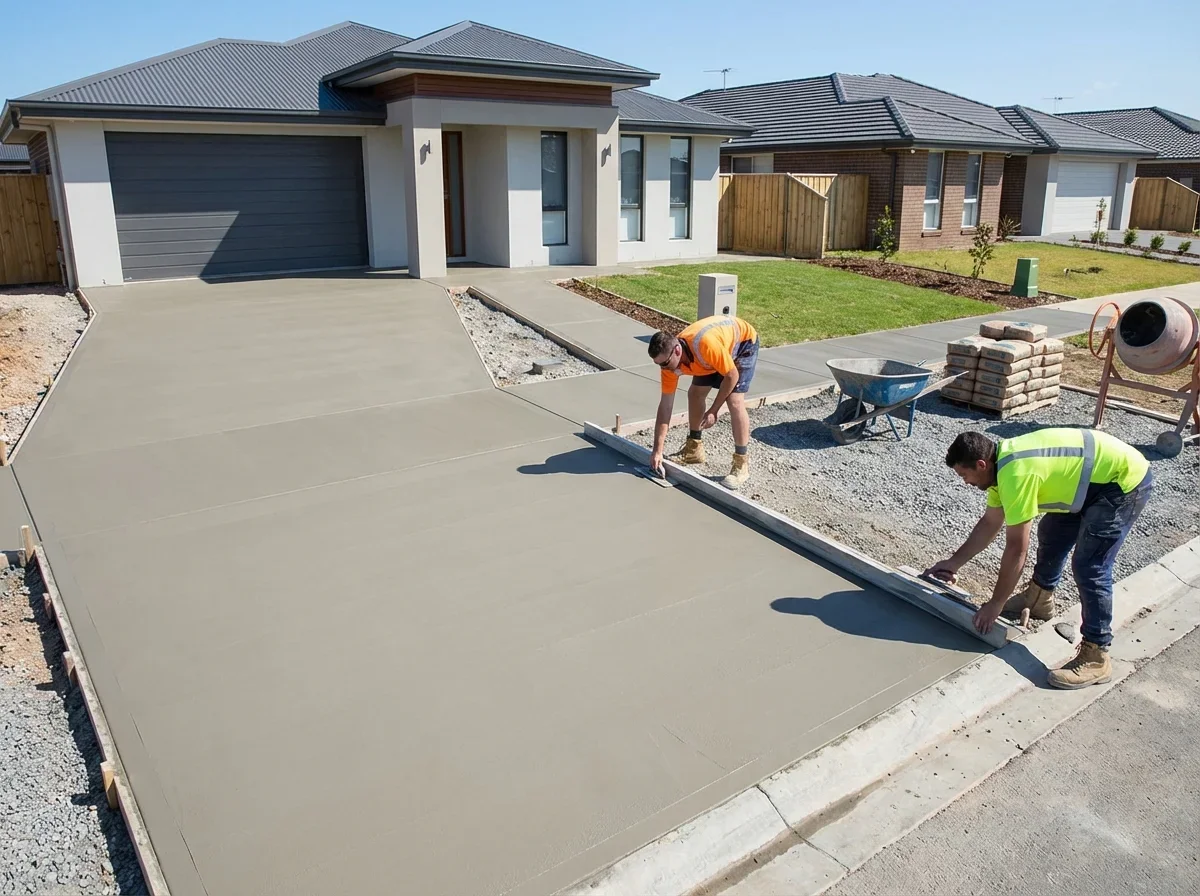
Concrete arrives from ready-mix trucks in most residential applications, though some contractors mix on-site for small repairs. Professional contractors check the concrete mix upon delivery, verifying it matches the specified strength and slump before accepting the load. They also plan pours to avoid cold joints (visible seams where one section hardens before the next is poured) that weaken slabs and create visual lines.
Finishing techniques vary by desired surface. Broom finishes provide traction for driveways and walkways. Smooth troweled finishes work for garage floors and areas you'll cover with other materials. Stamped and decorative finishes require specialized skills and timing — contractors must work quickly while concrete remains workable but has set enough to hold patterns.
Control joints get cut or formed into slabs to manage where cracks occur. Concrete will crack. Control joints ensure cracks happen in straight lines where forms dictate rather than random patterns across your slab.
Contractors who skip control joints or space them incorrectly create slabs that develop unsightly cracks in visible areas.
Curing and Protection
Proper curing takes days, not hours. Concrete reaches its full strength over 28 days, though you can typically walk on it after 24-48 hours and drive on it after 7 days. Professional contractors apply curing compounds or keep concrete moist during initial curing to prevent surface cracking from rapid moisture loss.
They also protect fresh concrete from rain, freezing temperatures, and premature loading.
Expect contractors to leave forms in place for at least 24 hours to support edges while concrete gains strength. Removing forms too early causes edge damage and corner breaks. After form removal, contractors backfill edges and perform final grading to direct water away from the new slab.
Weather significantly impacts project timelines. Concrete won't cure properly if poured when temperatures drop below 40°F or rise above 90°F without special precautions. Rain during or shortly after a pour can damage surface finishes and reduce strength.
Experienced contractors monitor forecasts closely and may reschedule pours to avoid weather complications.
Post-Project Considerations
Sealing protects concrete from moisture intrusion, freeze-thaw damage, and staining. Many contractors include sealing in their base price, while others offer it as an add-on. Whether included or not, plan to seal your concrete — either immediately after installation or following the contractor's recommended waiting period (often 28-30 days for full cure).
Minor imperfections like small surface voids or slight color variations are normal in concrete work. These don't affect structural integrity or longevity. However, significant issues like major cracking, widespread scaling, or sections that settle noticeably within the first year indicate installation problems that warranty coverage should address.
Ongoing maintenance extends concrete life significantly. Resealing every 2-3 years, avoiding harsh deicing chemicals, and promptly addressing minor cracks before they worsen keeps residential concrete looking good and performing well for decades.
Contractors who provide written maintenance guidelines demonstrate commitment to long-term customer satisfaction beyond just collecting final payment.
Find Trusted Residential Concrete Contractors in Fox Valley
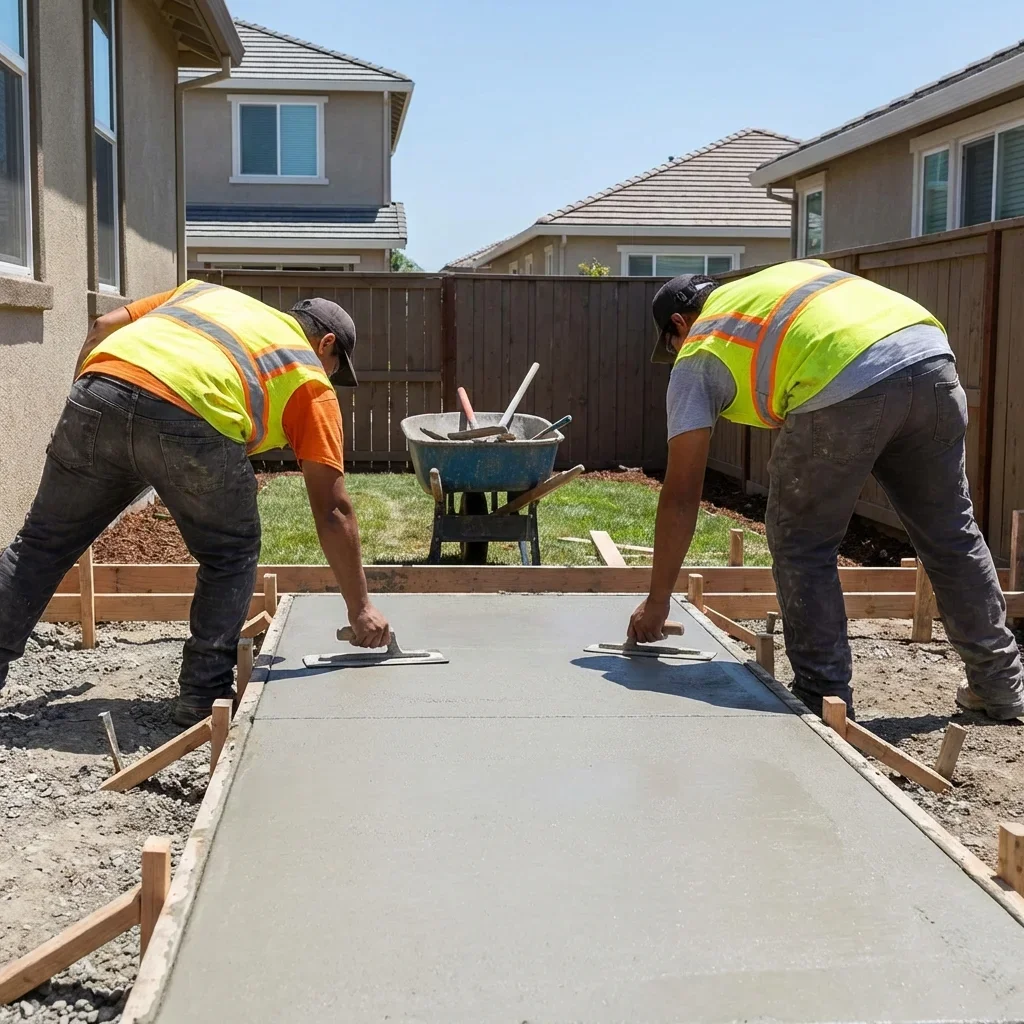
Fox Valley homeowners have access to established concrete contractors with strong local reputations and proven track records. Top-rated contractors in the area demonstrate the qualities that separate professionals from pretenders: proper licensing, responsive communication, accurate estimates that match final costs, and the kind of quality work that holds up through Wisconsin's freeze-thaw cycles.
When comparing contractors, prioritize those offering written warranties, clear explanations of their process, and verifiable past projects in your area.
Review portfolios that show work matching your needs — if you need decorative stamped concrete, find contractors with extensive stamping experience rather than those who primarily pour basic driveways. For specialized repairs like slab lifting, seek contractors who explain their methodology (such as polyurethane foam injection) and offer multi-year warranties on the repairs.
Get at least three detailed estimates that break down all costs: labor, materials, site preparation, removal of existing concrete if applicable, and any decorative options you're considering. Compare not just final price but what's included — the lowest bid often excludes crucial elements like proper base preparation, adequate concrete thickness, or professional finishing that mid-range bids include as standard.
Check references and verify credentials before making your decision. A few phone calls to past customers and quick verification of licensing and insurance through state databases takes an hour but prevents months of regret.
The difference between contractors who deliver beautiful, durable results and those who leave you dealing with wobbly steps or uneven slabs often comes down to doing this verification legwork upfront rather than discovering problems after the concrete hardens.
- California Contractors State License Board (CSLB). "Building Official Information Guide." https://www.cslb.ca.gov/about_us/faqs/building_official_information_guide.aspx. Accessed February 09, 2026.