What Garage Floor Services Do Contractors Offer?
Garage floor contractors specialize in concrete work, but the services they provide vary significantly in scope, cost, and timeline. Understanding what each service actually entails helps you recognize which one addresses your floor's condition.
New Concrete Garage Floor Installation
New slab installation means removing your existing floor (if there is one) and pouring fresh concrete from the ground up. Contractors excavate to proper depth, compact the subgrade, install gravel base and vapor barrier, position rebar or wire mesh reinforcement, and pour 4–6 inches of concrete depending on your garage's use.
The new slab gets finished with proper slope for drainage, typically ⅛ to ¼ inch per foot toward the garage door. Control joints are cut or formed to manage where the concrete cracks as it cures — because all concrete cracks eventually, and joints dictate where those cracks appear.
A properly installed garage slab includes thickened edges at the door opening to support vehicle weight and transitions. You need a new pour when your existing slab has structural problems: extensive cracking from settling, major heaving or sinking sections, or deterioration so severe that the concrete is crumbling. Surface issues don't require this level of intervention.
New installation is the most expensive option but gives you a correctly built foundation that should last 30+ years.
Garage Floor Coating Systems
Coating services apply protective layers over existing concrete that's structurally sound but needs better durability, appearance, or stain resistance. Contractors prepare the surface through grinding or acid etching, repair minor cracks and divots, then apply epoxy, polyurea, or polyaspartic coating systems in multiple layers.
Professional coating jobs typically include a primer coat, pigmented base coat (often with decorative flakes), and clear topcoat for UV protection and enhanced durability. The coating bonds chemically to the concrete, creating a barrier against oil, chemicals, moisture, and abrasion.
A proper coating system runs 10–30 mils thick — significantly thicker than DIY kits you'd buy at a hardware store. This service makes sense when your slab is level and crack-free (or has only hairline cracks), but the surface is stained, porous, or aesthetically unappealing. Coatings transform how your garage looks and performs without the disruption of demolition and new concrete work.
Resurfacing and Repair Services
Resurfacing addresses concrete that's structurally acceptable but surface-damaged. Contractors use diamond grinding to remove the top layer of degraded concrete, exposing fresh aggregate underneath. For deeper damage, they apply thin overlay systems — polymer-modified cementitious products that rebuild the surface in ⅛ to ½ inch layers.
Resurfacing can eliminate shallow spalling, smooth out rough or pitted surfaces, and level minor undulations.
It's not appropriate for major cracks, significant settling, or moisture problems coming through the slab. Those issues require more comprehensive solutions. Some contractors offer crack repair and partial patching as standalone services, using epoxy injection or routed-and-sealed methods. These work when damage is localized and the rest of the slab is fine.
Extensive cracking usually points to problems that patching won't resolve long-term.
| Service Type | Best For | Typical Lifespan | Downtime Required |
|---|---|---|---|
| New Concrete Slab | Structural damage, extensive cracking, major settling | 30+ years | 7–14 days |
| Coating Systems | Sound concrete with surface stains, cosmetic issues | 10–20 years | 3–10 days |
| Resurfacing/Overlay | Surface damage, shallow spalling, minor unevenness | 10–15 years | 3–7 days |
| Crack Repair/Patching | Localized damage on otherwise sound concrete | 5–10 years | 1–3 days |
Do You Need a New Floor, Coating, or Resurfacing?
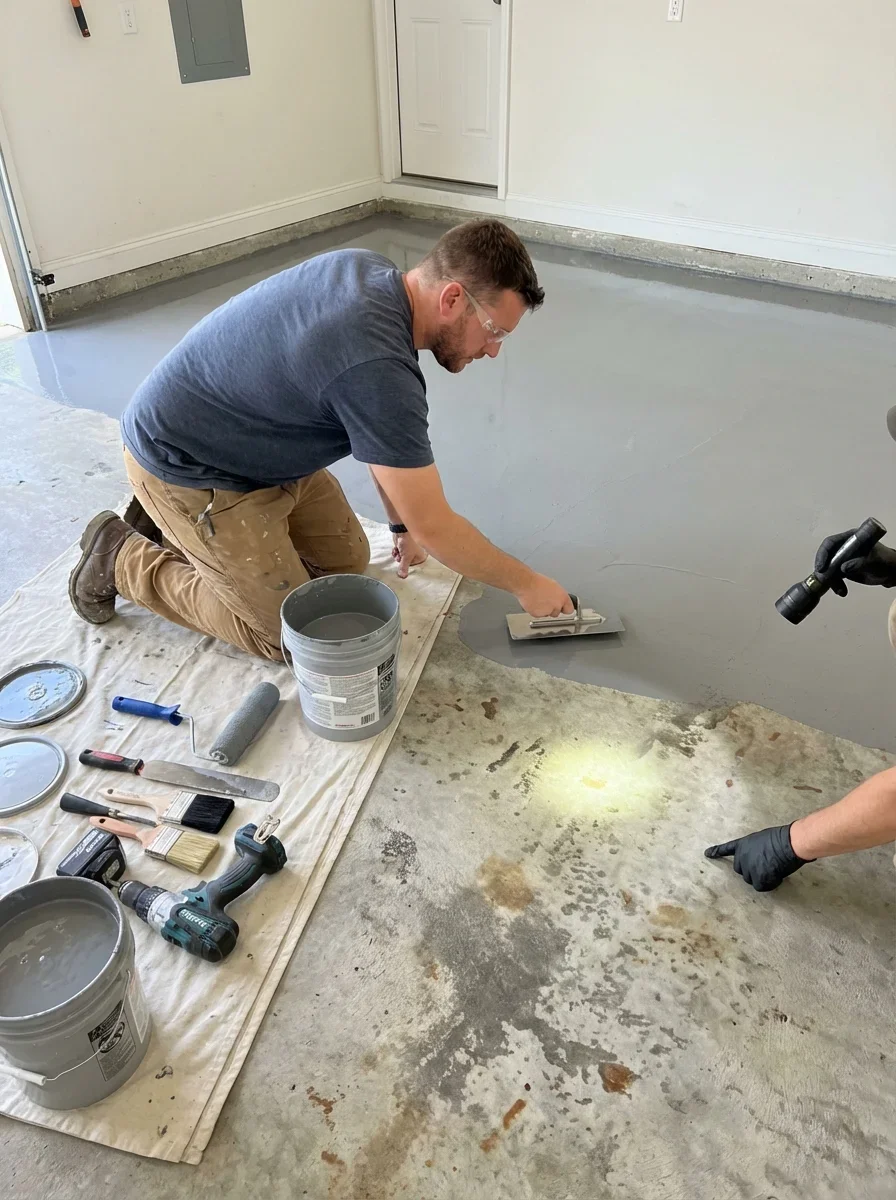
Contractors evaluate several factors when recommending which service fits your situation. The concrete's structural condition matters most — a coating or overlay only performs as well as the substrate underneath.
Check for cracks wider than ⅛ inch or cracks that have vertical displacement where one side sits higher than the other. Look for areas where the slab has settled or heaved, creating slopes or dips in places that should be level.
If you pour water on the floor, does it puddle in spots away from the door? That indicates structural movement.
Press on sections near cracks — if the concrete flexes or feels unstable, the slab has compromised integrity. Surface issues present differently. Staining, minor pitting, and cosmetic wear don't affect structural performance.
Concrete that's dusty, absorbs liquids quickly, or shows tire marks and oil penetration needs surface protection but not replacement. If you can't see significant cracks or settling and the floor feels solid underfoot, you're likely looking at coating rather than structural work.
Moisture problems complicate the picture. Persistent dampness, efflorescence (white mineral deposits), or moisture coming through the concrete indicates water issues that must be addressed before coating or resurfacing. Some moisture problems stem from poor drainage around the garage; others come from high groundwater or missing vapor barriers under the slab.
A contractor should perform moisture testing on questionable floors before recommending coating systems that can trap water and fail.
Age alone doesn't determine what you need. A 40-year-old slab in good condition accepts coatings just fine. A 5-year-old floor with settling issues needs structural intervention regardless of its newness.
How Professional Garage Floor Coating Works
The coating process separates professional installations from DIY products. Contractors follow specific protocols that determine whether the coating lasts two years or twenty.
Surface Preparation Standards
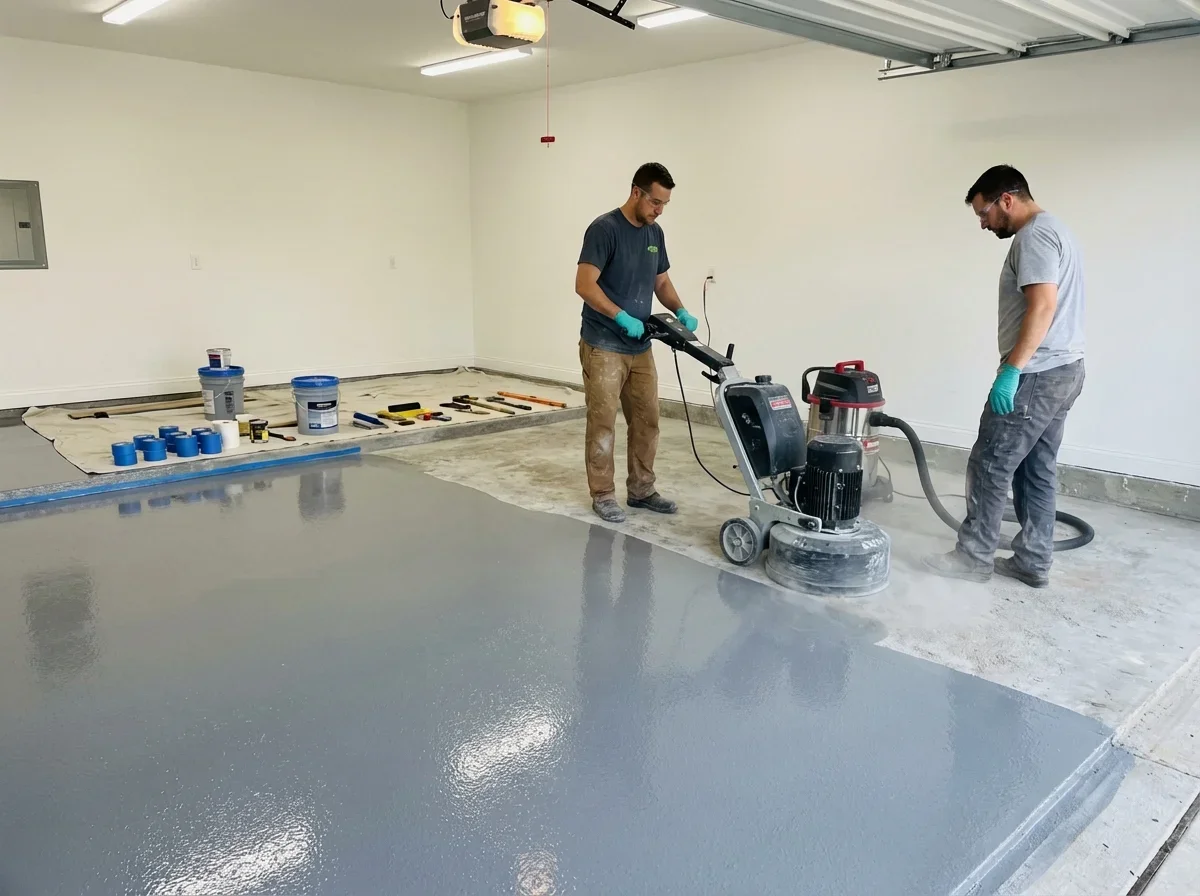
Proper preparation creates the mechanical bond that holds coatings to concrete. Contractors use diamond grinding equipment to open the concrete's pores, removing surface laitance (the weak, dusty layer on top) and any previous sealers or contaminants.
This process roughens the surface to a specific profile — measured in "concrete surface profile" or CSP levels — that coating manufacturers require for proper adhesion. Acid etching is an alternative prep method, though less reliable than mechanical grinding because it depends on the concrete's chemical response. Some concrete doesn't etch well; inconsistent etching creates inconsistent bonding.
Most professional installers prefer grinding for garage floors because it delivers predictable results regardless of concrete composition.
After grinding, contractors vacuum thoroughly and often wash the floor, letting it dry completely before coating. Any moisture in the concrete during coating application creates bonding problems. Many pros use moisture meters to verify the slab is dry enough to accept coating — typically below 4% moisture content for epoxy systems, though this varies by product.
Crack and divot repair happens during prep. Small cracks get filled with flexible epoxy or polyurea to prevent them from telegraphing through the coating. Larger repairs might require grinding out damaged areas and patching with repair mortar.
The floor needs to be structurally sound and smooth before the first coating layer goes down.
Coating System Options and Performance
Epoxy coatings remain popular for garage floors because of their chemical resistance and durability under vehicle traffic. 100% solids epoxy systems (no solvents or water carriers) create thick, hard-wearing floors that stand up to hot tires, chemicals, and impact.
Epoxy handles temperature cycling well once fully cured, though it can yellow in direct sunlight — less relevant in enclosed garages. Polyurea coatings cure faster than epoxy, often within hours rather than days. This reduces garage downtime significantly.
Polyurea offers excellent flexibility, meaning it tolerates substrate movement better than rigid epoxies — useful in climates with freeze-thaw cycling. The fast cure time also means less working time during application, requiring experienced applicators who can work efficiently.
Polyaspartic coatings combine benefits of both: UV stability, fast cure, good flexibility, and high durability.
They're increasingly common in professional installations. Polyaspartic topcoats over epoxy base coats give you chemical resistance from epoxy plus UV protection and faster return-to-service from polyaspartic.
Professional systems use multiple coats. A primer coat penetrates the concrete and improves adhesion. The base coat provides color and thickness — this is where decorative flakes get broadcast if you want them.
The topcoat seals everything, adds gloss or matte finish, and provides the wear surface that takes daily abuse. Total thickness typically runs 10–30 mils, compared to 2–4 mils for consumer-grade kits.
Cure Time and Garage Downtime
Even fast-curing systems require you to stay off the floor while chemistry happens. Light foot traffic might be possible after 24 hours with polyurea or polyaspartic systems, but vehicle traffic typically requires 3–7 days for full cure.
Epoxy systems may need 7–10 days before you can park on them safely.
Temperature affects cure time significantly. Most coating systems require ambient temperatures between 50°F and 85°F during application and initial cure. Cold weather slows curing; excessive heat can cause coatings to cure too fast, creating application problems and weaker bonds. Wisconsin contractors often avoid coating work during temperature extremes for this reason.
Humidity also matters. High humidity can cause problems with some coating systems, creating surface defects or interfering with proper curing.
Contractors monitor weather conditions closely when scheduling coating jobs.
Pro Tip: Never apply garage floor coatings when temperatures will drop below 50°F within 72 hours of application. Cold temperatures dramatically slow chemical curing and can cause the coating to fail prematurely, wasting both your money and the contractor's work. Spring and fall installations in Wisconsin require careful weather monitoring.
When Contractors Recommend Resurfacing vs Replacement
The decision between resurfacing and full replacement comes down to what's happening below the surface and whether the problem is fixable without tearing everything out.
Contractors recommend replacement when the slab has moved significantly — settling more than an inch in sections, heaving from tree roots or frost, or showing widespread cracking that indicates the subgrade wasn't properly compacted. If the concrete was poured too thin originally (less than 4 inches in most garages), has extensive scaling where the surface is flaking away, or shows signs of internal deterioration like spalling and crumbling, replacement makes more sense than trying to resurface.
Moisture problems coming from underneath require investigation before any decision.
If the slab lacks a vapor barrier and sits over high groundwater, no resurfacing approach will work long-term. You either accept a bare concrete floor that can breathe, improve exterior drainage to lower moisture levels, or remove the slab and install it properly with vapor barrier and appropriate gravel base.
Resurfacing works when damage is surface-level. Shallow spalling, surface pitting, minor cracking without structural movement, and uneven spots that can be ground smooth all respond well to overlay systems.
If the slab is fundamentally sound — level, well-supported, free of major cracks — but the top surface is deteriorated, resurfacing gives you a fresh surface at a fraction of replacement cost.
Some situations fall in between. Significant but localized damage might call for partial replacement — removing and repouching just the damaged section while leaving intact concrete alone. This requires careful evaluation of where problems start and stop, plus skill in tying new concrete into old without creating more cracking at the joints.
What Do Garage Floor Services Cost?
Cost varies significantly based on which service you need and your garage's size and condition. These ranges reflect typical pricing in residential markets but expect variation based on local labor rates and project specifics.
New concrete slab installation runs $8–$15 per square foot for a standard two-car garage. This includes demolition and removal of existing concrete, site prep, materials, and installation.
Complex jobs — difficult access, heavy reinforcement requirements, or extensive grading — push toward the higher end. A 400-square-foot two-car garage floor typically costs $3,200–$6,000 for complete replacement.
Professional coating systems range $5–$12 per square foot depending on the coating type and number of layers. Basic epoxy systems fall toward the lower end; polyaspartic or polyurea systems with broadcast flakes and multiple topcoats cost more. That same 400-square-foot garage runs $2,000–$4,800 for professional coating.
Surface condition affects price — floors requiring extensive repair before coating cost more than clean, crack-free concrete.
Resurfacing costs $3–$8 per square foot depending on the extent of damage and overlay thickness needed. Simple diamond grinding to remove surface damage and smooth the floor costs less than applying thick overlay systems.
Localized repairs and patching might run $200–$800 depending on how much area needs attention.
Most contractors have minimum charges regardless of square footage. A $1,500 minimum isn't unusual even for small jobs, because mobilization, equipment, and material costs don't scale down proportionally with floor size. Single-car garages often cost almost as much as two-car garages for this reason.
Get detailed quotes that break out preparation, materials, and installation separately.
"Too good to be true" pricing usually skips preparation steps that determine long-term performance. A contractor offering professional coating for $2 per square foot is either using substandard materials, skipping proper prep, or will find "unexpected conditions" that increase costs once work begins.
Garage Floor Project Cost Quick Reference:
- Two-car garage (400 sq ft) new concrete: $3,200–$6,000 total
- Two-car garage professional coating: $2,000–$4,800 total
- Two-car garage resurfacing: $1,200–$3,200 total
- Typical contractor minimum charge: $1,500–$2,000
- Timeline for new concrete (full cure): 28 days
- Timeline for coating (vehicle traffic): 3–10 days
- Cost factors that increase price: Extensive prep work, difficult access, heavy damage repair, premium coating systems
Questions to Ask Your Garage Floor Contractor
The right questions reveal whether a contractor understands the technical aspects of concrete work and coating systems. Start with licensing and insurance — concrete contractors should carry liability coverage and workers' compensation if they have employees.
Some states require specific contractor licenses for concrete work; verify local requirements and confirm the contractor meets them.
Ask about the specific products they'll use. Product names and manufacturers matter because coating performance varies dramatically between systems. A contractor should specify whether they're using 100% solids epoxy, water-based epoxy, or polyurea/polyaspartic systems.
They should explain why they recommend a particular product for your situation rather than just quoting whatever they always use.
Surface preparation deserves detailed discussion. How will they prep your floor — grinding or etching? What concrete surface profile will they achieve? How do they handle moisture testing?
What's their process for repairing cracks and damage before coating? Contractors who gloss over prep or say "we'll clean it really well" don't understand how coatings work.
Ask about cure time and temperature requirements. When can you walk on the floor, and when can you park on it? What temperature range do they need for installation, and what happens if weather doesn't cooperate?
This reveals whether they understand the products' technical requirements.
Request references from garage floor jobs completed at least two years ago. Recent work always looks good; you want to see how their installations hold up over time. Ask previous clients about preparation quality, whether the coating is still adhering properly, and how the contractor handled any issues.
Warranty terms should be specific.
What does the warranty cover — materials only, or materials and labor? How long does it last? What conditions void it (using certain chemicals, impact damage, etc.)? Vague "lifetime warranty" claims mean nothing without documentation of what's covered.
Find Qualified Garage Floor Contractors Near You
The contractors listed in our directory specialize in concrete garage floor work across installation, coating, and resurfacing services. They've been verified for proper licensing and insurance, and they serve Wisconsin homeowners specifically.
Compare multiple contractors in your area. Request detailed quotes that specify products, preparation methods, and project timelines.
Discuss your garage's condition honestly — the more information contractors have, the more accurately they can recommend appropriate solutions and price the work.
Most qualified contractors offer free on-site assessments. They'll evaluate your floor's condition, test for moisture if relevant, and discuss which approach makes sense for your situation. Use these consultations to gauge their expertise and communication style.
The contractor who takes time to explain your options and answer questions thoroughly is often the one who'll deliver quality work.
Your garage floor is a long-term investment in your home's functionality and value. Working with experienced contractors who understand both concrete fundamentals and coating chemistry ensures you get results that last.