What Makes a Concrete Contractor Review Trustworthy?
The most reliable reviews don't just say "great job" or "highly recommend." They include specific details that only someone who actually hired the contractor would know. You're looking for mentions of project scope, timeline, how the contractor handled unexpected issues, and concrete results (literally and figuratively).
Trustworthy reviews often include photos of the finished work, descriptions of the quote process, and candid observations about communication style. When someone writes that the contractor "poured a 12x16 patio with a broom finish and added a formed edge detail we discussed during the walk-through," you're reading real experience.
Generic praise like "very professional, on time, great work" could apply to anyone.
Signs of Authentic Customer Feedback
Look for reviews that describe project-specific challenges and solutions. Real customers mention things like weather delays the contractor navigated, how they protected existing landscaping, or adjustments made when the initial plan didn't fit the site conditions. These details are nearly impossible to fabricate convincingly.
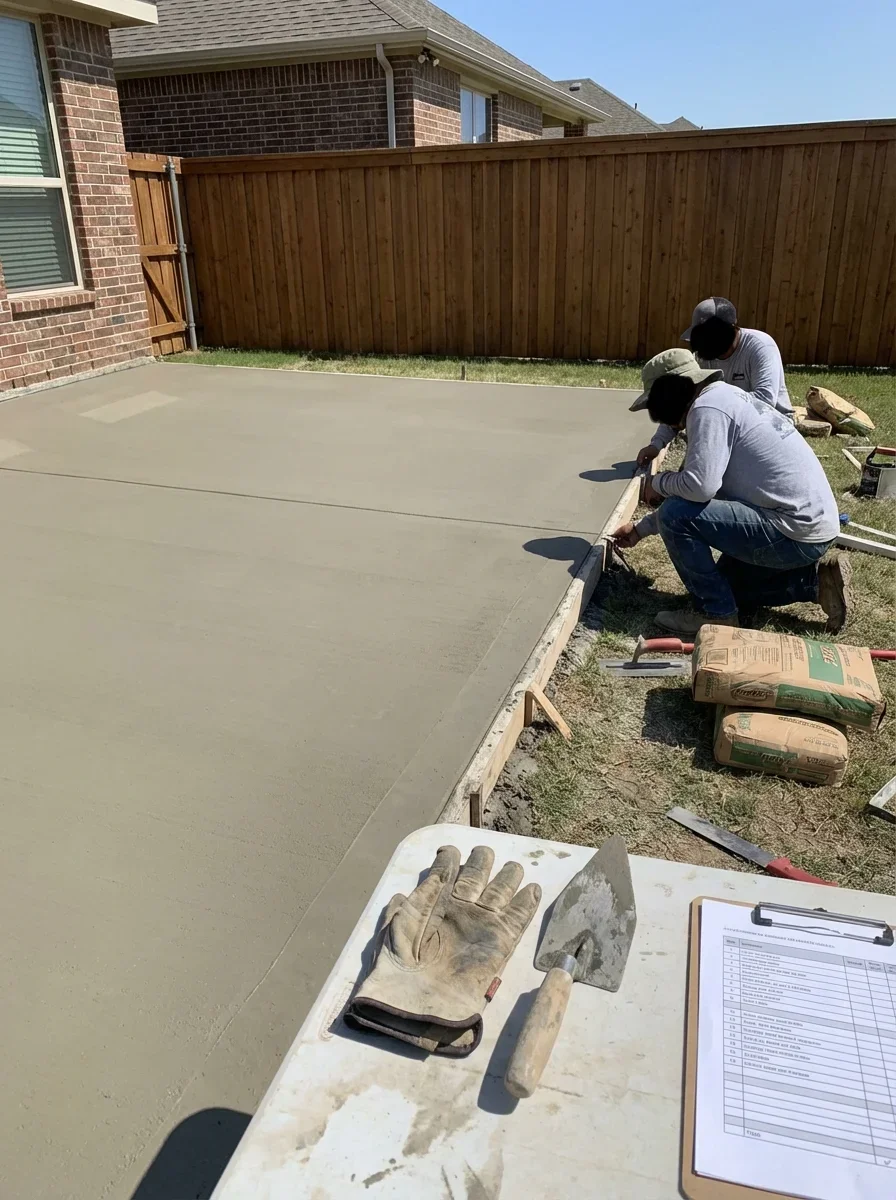
Photos matter, but not just any photos. Authentic reviews include images that show the customer's actual property—not stock photos or the same generic driveway you've seen on other profiles. You'll notice unique features: a specific home style in the background, particular landscaping, or that weird corner lot configuration that required custom formwork.
Balanced feedback is another strong indicator. When a review mentions both what went well and one minor issue that was resolved, it reads more credibly than pure perfection. A homeowner might note that the crew arrived a day late due to rain but communicated proactively and made up the time, or that the final cost came in $200 over estimate because they discovered poor base material that needed replacement.
Reviews describing similar projects to yours carry the most weight.
If you're planning a small patio repair, a detailed review about a similar 50-square-foot patch job tells you more than a five-star rating from someone who had a commercial warehouse floor poured.
Pro Tip: The most valuable review for your project is one that describes work similar to yours in scope and budget. A detailed account of a $3,000 walkway repair tells you more about what to expect than ten generic five-star ratings from large commercial projects.
Red Flags in Review Content
Repetitive language across multiple reviews suggests something manufactured. When five different "customers" all mention the contractor being "punctual and detail-oriented" using nearly identical phrasing, you're likely looking at fake reviews or reviews written by the same person.
Vague superlatives without substance should make you skeptical. Reviews that say "best contractor ever!" or "amazing work, would definitely hire again!" without explaining what made the experience positive don't give you usable information. They're easy to write and don't require actual knowledge of the contractor's work.
Watch for review clusters—batches of glowing reviews posted within a few days of each other, especially if they all come from accounts with minimal other activity. Legitimate reviews for residential concrete work tend to trickle in over time as projects are completed, not arrive in suspicious bunches.
All five-star reviews with zero criticism can be a warning sign, particularly for contractors who've been in business for years. Every contractor occasionally faces a difficult client, a miscommunication, or an unexpected site condition.
A complete absence of anything less than perfect suggests selective posting or review management.
How to Read Review Patterns, Not Just Star Ratings
The overall rating matters less than what people consistently mention. If a contractor has 4.3 stars but twelve different reviews praise their communication and problem-solving, that tells you more than a 5.0 rating based on three generic comments.
Look for recurring themes in both positive and negative reviews. When multiple customers mention that a contractor "cleaned up better than expected" or "explained options clearly," you've identified a real strength. Similarly, if three different reviews note that the crew showed up late or that getting a final invoice took multiple follow-ups, you've spotted a pattern worth investigating.
Pay attention to how contractors respond to negative reviews. A professional, solution-focused response that acknowledges the customer's concern and explains what they learned or how they resolved the issue demonstrates accountability.
Defensive responses, blame-shifting, or attacks on the customer's credibility reveal more red flags than the negative review itself.
The timeline of reviews matters for understanding current quality. A contractor who earned stellar reviews three years ago but has recent complaints about missed deadlines or poor communication may have grown too fast, changed crews, or lost focus on customer service. Weight recent feedback more heavily.
For small residential concrete jobs, don't expect hundreds of reviews. A quality contractor who focuses on residential patios, walkways, and small repairs might complete 30-50 projects per year, and maybe one in five customers leaves a review. Fifteen thoughtful reviews over two years can indicate a solid track record, while 200 generic reviews in six months suggests review manipulation.
Quick Reference: What Review Patterns Reveal
- Recurring positive themes (mentioned 3+ times) = genuine contractor strength
- Recent reviews (past 6-12 months) = current service quality indicator
- 15-30 detailed reviews over 2 years = healthy track record for small residential contractors
- Professional responses to complaints = accountability and customer focus
- 200+ reviews in 6 months = potential manipulation or review farming
Requesting and Checking Contractor References
Ask contractors for references from projects completed within the past year that match your scope and budget. A reference from a $40,000 commercial job won't tell you much about how they handle a $3,000 residential patio. You want to talk to homeowners who hired them for similar work.
When checking contractor credentials, research the contractor's license number, business name, and personnel details to verify legitimacy.[1] Certifications from professional organizations like the Associated General Contractors of America or the National Association of Home Builders add credibility, indicating the contractor follows industry best practices and ethical standards.[2]
Request at least three references, and call them. Many homeowners skip this step, assuming the contractor wouldn't provide bad references. That's true, but the conversation still reveals valuable information about communication style, problem-solving, and follow-through that you won't get from a list of names.
What to Ask Past Clients
Start by confirming basic project details to ensure you're talking to a real customer: "What type of concrete work did they do for you, and when was it completed?" This establishes credibility and context for the rest of your questions.
Ask about timeline accuracy and communication quality: "Did they start and finish when promised? How did they handle delays or changes?" You're listening for whether the contractor set realistic expectations and kept the homeowner informed, or made promises they couldn't keep.
The question "Would you hire them again?" is useful, but follow it up: "What would you do differently if you hired them for another project?" This opens the door for honest feedback about minor issues or learning experiences that didn't rise to the level of a complaint but still matter.
Inquire about warranty follow-through if applicable: "Did they provide a written warranty? Have you needed to contact them about any issues after completion?" This reveals whether the contractor stands behind their work beyond the final payment.
Don't forget to ask about the small details that affect your experience: "How was the crew's behavior and job site cleanliness? Did they protect your property and clean up thoroughly?" These factors significantly impact your satisfaction even when the concrete work itself is solid.
Warning Signs When Calling References
Vague or overly rehearsed responses suggest the "reference" might be a friend, family member, or employee rather than an actual customer. Real homeowners provide specific, unscripted answers and often mention small details or stories you didn't ask about.
If a reference can't recall basic project details or timeline, question whether they're a legitimate past client.
Someone who recently had concrete work done will remember approximately when it happened, what it cost, and what the crew was like.
Be cautious if every reference sounds scripted with the same talking points. Authentic customers describe their experience in their own words with personal perspective, not company marketing language.
References who seem reluctant to discuss any challenges or learning moments may not be giving you the full picture. Most honest homeowners will mention at least one moment of uncertainty or a question they had to work through, even if the overall experience was positive.
When references mention problems but can't or won't explain how the contractor resolved them, dig deeper. Vague reassurances like "oh, they fixed it" without details about the resolution process might indicate issues that weren't resolved satisfactorily.
Understanding Review Platforms and Verification
Different review platforms offer different levels of reliability. Verified review systems that require photo evidence of completed work, confirmed project details, or documented payments provide stronger credibility than completely open platforms where anyone can post anonymously.
Some directories verify that reviewers hired the contractor by confirming transaction details, email addresses associated with quotes, or other proof of engagement. This verification process filters out fake reviews from competitors or paid review farms.
Photo requirements separate legitimate customer feedback from manufactured reviews. When a platform requires customers to upload images of their specific project, it becomes much harder to fake the review. You can verify that the concrete work shown matches the description and that multiple photos show the same property from different angles.
Platforms that allow anonymous posting make it easier for both fake positive reviews (from the contractor or paid services) and fake negative reviews (from competitors) to appear. While anonymity can encourage honest feedback, it also reduces accountability and verification.
Be aware that some contractors game review systems by timing their review requests. They ask satisfied customers immediately after project completion when enthusiasm is highest, but delay or avoid requesting reviews from customers who had minor issues.
This creates a skewed positive picture that doesn't reflect their overall track record.
| Platform Feature | High Credibility | Low Credibility |
|---|---|---|
| Reviewer Verification | Transaction proof, confirmed email/project details | Anonymous posting, no verification |
| Photo Requirements | Multiple project-specific images required | No photos or stock images accepted |
| Review Timing | Natural distribution over months/years | Suspicious clusters within days |
| Response Policy | Public contractor responses visible | No response feature or selective display |
How Contractors Should Handle Negative Reviews
A contractor's response to criticism tells you more about their character than their response to praise. Professional contractors acknowledge the customer's concerns, explain their perspective without dismissing the complaint, and describe what steps they took or will take to address the issue.
Watch for responses that offer solutions or learning moments: "We apologize for the communication gap during your project. We've since implemented daily update texts to keep clients informed, and we'd welcome the chance to address your remaining concerns." This shows accountability and continuous improvement.
Defensive responses that blame the customer, make excuses, or attack the reviewer's credibility are major red flags.
Phrases like "this customer was impossible to please" or "they changed their mind constantly and expected us to work for free" suggest the contractor doesn't take responsibility for their role in the breakdown.
Contractors who respond to negative reviews with an offer to make things right—even months or years later—demonstrate commitment to customer satisfaction beyond the final payment. This matters more than a perfect review record.
Some negative reviews reveal unreasonable customer expectations rather than contractor failures. A professional response that explains industry standards, contract terms, or technical limitations without being condescending shows the contractor can handle difficult situations with maturity.
Find Contractors with Verified Reviews

The concrete contractors in our directory go through verification processes that confirm their licensing, insurance, and business legitimacy. When you read reviews on verified profiles, you're seeing feedback connected to actual documented projects, not anonymous internet opinions.
Our review system requires specific project details and encourages photo documentation, making it significantly harder to post fake reviews.
You can trust that the patterns you observe in contractor feedback represent real customer experiences with verified service providers.
- Online Induction. "Contractor Credential Checking And Verification." https://www.onlineinduction.com/credential_verification/contractor.php. Accessed February 09, 2026.
- Vocal Media. "9 Ways to Verify a Contractor's Credibility Before Hiring." https://vocal.media/journal/9-ways-to-verify-a-contractor-s-credibility-before-hiring. Accessed February 09, 2026.
- Best Pick Reports. "How to Spot Fake Reviews." https://www.bestpickreports.com/blog/post/how-to-spot-fake-reviews/. Accessed February 09, 2026.