The Appeal of DIY Concrete Work
The math looks straightforward. Concrete itself costs maybe $150 per cubic yard delivered, and simple projects like a small walkway or patio might only need two or three yards. Add some forms, rebar, and a weekend of labor, and you're looking at materials under $1,000 for what contractors quote at $3,500.
That price gap makes sense until you factor in what bridges it.
Professional quotes include base preparation that takes days, not hours. They include knowledge about soil conditions specific to your property. They include equipment that turns concrete finishing from a frantic wrestling match into controlled precision work.
The appeal of DIY concrete is real — it just evaporates once you understand how quickly things go wrong and how expensive those mistakes become to fix.
| Cost Factor | DIY Approach | Professional Contractor |
|---|---|---|
| Materials | $800-1,000 (retail pricing, often excess) | $800-1,000 (wholesale pricing, exact amounts) |
| Equipment | $300-500 rental + purchased tools | Included in quote (commercial-grade) |
| Timeline | 2-3 weekends + evenings | 1-2 days total |
| Warranty | None — you own all mistakes | 1-3 years labor, material warranties |
| Risk Cost | $6,000+ if complete redo needed | Minimal — contractor accountable for fixes |
What Makes Professional Concrete Work Different
Expertise That Can't Be Learned from Videos
Concrete contractors develop judgment through thousands of pours across different conditions. They read soil drainage patterns by looking at your yard. They adjust mix designs based on whether you're pouring in June heat or October cold. They know exactly when to start finishing — too early and you bring up water, too late and you're fighting hardened concrete.
YouTube videos show the mechanical steps, but they can't teach you to recognize when subgrade needs more compaction or when weather conditions mean you should wait another day.
Contractors who've worked in your region for years know local soil types, typical frost depths, and which aggregate sources produce the best results. That knowledge base prevents the failures that turn DIY projects into expensive do-overs.
One homeowner noted how their contractor worked harder than expected to beat weather deadlines, finishing an entire job in one day despite challenges.[1] That pace comes from experience — knowing exactly which steps can be compressed and which can't be rushed without compromising quality.
Equipment and Materials Contractors Use
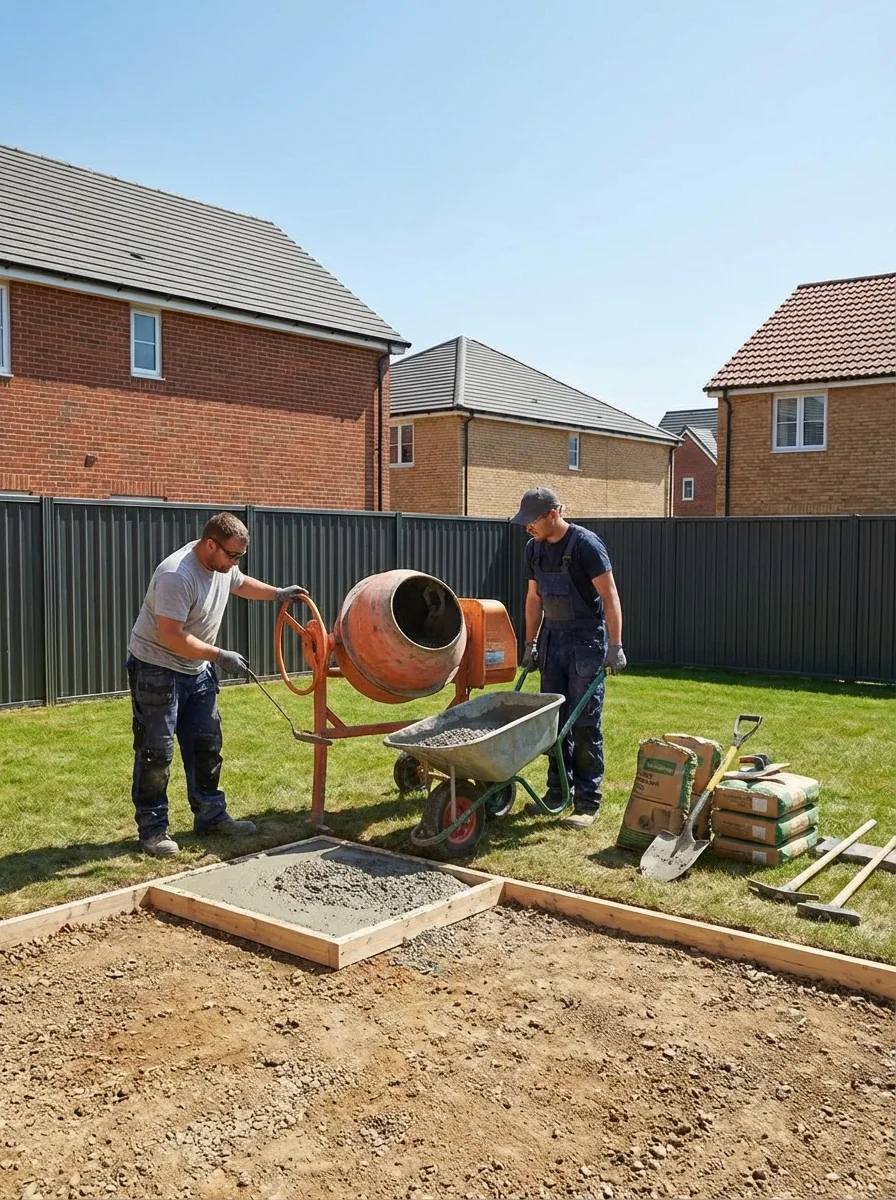
The equipment gap between DIY and professional concrete work is wider than most homeowners realize. You can rent a concrete mixer and basic finishing tools, but you can't access the machinery that separates adequate work from excellent work.
Power trowels create the smooth, dense surface that resists scaling and wear. Laser screeds ensure perfectly level surfaces across large areas. Plate compactors that weigh 500+ pounds achieve base compaction that hand tampers can't match. Concrete vibrators eliminate air pockets in foundations and structural pours. Walk-behind saws with diamond blades cut clean control joints that don't crack randomly.
Contractors also maintain relationships with concrete suppliers that let them specify exact mix designs for your project.
They're not buying generic 3,000 PSI bags from the home center — they're ordering mixes with specific aggregate sizes, air entrainment for freeze-thaw resistance, and strength ratings appropriate to your use case.
Common DIY Concrete Mistakes and Their Costs
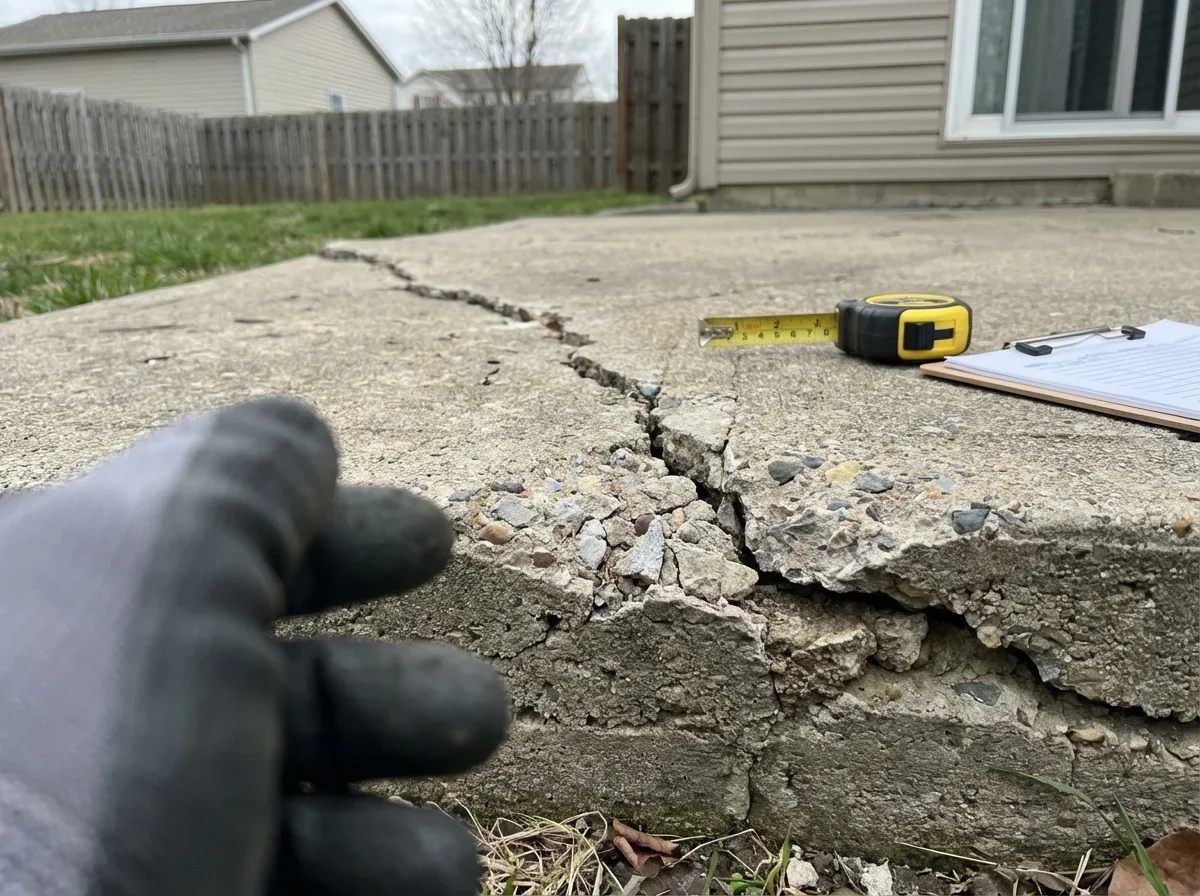
The most expensive DIY concrete mistakes share a pattern: they're invisible during the pour and obvious within months. Inadequate base preparation leads to settling and cracking as soil shifts underneath. Improper grading creates drainage problems that weren't there before. Poor finishing traps moisture that causes scaling when winter arrives.
Cracking is nearly universal in DIY slabs because most homeowners either skip control joints entirely or cut them too shallow or too late.
Concrete will crack — the goal is controlling where those cracks happen. Control joints should be cut to at least one-quarter the slab depth and placed at intervals no greater than 10 feet. Cut too shallow and the concrete cracks wherever it wants. Cut too late and the cracks have already started.
Surface failures happen because finishing concrete requires precise timing. Start too early and you weaken the surface by bringing up excess water. Start too late and you can't achieve a smooth finish, leaving rough spots that collect water and deteriorate quickly. The window between too early and too late might be 20 minutes, and it varies based on temperature, humidity, mix design, and wind.
Fixing these mistakes costs more than hiring professionals in the first place.
You can't patch a poorly poured driveway back to quality — you're looking at removal and replacement, which means paying for demolition, disposal, and a complete new pour. That $2,000 you saved becomes a $6,000 lesson.
Pro Tip: Concrete will crack — it's not a question of if, but where. Control joints guide cracks to predetermined lines, but they must be cut to at least 1/4 the slab depth within 24 hours of pouring. Skip this step and random cracks will appear wherever concrete chooses, often across the most visible areas.
Hidden Expenses of the DIY Approach
Tool rental for a weekend concrete project runs $300-500 when you add up the mixer, compactor, finishing tools, and concrete saw. That doesn't include the wheelbarrows, shovels, rakes, floats, trowels, edgers, and groovers you'll need to buy because they're not available for rent.
But the real hidden cost is time value and mistake expenses.
A contractor pours, finishes, and walks away from a 300-square-foot patio in one day. Your DIY version takes a full weekend for prep, another weekend for the pour (if weather cooperates), plus evenings throughout the week managing the cure.
When DIY projects fail, homeowners face three bad options: live with substandard work that damages property value, pay for professional fixes that cost more than the original professional quote would have been, or tear everything out and start over. One homeowner mentioned ongoing issues like wobbly patio steps that required follow-up complaints to get fixed.[1] At least with a professional pour, you have someone accountable for making it right.
The materials themselves often cost more in small quantities. Contractors buy concrete, rebar, and sealer at wholesale rates and purchase exactly what's needed. DIYers pay retail, often over-ordering to avoid running short, then dispose of the excess.
When DIY Might Be Appropriate (And When It Definitely Isn't)
Small repairs and non-structural patches under 10 square feet fall into reasonable DIY territory. Filling a crack in an existing slab, patching a broken step corner, or pouring a small concrete pad for an AC unit — these involve minimal material, don't require perfect finishing, and won't cause serious problems if they fail.
Even these small repairs work better with professional help, but the cost-benefit calculation shifts when you're talking about $200 worth of materials versus a $750 contractor minimum charge.
The key is keeping expectations realistic — your patch won't match the existing concrete perfectly, and it might crack or fail within a few years.
Everything else belongs in professional hands. Driveways carry vehicle loads and need proper base prep, adequate thickness, and reinforcement. Foundations support your entire house — there's no room for drainage errors or weak concrete. Patios require precise grading so water flows away from your home, not toward it. Sidewalks need control joints placed correctly or you'll have random cracking across walking surfaces.
Stamped or decorative concrete demands professional expertise.
The timing and technique required to stamp patterns or apply color without ruining the surface takes years to learn. You get one chance — once you start finishing, there's no pause button if something goes wrong.
Anything structural, anything that affects drainage, anything larger than a few square feet — hire a contractor. The risk-reward calculation doesn't favor DIY once project scope exceeds simple repairs.
Projects That ALWAYS Need Professional Contractors:
- Driveways (vehicle loads require proper engineering)
- Foundation work (structural integrity, drainage critical)
- Patios over 100 sq ft (grading and finishing complexity)
- Stamped or decorative concrete (one-shot technique, no margin for error)
- Any structural concrete (building codes, inspection requirements)
- Slabs requiring permits (legal compliance, liability protection)
How to Choose the Right Concrete Contractor
Evaluating Reviews and References
Start with verification before you read reviews. Confirm the contractor holds an active license through your state's licensing board — in Wisconsin, that's the Department of Safety and Professional Services.[4] Check that their insurance coverage is current and adequate for your project size.
Once you've verified credentials, look for review patterns rather than individual complaints.
Every contractor gets occasional negative reviews — what matters is how they respond and whether problems are systemic or isolated. Look for mentions of communication quality, timeline adherence, and how issues were handled when they arose.
Homeowners consistently cite responsive communication as a separator between good contractors and average ones.[1] Contractors who respond quickly during the quoting phase, who offer helpful suggestions during planning, and who keep you updated during work tend to run better projects overall.
Ask contractors for references from similar projects completed within the past two years. A contractor who specializes in commercial work might be less ideal for your residential driveway than someone who's poured fifty driveways in your neighborhood. Check portfolios for projects matching your scope and style.[4]
Local experience matters more for concrete than many other trades.
Contractors familiar with your region understand local soil conditions, climate factors, and permit requirements. Family-owned operations with strong local reputations often deliver better results than large regional companies with rotating crews.[1]
Questions to Ask During Contractor Interviews
Request detailed written quotes breaking down labor and materials separately.[4] A contractor who won't itemize costs is either hiding something or doesn't track expenses carefully — neither scenario works in your favor. The quote should specify concrete strength (PSI), thickness, reinforcement type, base preparation depth, and finishing details.
Ask about their timeline and what could delay the project.
Weather affects concrete work more than most trades — you want a contractor who builds buffer time rather than promising aggressive schedules they can't meet. Some contractors have worked hard to beat weather deadlines, finishing entire jobs in one day despite challenges,[1] but that comes from experience and proper planning, not wishful thinking.
Discuss warranties explicitly. What's covered and for how long? Labor warranties typically run 1-3 years, while material warranties depend on the products used. For specialized work like concrete leveling with polyurethane foam, look for contractors offering 5-year warranties on their repairs.[2]
Ask how they handle base preparation and what they do differently based on soil conditions. Generic answers suggest limited experience. Detailed explanations about compaction testing, drainage solutions, and aggregate selection indicate contractors who understand what makes concrete last.
Don't choose contractors solely on lowest price.
Get at least three detailed quotes and verify licensing, insurance, and portfolios before making decisions.[4] The cheapest quote often comes from contractors who cut corners you won't discover until problems emerge months later.
Get Quotes from Experienced Concrete Contractors
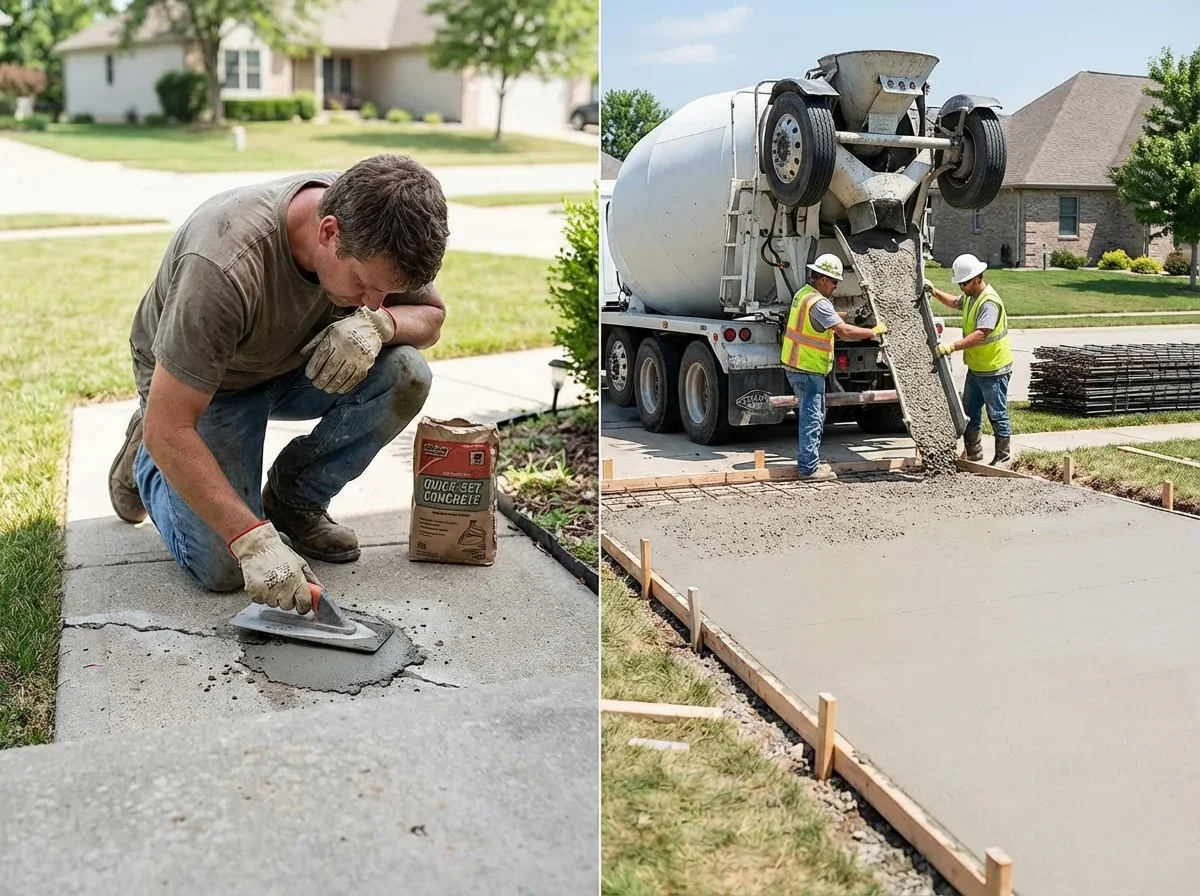
Professional concrete work costs more upfront but delivers decades of service when done right. Contractors bring expertise about soil conditions, weather timing, and mix design that videos can't teach.[1] They use specialized equipment that produces results hand tools can't match. They provide warranties that protect your investment beyond the pour date.
The choice between DIY and professional concrete work isn't about capability — it's about risk tolerance.
DIY might save money if everything goes perfectly, but concrete offers little margin for error and expensive consequences when mistakes happen. Most homeowners who carefully evaluate both options choose professionals, even when quotes initially feel high.