What Is Continuous Pour Concrete Curbing?
Continuous pour curbing uses a concrete extrusion machine to create landscape borders in one unbroken piece. The contractor mixes concrete on-site, loads it into a specialized curbing machine, and guides the equipment along your landscape beds to form a solid ribbon of concrete. This single-pour process eliminates joints every few feet that you'd get with segmented pavers or stamped sections.
The concrete sets within hours and reaches full strength within days. The continuous nature means no separation gaps where grass can creep through or sections that shift when soil settles.
You get borders that follow property curves, wrap around trees, and create flowing lines that segmented materials can't match.
Most residential curbing stands 4-6 inches tall and extends 4-8 inches wide depending on the profile you choose. Contractors pour the curbing directly against existing soil or excavate a shallow trench to set the base slightly below grade. The result is a permanent edging solution that defines planting beds, prevents mulch migration, and creates clean mowing edges.
How Do Contractors Install Landscape Curbing?
Professional installation starts with layout and design. Your contractor walks the property with you to mark curbing lines, discuss how borders will connect to existing hardscaping, and plan for drainage patterns. Experienced installers account for how water flows through your landscape and position curbing to direct runoff away from foundations and into appropriate drainage areas.
Equipment and Extrusion Process
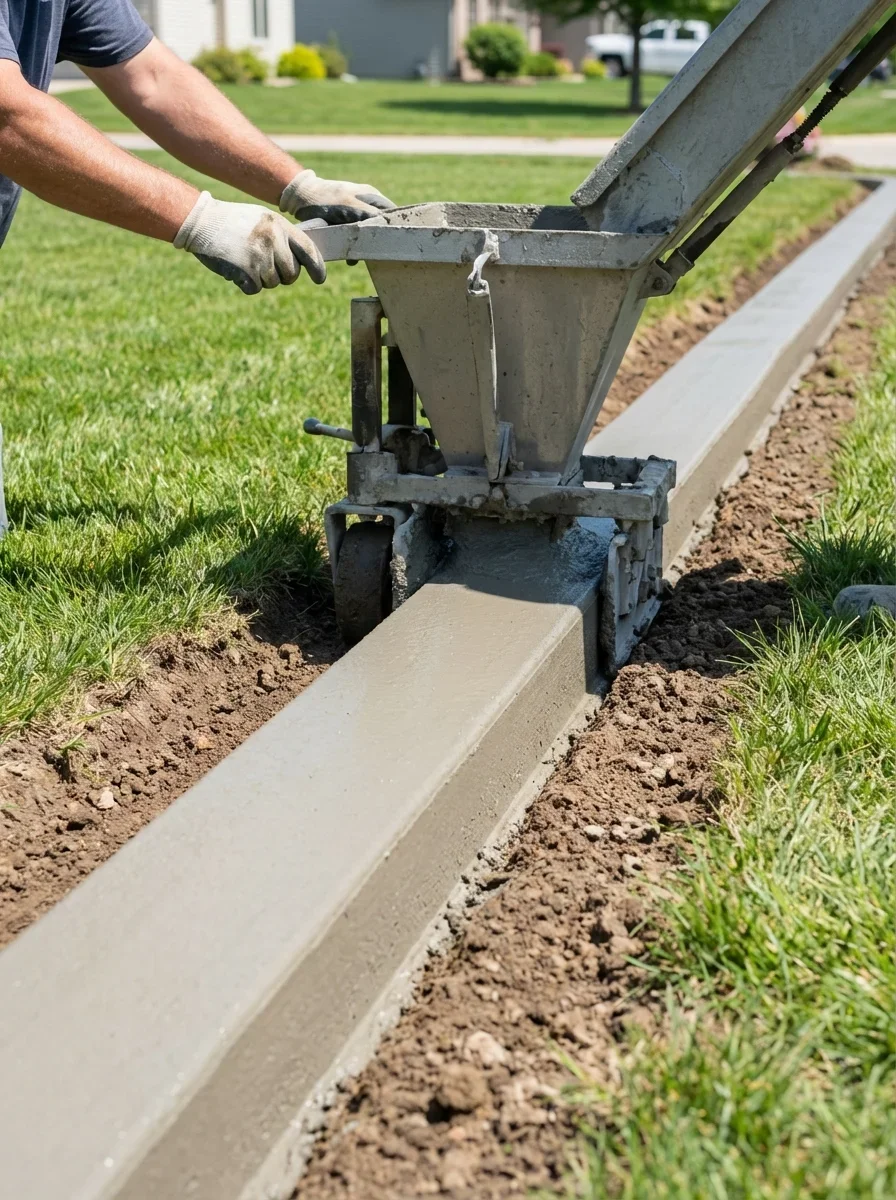
Contractors use portable concrete curbing machines that mix, transport, and extrude concrete in one continuous operation. These machines range from hand-guided models for residential work to larger trailer-mounted units for commercial properties.
The equipment shapes wet concrete through a steel mold as the operator pushes or pulls the machine along your landscape beds.
Quality contractors own their equipment rather than renting, which signals they perform curbing regularly and maintain machinery to professional standards. The extrusion process requires skill to maintain consistent speed, monitor concrete consistency, and create smooth transitions at corners and curves. A contractor who's extruded thousands of linear feet develops the touch needed for professional results.
Most installations use a concrete mix specifically formulated for curbing — slightly drier than typical flatwork but wet enough to extrude smoothly and hold shape immediately. Contractors add fiber reinforcement to resist cracking and may include color pigments during mixing.
The entire process from excavation through finishing typically takes a few hours for 100-150 linear feet.
Installation Timeline at a Glance:
- Site consultation and layout: 30-60 minutes
- Excavation and base prep: 1-2 hours (100-150 linear feet)
- Concrete mixing and extrusion: 2-3 hours
- Finishing and cleanup: 30-60 minutes
- Initial cure time before walking on curbing: 4-6 hours
- Full strength achieved: 7-10 days
- Sealer application (if included): 24-48 hours after pour
Profile Options Contractors Offer
Mower strip profiles create flat-topped curbing 6-8 inches wide that your mower wheel can roll across. This design eliminates string trimming along bed edges because you mow directly against the curbing. The wide, flat surface works well in formal landscapes and contemporary designs where clean horizontal lines matter.
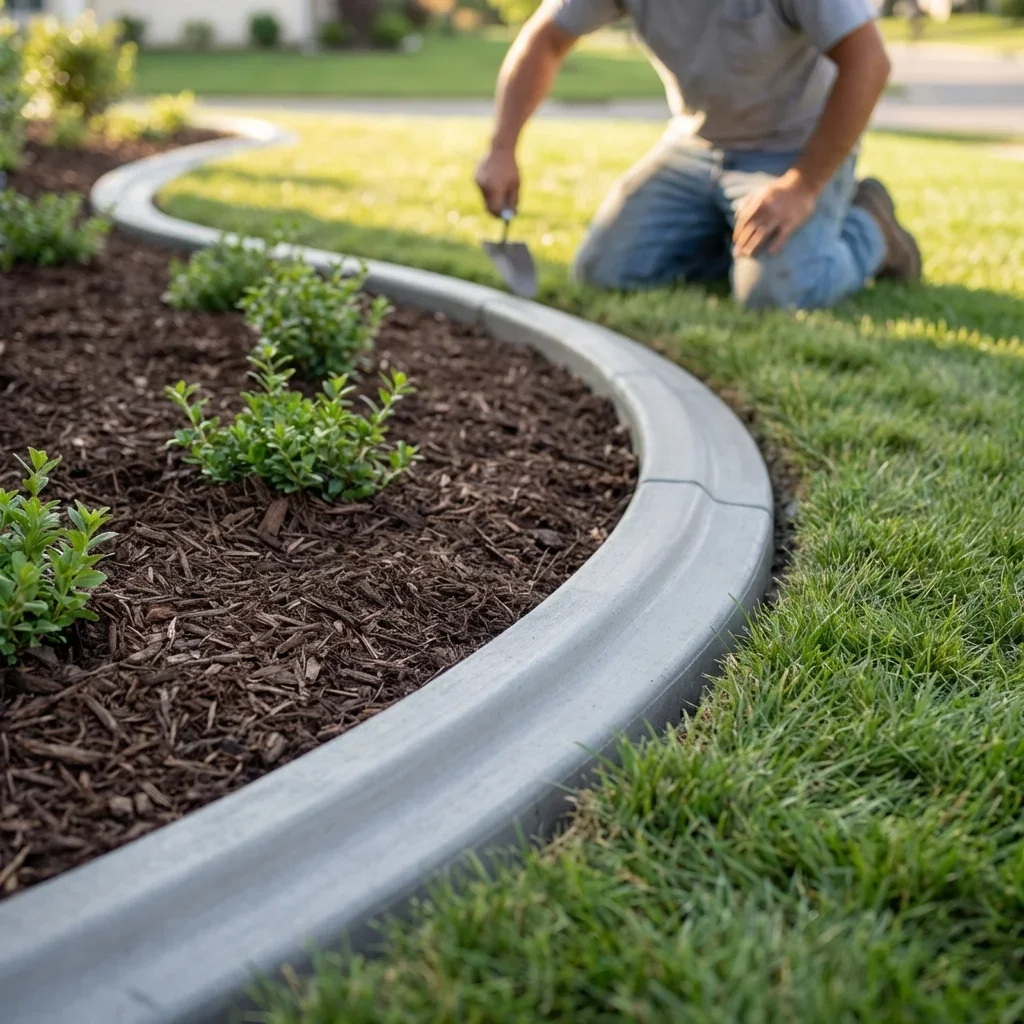
Decorative profiles add rounded tops, beveled edges, or multiple tiers for dimension. Slant curbing angles from ground level up to 4-6 inches, creating a gradual slope that visually softens bed edges. Rolled edge profiles curve upward and over, forming a gentle arch that complements cottage gardens and naturalized plantings.
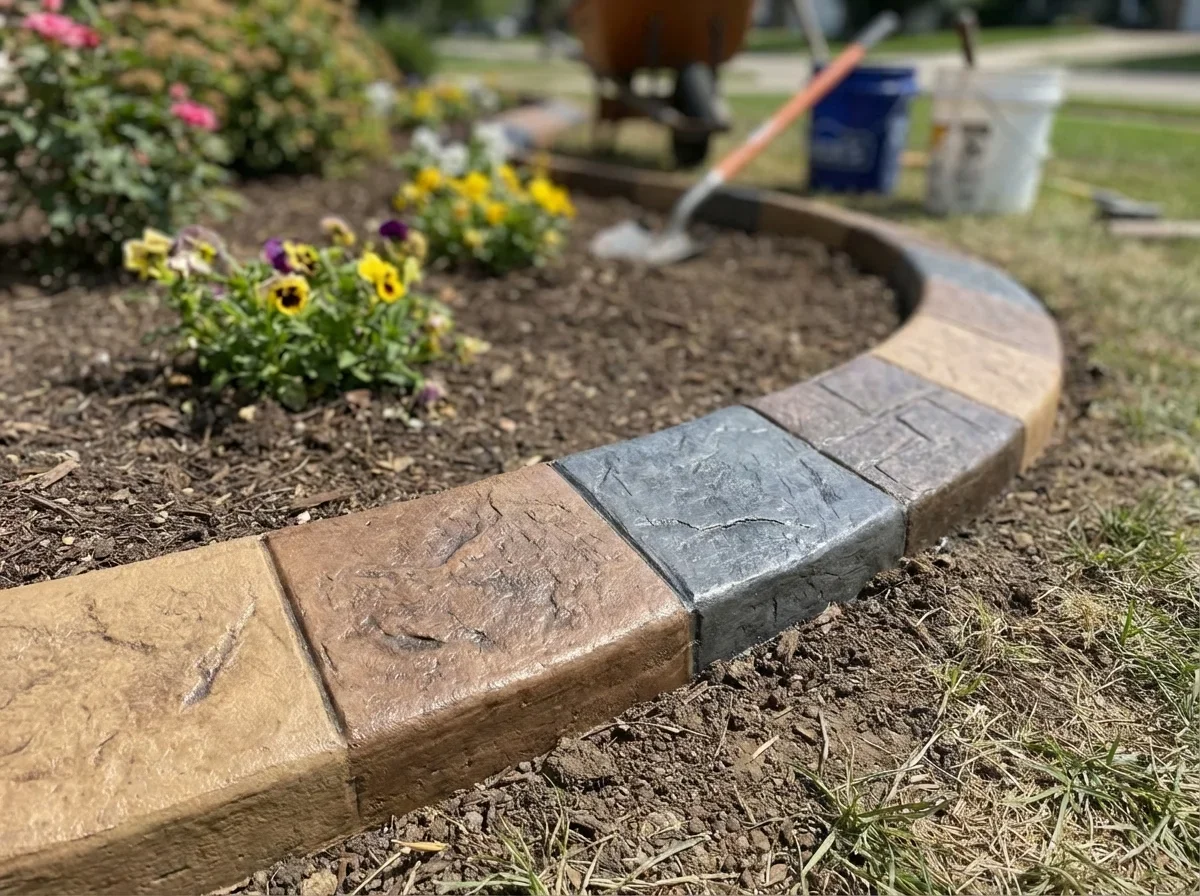
Stamped and textured options let contractors press patterns into wet concrete before it sets. Stone textures mimic natural rock faces, brick patterns suggest traditional masonry, and custom stamps create unique designs.
Your contractor brings profile samples or photos showing installed examples so you see exactly how each option looks at full scale.
Color and Decorative Options for Concrete Edging
Integral color pigments mix directly into concrete before extrusion, creating color throughout the entire curbing depth. Earth tones like tan, brown, and terracotta blend with natural landscapes, while grays match contemporary stone and modern architecture.
Color remains consistent even if the surface chips because the pigment extends through the full concrete thickness.
Acid stains and concrete dyes applied after installation create deeper, more varied color effects. Stains react chemically with concrete to produce mottled, natural-looking tones that vary across the surface. Contractors apply stains 24-48 hours after pouring once concrete has cured enough to accept the treatment. This post-installation coloring costs more than integral pigments but delivers richer, more custom appearance.
Some contractors offer color layering where they extrude a base color, then hand-trowel accent colors onto edges or tops before concrete sets. This technique creates two-tone effects or highlights decorative profiles. Homeowners who want curbing that coordinates with existing pavers, stone accents, or home trim colors often choose custom stain blends matched to specific samples.
Sealer application protects color and helps curbing resist weather, UV fading, and staining from lawn chemicals. Clear sealers maintain the concrete's natural appearance while adding a subtle sheen. Tinted sealers can deepen colors or add warmth.
Quality contractors include initial sealing in their installation price and explain resealing schedules — typically every 2-3 years depending on climate and sun exposure.
Concrete Curbing vs. Other Landscape Edging Materials
Plastic edging costs less upfront, typically $1-3 per linear foot installed, but shifts within seasons as soil freezes, thaws, and settles. The thin plastic bends under mower wheels and becomes brittle after a few years of UV exposure.
Homeowners replace plastic edging every 3-5 years, while concrete curbing lasts 20-30 years or longer with minimal maintenance.
Metal edging provides clean lines and works well for contemporary landscapes, but sharp edges pose safety concerns around play areas. Steel edging rusts over time even with powder coating, and aluminum dents when struck by mowers or landscape equipment. Metal costs $4-8 per linear foot installed — comparable to basic concrete curbing but without the profile variety or permanence.
Brick or paver edging creates traditional looks but requires regular maintenance. Individual units shift as soil moves, creating gaps where grass invades bed areas. Resetting pavers every few years adds labor costs that exceed concrete curbing's minimal upkeep.
Pavers cost $8-15 per linear foot installed depending on material quality and pattern complexity.
Natural stone edging offers rustic appeal but proves most expensive, often $15-25 per linear foot for installation. Stones require ongoing adjustment as they settle unevenly, and irregular shapes make mowing edges less defined. Concrete curbing replicates stone textures through stamping at half the cost while providing the straight mowing lines and permanent positioning that loose stone can't deliver.
| Material | Cost Per Linear Foot | Lifespan | Maintenance Needs | Best For |
|---|---|---|---|---|
| Concrete Curbing | $5-15 | 20-30+ years | Minimal; reseal every 2-3 years | Permanent borders, custom profiles, low maintenance |
| Plastic Edging | $1-3 | 3-5 years | Frequent repositioning, replacement | Temporary gardens, budget constraints |
| Metal Edging | $4-8 | 10-15 years | Rust treatment, dent repair | Contemporary designs, straight lines |
| Brick/Pavers | $8-15 | 15-20 years | Reset every 2-3 years, weed control | Traditional aesthetics, DIY-friendly |
| Natural Stone | $15-25 | 20+ years | Ongoing repositioning | Rustic landscapes, premium budgets |
What Does Landscape Curbing Cost?
Basic concrete curbing in standard gray with simple profiles runs $5-8 per linear foot installed in most markets. This pricing includes excavation, concrete materials, extrusion, and basic finishing.
A typical front yard installation of 150 linear feet costs $750-1,200 for contractors using basic mower strip or slant profiles without color.
Integral color adds $1-2 per linear foot to base pricing. Earth tones and common colors like tan or brown fall at the lower end, while custom color matching increases costs. Decorative profiles with multiple tiers, stamped textures, or hand-finished details add another $2-3 per linear foot. Complex installations with many curves, radius work around trees, or multiple profile transitions push pricing toward $10-12 per linear foot.
Acid staining and specialty finishes applied after installation cost $2-4 per linear foot beyond base curbing prices. These premium finishes require contractors to return after concrete cures, adding labor time and material costs.
High-end projects combining custom colors, decorative profiles, and acid staining can reach $12-15 per linear foot for unique, architectural-quality results.
Most contractors set minimum project fees of $500-800 regardless of linear footage because mobilizing equipment and crew costs similar amounts whether installing 50 feet or 200 feet. Small projects under 75 linear feet often see higher per-foot pricing to cover these baseline costs. Larger installations of 300+ linear feet may qualify for volume discounts of 10-15%.
How to Find a Qualified Curbing Contractor
Equipment ownership indicates commitment to curbing as a core service rather than occasional side work. Ask contractors directly whether they own extrusion machines or rent equipment for individual jobs.
Contractors who own machinery have performed enough installations to justify equipment investment and maintain it to professional standards.
Request photos of completed projects showing various profiles, colors, and property types similar to yours. Quality portfolios include close-up shots demonstrating smooth extrusion, clean corners, and consistent thickness. Look for installations that have aged well — contractors proud of their work often photograph projects months or years after installation to show durability and color retention.
Experience specifically with landscape curbing matters more than general concrete experience. Flatwork specialists who pour driveways and patios don't necessarily excel at curbing extrusion, which requires different skills and equipment. Ask how many years contractors have focused on curbing and approximately how many linear feet they install annually.
Specialists who extrude 10,000+ feet yearly have refined techniques that occasional installers haven't developed.
Verify contractors explain sealing requirements, maintenance schedules, and realistic color expectations upfront. Professionals discuss how UV exposure affects certain pigments, when resealing becomes necessary, and what homeowners should do if minor cracks appear during the first year. Contractors who gloss over maintenance or promise zero upkeep don't set realistic expectations.
Check that estimates itemize curbing profile, color choices, sealer type, and linear footage separately. Detailed quotes let you understand exactly what you're paying for and make informed decisions about upgrades.
Vague "total project" pricing without breakdowns makes comparing contractors difficult and suggests less transparent business practices.
Pro Tip: The best curbing contractors perform a "scratch test" during your consultation — they'll scrape a key or coin across their sample pieces to show you how integral color remains consistent throughout the concrete depth, while surface-only treatments chip away to reveal plain gray underneath. This simple demonstration separates quality materials from cheaper alternatives.
Connect with Concrete Curbing Specialists Near You
Landscape curbing contractors often operate as specialized businesses focusing exclusively on decorative concrete edging or as divisions within larger hardscaping companies. You'll find them through landscape material suppliers, nurseries that offer installation services, and referrals from landscape designers who coordinate curbing with broader projects.
Quality installers schedule site visits to assess your landscape, discuss design preferences, and provide detailed quotes. This consultation helps contractors understand soil conditions, existing irrigation, and how curbing integrates with other hardscaping elements.
You'll review profile samples, color charts, and photos of completed installations during this meeting.
The directory below connects you with concrete curbing contractors serving your area who own professional equipment and focus on landscape edging as a primary service. These specialists understand how curbing coordinates with mulching, irrigation, and planting projects to create cohesive landscape designs that reduce maintenance for years to come.