Common Concrete Problems Homeowners Face
Concrete fails in predictable patterns. The crack pattern, location, and progression tell contractors whether you're dealing with surface deterioration or something affecting the structural integrity of the slab itself.
Surface Damage vs Structural Issues
Surface damage affects only the top layer of concrete — typically the first quarter-inch to half-inch. Crazing produces those fine, interconnected surface cracks that look like spiderwebs but don't penetrate deep into the slab.[1] Scaling creates shallow pockmarks that expose aggregate, usually from freeze-thaw cycles in regions with harsh winters. Pop-outs leave small conical depressions where embedded stones expanded and broke through the surface.
These cosmetic problems don't compromise what the concrete does structurally. Your driveway still supports vehicle loads. Your patio still bears furniture weight without issue.
Structural cracks behave differently. They extend through the full depth of the slab, often widening over time as the underlying problem worsens. Diagonal corner cracks result from the slab curling or warping due to temperature and moisture differences between the top and bottom surfaces.[1] Plastic-shrinkage cracks — which appear during the curing process when surface concrete dries faster than the interior — can penetrate deep enough to affect long-term durability.[2]
Active cracks change in width, direction, or depth over months or years. Dormant cracks remain stable.
Contractors determine activity by measuring crack widths at multiple points and returning weeks later to check for progression. Active structural cracks signal ongoing foundation movement or continuing settlement below the slab.
| Damage Type | Depth | Structural Impact | Repair Urgency |
|---|---|---|---|
| Surface Crazing | 1/4" - 1/2" | None — cosmetic only | Low — address when resurfacing |
| Structural Cracks | Full slab depth | High — compromises load capacity | Immediate — worsens over time |
| Settlement Cracks | Full depth + foundation issues | Severe — ongoing movement | Urgent — causes additional damage |
Settlement and Sinking Concrete
Concrete doesn't sink because the material itself fails. The soil beneath loses its load-bearing capacity.
Insufficiently compacted subgrades compress under the slab's weight over time. Frost heave forces soil upward in winter, creating voids when it thaws. Expansive clay soils swell when wet and shrink when dry, producing uneven support that lets sections of concrete drop.[2]
You'll notice settlement when adjacent slabs form uneven transitions — that raised edge where your driveway meets the garage floor, or the patio section that now pools water after rain. Even an inch of settlement creates tripping hazards and drainage problems.
Settlement rarely affects the entire slab uniformly. One corner drops while the rest remains level, creating stress concentrations that spawn new cracks radiating from the sunken area. Attempting to resurface settled concrete without first releveling it just camouflages the problem temporarily.
The new overlay will crack along the same stress lines within months.
Concrete Repair Options Contractors Offer
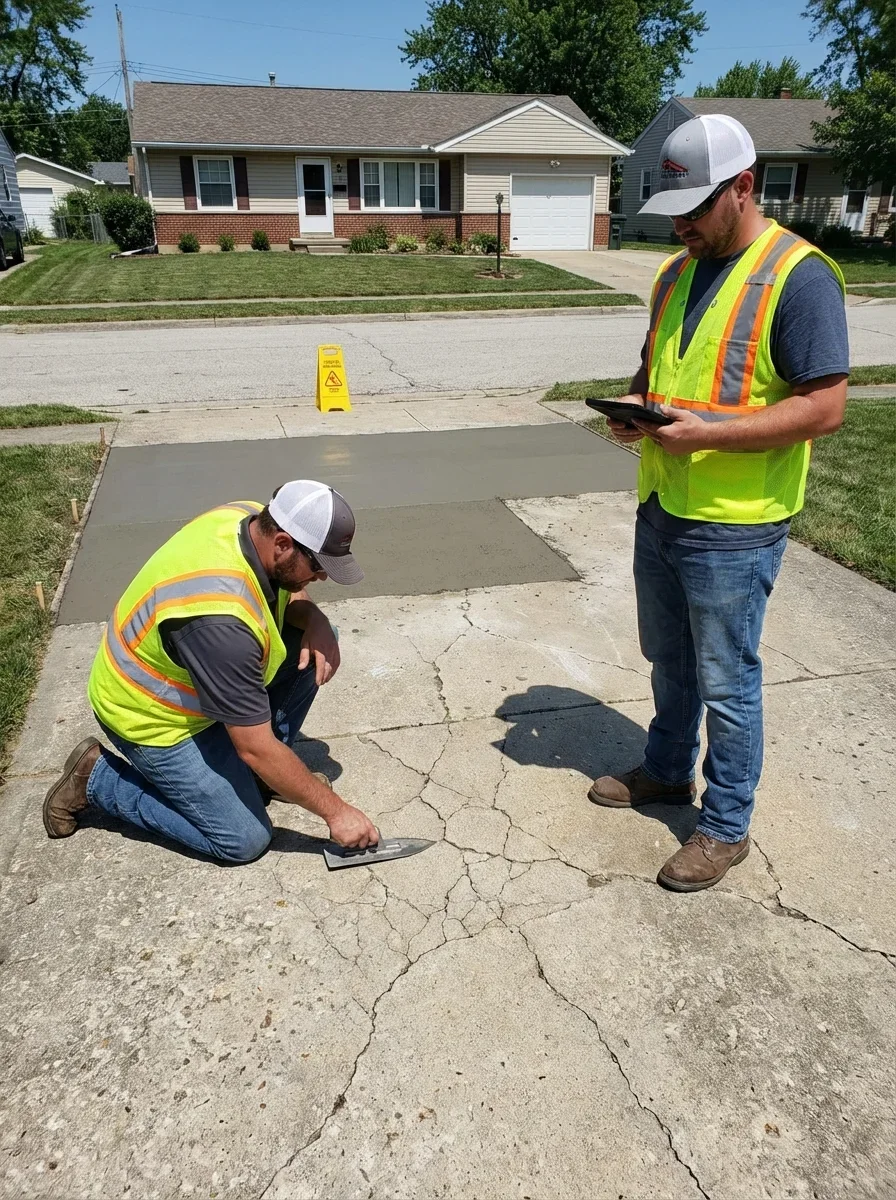
Different repair methods target different damage mechanisms. Matching the repair to the underlying cause determines whether you get five years or twenty from the work.
Patching and Crack Repair
Patching addresses localized surface damage without replacing entire slabs. Contractors grind out damaged areas to create clean edges, then fill the void with polymer-modified repair mortar that bonds to existing concrete. Modern patching compounds include bonding agents that create mechanical and chemical adhesion to prevent the patch from popping out under traffic or temperature cycling.
Small surface cracks under a quarter-inch wide get routed slightly wider to create a reservoir, then filled with flexible crack sealant. This approach works for dormant cracks that won't continue widening. The sealant prevents water infiltration that would otherwise accelerate freeze-thaw damage in the crack zone.
Patching makes sense for damage covering less than 20% of a slab's surface area. Beyond that threshold, you're creating a patchwork that will weather differently than the original concrete. Many homeowners find that mottled appearance visually worse than the initial damage.
Expect patched areas to last 5-10 years before the bond fails or the patch material itself begins deteriorating. Patches don't restore the original appearance — color and texture differences remain visible, particularly as surrounding concrete continues aging.
Resurfacing and Overlay Systems
Resurfacing bonds a new layer of specialized concrete over the existing surface, hiding cosmetic damage while adding structural thickness. Contractors apply polymer-modified overlay materials between a quarter-inch and two inches thick, depending on the existing surface condition and the desired finish profile.
The process begins with surface preparation — pressure washing, acid etching, or shot blasting to remove contaminants and create the rough texture needed for proper bonding. Some contractors apply a bonding slurry to further enhance adhesion between old and new concrete layers.
The overlay material itself contains polymers that increase flexibility and bond strength compared to standard concrete mixes.
Resurfacing works for surfaces with widespread crazing, minor spalling, or discoloration that makes the concrete look worse than it structurally is. The existing slab must be sound — resurfacing over concrete with active structural cracks or settlement issues simply transfers those problems to the new surface layer within months.
Properly installed overlays last 10-20 years before they require replacement or another resurfacing cycle. The longevity depends heavily on surface preparation quality and whether the underlying concrete remains stable. Some contractors offer decorative stamped or stained overlays that not only repair damage but also upgrade the appearance beyond what the original concrete provided.
Pro Tip: Resurfacing over settled or actively cracking concrete is like painting over rot — it looks better temporarily but fails within months. Always address structural issues before applying any overlay system.
Leveling and Lifting Services
Concrete leveling corrects settlement by injecting material beneath sunken slabs to fill voids and raise the concrete back to its original elevation. Two primary methods dominate the industry.
Mudjacking pumps a slurry of cement, sand, and water through 2-inch holes drilled in the settled concrete. The slurry fills voids and exerts hydraulic pressure that lifts the slab. Once the concrete reaches the desired height, contractors cap the injection holes with mortar plugs.
Mudjacking costs less than polyurethane foam injection but adds significant weight to the already-compromised soil beneath — potentially causing future resettlement if the soil can't support the additional load.
Polyurethane foam injection uses much smaller injection holes (typically 5/8-inch) and fills voids with expanding structural foam that weighs just two pounds per cubic foot compared to mudjacking's 100+ pounds. The foam expands to fill voids completely, then cures within 15 minutes to a rigid state that won't compress further. The minimal weight makes foam suitable for situations where soil bearing capacity is marginal.
Foam costs roughly double what mudjacking does, but the precision control and reduced reoccurrence rate often justify the premium.
Both methods work only when the concrete itself remains structurally sound. Extensively cracked slabs lack the tensile strength to lift as a unit — attempting to level them can cause additional fracturing. Leveling typically extends concrete life by 10-15 years by eliminating the drainage and stress concentration problems that settlement creates.
When Replacement Is Necessary
Full replacement becomes unavoidable when the concrete has deteriorated beyond what surface treatments or leveling can address. Structural failure from insufficient reinforcement, extensive cracking affecting more than 40% of the surface area, or recurring settlement that leveling has already failed to resolve once all indicate that patching around the edges won't deliver acceptable longevity.
Concrete subjected to chemical damage — from road salt, petroleum products, or industrial chemicals — often deteriorates through its full depth in ways resurfacing can't fix. The existing material lacks the strength to support a bonded overlay, and cracks propagate through from the compromised base concrete.
Replacement allows contractors to correct the original design flaws or installation errors that caused premature failure. Subgrade compaction, proper base material depth, adequate slab thickness, correctly spaced control joints, and appropriate reinforcement all get addressed during replacement in ways repair methods can't retrofit.
New concrete carries a realistic 20-30 year lifespan when properly installed over prepared subgrades in moderate climates. Replacement costs 2-3 times what resurfacing does, but dividing that cost over three decades of service life often makes replacement the most cost-effective solution when existing concrete has reached end-of-life.
How Contractors Decide Which Repair to Recommend
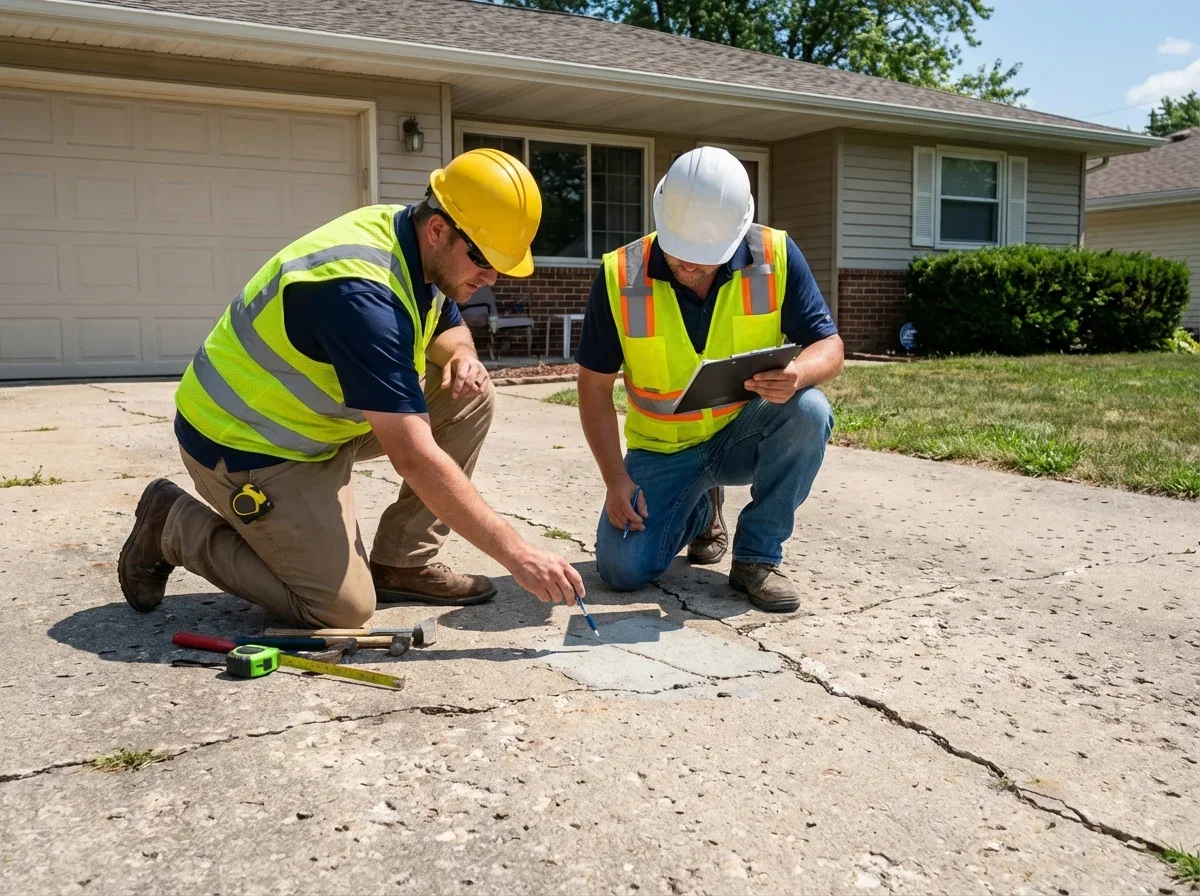
Professional assessment begins with visual inspection but doesn't end there. Contractors evaluate crack patterns to determine whether damage originates from surface causes or structural movement below.
They check for active versus dormant cracking by measuring widths and looking for fresh concrete dust in crack openings — evidence of recent movement.
Sound testing involves tapping the slab with a hammer or chain to listen for hollow sounds that indicate delamination or voids beneath the surface. Solid concrete produces a sharp, ringing tone. Delaminated areas sound dull and flat.
Some contractors use ground-penetrating radar or infrared imaging to map subsurface voids without drilling exploratory holes.
Elevation surveys using laser levels or optical transits quantify settlement. Contractors establish a reference plane and measure deviations at grid points across the slab. Settlement of more than half an inch typically requires leveling before other repairs. Minor elevation differences might be addressed through strategic grinding and overlays that taper to create smooth transitions.
Core sampling removes cylindrical concrete specimens that labs test for compressive strength and depth of deterioration. Cores reveal whether damage extends through the full slab thickness or remains confined to surface layers.
Strength testing determines if the existing concrete can support overlay materials or if the deterioration has progressed too far.
Climate and usage patterns influence recommendations. Concrete in freeze-thaw regions needs different solutions than slabs in arid climates. Driveways that carry commercial vehicle traffic require more robust repairs than residential patios. Experienced contractors factor these conditions into longevity projections for each repair option.
Key Assessment Tools Contractors Use:
- Visual crack pattern analysis (active vs. dormant movement)
- Sound testing with hammer/chain (detects subsurface voids)
- Laser elevation surveys (quantifies settlement extent)
- Core sampling for lab strength testing (determines structural integrity)
- Ground-penetrating radar or infrared imaging (maps hidden damage)
What Does Concrete Repair Cost?
Patching small surface damage typically runs $200-$500 per repair area, depending on the damaged section size and accessibility. Crack repair costs $3-$8 per linear foot for routing and sealing.
These represent the most economical repairs when damage remains localized.
Concrete resurfacing costs $3-$8 per square foot installed, varying with the overlay material selected and surface preparation requirements. Decorative stamped or stained overlays increase costs toward the higher end of that range. Minimum project charges often apply — contractors rarely mobilize equipment for areas under 200 square feet, making small resurfacing jobs proportionally more expensive per square foot.
Leveling costs depend on the method and extent of settlement. Mudjacking typically runs $500-$1,200 for average driveways or patios, while polyurethane foam injection costs $800-$2,000 for comparable projects.
Deeper voids require more material, increasing costs. Some contractors charge by the slab rather than by square footage for leveling work.
Full concrete replacement costs $8-$15 per square foot, including demolition of existing concrete, subgrade preparation, and installation of new concrete at proper thickness. Complex projects involving extensive forming, decorative finishes, or difficult access can push costs higher. The wide range reflects regional material and labor cost variations, with urban markets typically commanding premium pricing.
Most contractors provide free initial assessments before quoting specific repair costs. Accurate quotes require on-site evaluation — the contractor needs to see crack patterns, measure settlement, and assess underlying conditions.
Be wary of contractors who quote prices over the phone without inspecting the damage.
Choosing a Concrete Repair Specialist
Look for contractors who specialize in the repair method your situation requires. A residential concrete contractor who primarily pours new driveways may lack the specialized equipment and materials for professional leveling work.
Resurfacing demands different expertise than structural repair. Many contractors offer multiple services, but verify they regularly perform the specific work you need.
Ask about repair longevity expectations and what factors might shorten the projected lifespan. Contractors confident in their work provide realistic timelines — "this resurfacing should last 15 years assuming no new settlement occurs" gives you actionable information.
Vague promises about permanent repairs or lifetime solutions signal inexperience with how concrete performs long-term.
Request references from projects completed 3-5 years ago, not just recent work. Recent projects always look good; you need to see how repairs hold up after years of weathering and use. Contact those references and ask specific questions about whether cracks returned, whether leveled concrete remained stable, or whether resurfaced areas have delaminated.
Verify the contractor carries proper insurance — both general liability and workers compensation if they employ others. Concrete work involves heavy materials and equipment that can cause significant property damage if mishandled.
Insurance protects you from liability if someone gets injured on your property during repairs.
Get detailed written proposals that specify materials by manufacturer and product name, repair procedures, and warranty coverage. "Concrete overlay" means little without knowing the specific product specifications. Quality contractors use established overlay systems from manufacturers like Ardex, Rapid Set, or W.R. Meadows rather than field-mixing their own formulations.
Find Qualified Concrete Repair Contractors
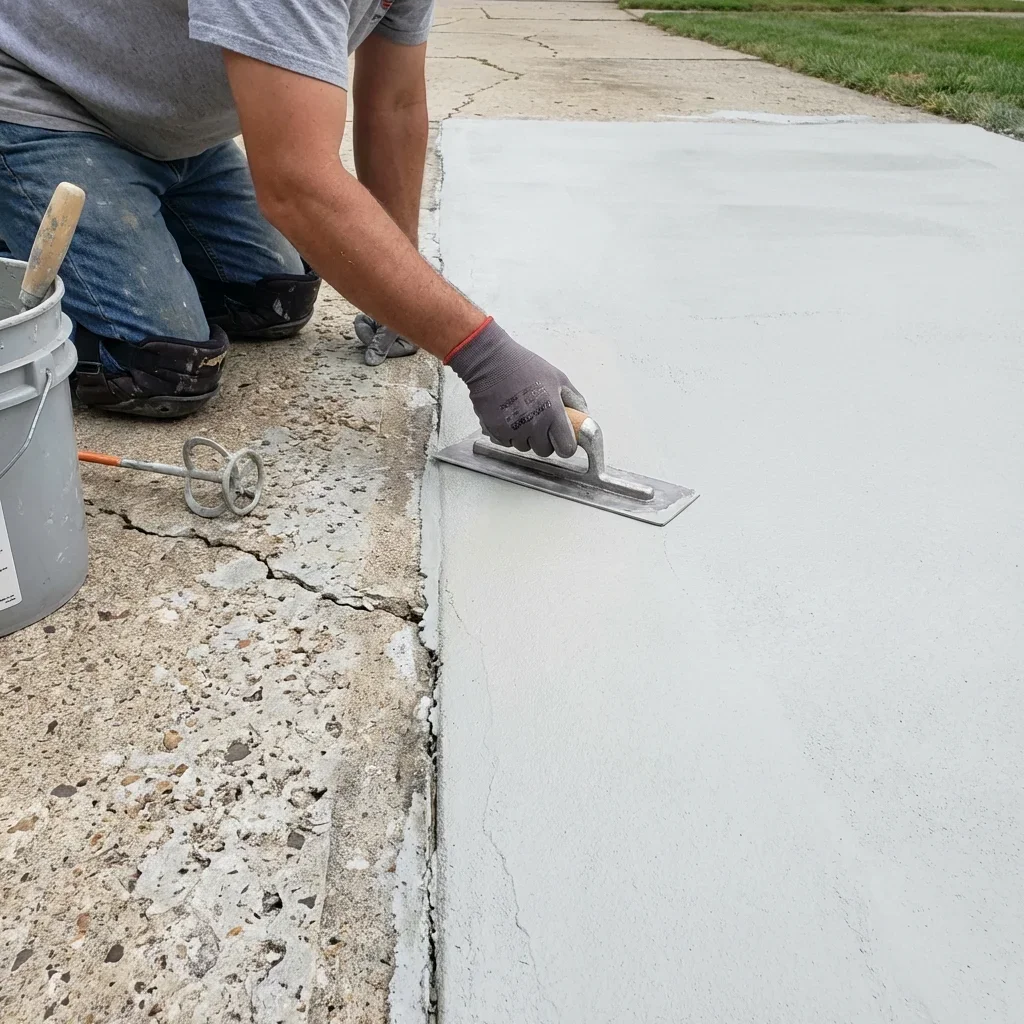
Professional concrete repair requires matching the solution to the underlying problem. Surface treatments fail quickly when applied over structural issues. Leveling work succeeds only when the concrete itself remains sound enough to lift as a unit.
Replacement makes sense when existing concrete has deteriorated beyond what any repair method can reliably address.
Getting multiple assessments helps you understand whether contractors agree on the diagnosis and recommended approach. If three contractors independently suggest leveling while one proposes resurfacing, the outlier may be pushing the service they prefer to deliver rather than what your situation requires.
Consensus across independent evaluations increases confidence you're pursuing the right repair path.
Frequently Asked Questions
- U.S. General Services Administration (GSA). "Types of Cracks in Concrete and Typical Causes." https://www.gsa.gov/real-estate/historic-preservation/historic-preservation-policy-tools/preservation-tools-resources/technical-procedures/types-of-cracks-in-concrete-and-typical-causes. Accessed February 09, 2026.
- Portland Cement Association. "Concrete Slab Surface Defects: Causes, Prevention, Repair." https://www.concreteisbetter.com/wp-content/uploads/2013/06/Slab-Surface-Prevention-Repair-a.pdf. Accessed February 09, 2026.