Enhanced Article with Engagement Widgets
What Do Concrete Contractors Charge in Fox Valley?
Concrete contractors in Fox Valley typically charge between $6 and $10 per square foot for standard residential work, though you'll see quotes as low as $4 and as high as $12 depending on project complexity. That $6–$10 range covers basic slabs with proper reinforcement and finishing — the kind of work that lasts 20+ years without major issues.
National averages put basic concrete pad installation at $6.30 to $7.66 per square foot, but Wisconsin's shorter construction season and freeze-thaw cycles push local pricing slightly higher.[1][3]
You're paying for contractors who understand how to prevent winter heaving and know that skimping on base prep means callbacks in spring.
Average Costs by Project Type
Driveways run $3,900 to $7,300 for a standard two-car setup (400–600 square feet), though that can climb to $10,000+ if you're replacing an old driveway and need significant excavation. Patios average $1,500 to $4,900 depending on size and finishing. A basic 200-square-foot patio with broom finish sits around $1,800, while the same space with stamped patterns and integral color pushes $3,500.[1]
Sidewalks and small walkways cost $6 to $12 per square foot. The higher end reflects tight access areas where concrete trucks can't reach and contractors pump or wheelbarrow every yard. Foundation work ranges more widely ($8–$15 per square foot) because it includes structural engineering, deeper excavation, and heavier reinforcement requirements.
Small repairs and patches carry minimum charges — most contractors won't mobilize for less than $500 to $800, even if you only need 50 square feet poured.
That's why your small patio extension costs $12 per foot while your neighbor's full driveway came in at $7.
Quick Reference: Fox Valley Concrete Costs
- Driveways (400–600 sq ft): $3,900–$7,300 (standard), $10,000+ (with excavation)
- Patios (200 sq ft): $1,800 (basic broom finish), $3,500 (stamped/colored)
- Sidewalks: $6–$12 per square foot
- Foundation work: $8–$15 per square foot
- Minimum project charge: $500–$800
- Seasonal pricing swing: 10–20% higher in spring, 10–15% discount in fall
Regional Pricing Factors in Wisconsin
Fox Valley pricing reflects Wisconsin-specific challenges that contractors in milder climates don't face. The ground freezes 40+ inches deep here, which means proper base preparation isn't optional — it's the difference between a driveway that lasts and one that cracks the first winter.
Contractors who know what they're doing excavate deeper, install 4–6 inches of compacted gravel base, and use air-entrained concrete mixes designed to survive freeze-thaw cycles. That knowledge and extra material cost more upfront but save you from repours.
You'll also see seasonal pricing swings. Spring demand drives rates up 10–20% as everyone tries to schedule before summer events, while fall bookings sometimes catch 10–15% discounts from crews filling their schedule before winter shutdown.
What Affects Concrete Contractor Pricing?
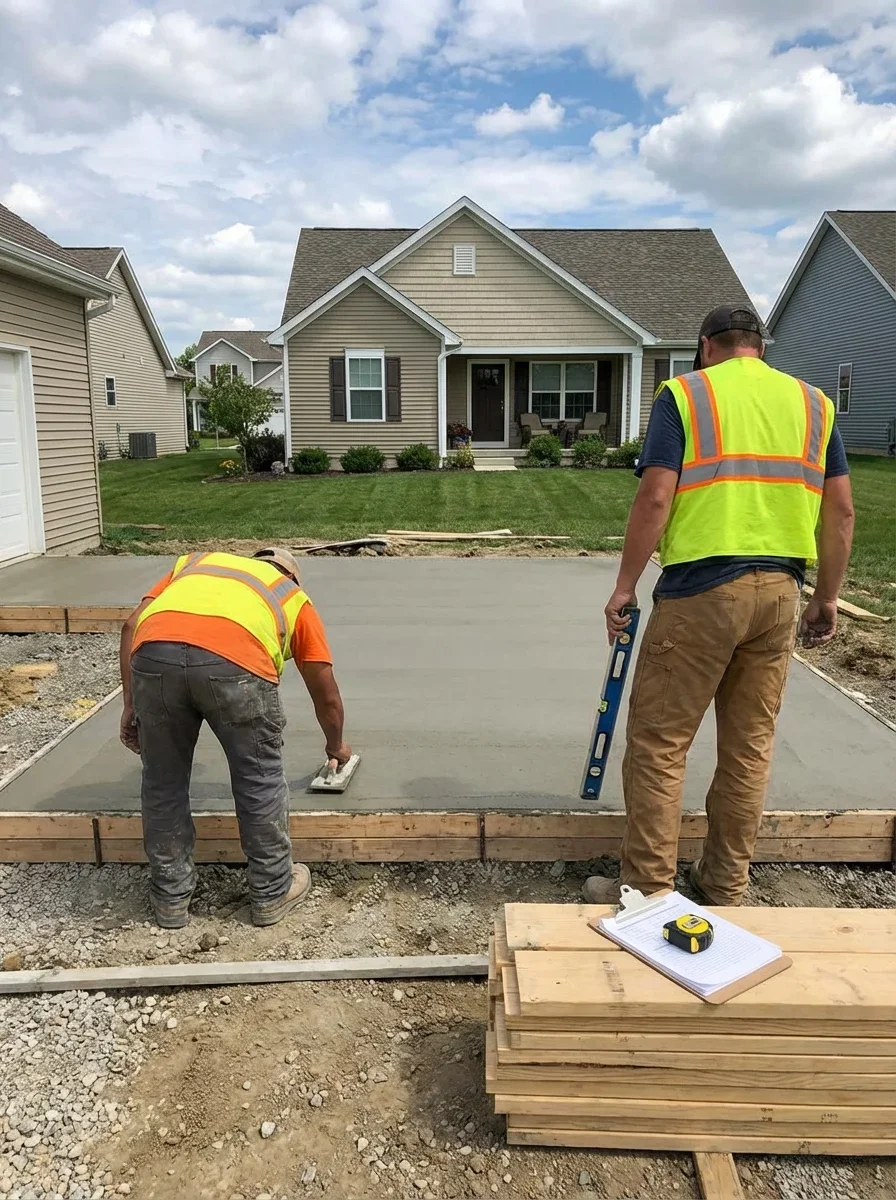
Three main variables separate a $4,000 driveway from an $8,000 one: what goes into the concrete, what happens before the pour, and what the surface looks like when they're done.
Understanding these factors helps you spot whether a quote reflects quality work or cut corners.
Material Quality and Mix Design
Not all concrete is the same. Standard residential mixes run 3,000 to 4,000 PSI (pounds per square inch of compressive strength), with materials costing around $100 per cubic yard for basic 3,000 PSI mix.[2] Driveways handling heavier vehicles need 4,000+ PSI. Exposed surfaces benefit from air-entrained mixes that resist freeze damage and salt scaling.
Contractors charging premium rates often use better aggregate — crushed stone instead of river rock for stronger bonding. They add fiber reinforcement mixed into the concrete itself, and admixtures that improve workability and cure strength. These upgrades add $15–$30 per cubic yard but dramatically reduce cracking.
A 400-square-foot driveway uses about 5 cubic yards, so better concrete adds $75–$150 to material costs. Noticeable but not budget-breaking.
The bigger material decision is rebar versus wire mesh. The Portland Cement Association recommends rebar for structural slabs to prevent cracking, yet many budget contractors still use cheaper wire mesh that doesn't hold cracked sections together.[2]
Rebar upgrades add $0.50–$1.00 per square foot but turn a cracked slab from a failure into a minor cosmetic issue.
| Feature | Wire Mesh | Rebar |
|---|---|---|
| Cost | Lower (baseline) | +$0.50–$1.00/sq ft |
| Crack Prevention | Minimal | Excellent |
| Crack Control | Poor (doesn't hold sections) | Strong (keeps sections together) |
| Industry Recommendation | Not recommended for structural | Recommended by Portland Cement Assoc. |
| Best For | Non-structural, low-traffic areas | Driveways, patios, structural slabs |
Site Preparation and Excavation
Site prep represents 20–40% of your total cost. This is where budget contractors cut first.
Proper preparation means excavating to the right depth (6–8 inches for driveways), removing organic material and soft spots, installing compacted gravel base in 2-inch lifts, and grading for drainage. Skip any step and you're pouring concrete over future problems.
Demolition and removal of existing concrete adds $2 to $5 per square foot depending on thickness and access.[3] If your old driveway is 4 inches thick, that's one cost. If it's 6 inches with rebar and the contractor hits unexpected footings, your demo bill climbs. Tree roots, underground utilities, and rocky soil all push excavation costs higher — not because contractors are padding bills, but because the work takes longer and requires equipment.
Grading matters more than most homeowners realize. A driveway that pools water against your foundation causes basement leaks. A patio that slopes toward the house sends runoff through your back door.
Good contractors laser-level sites and build in proper pitch. Cheap ones eyeball it and pour.
Finishing Options and Complexity
A basic broom finish — the standard textured surface on most driveways — adds minimal cost beyond labor. Stamped concrete that mimics stone or brick costs $3 to $6 per square foot extra for the stamps, release agents, and additional labor time. Integral color adds $0.50 to $1.50 per square foot. Acid staining ranges from $2 to $4 per square foot.
Decorative edges, radius curves, multiple colors, and intricate stamp patterns all require more time and skill. A rectangular patio takes one crew day to pour and finish. That same square footage with curved edges, three colors, and ashlar slate stamping takes two days plus touch-up work.
Labor represents 30–50% of concrete work costs, so doubling labor time significantly impacts your final bill.[2]
Exposed aggregate finishes (washing away surface cement to reveal decorative stone) and polished concrete both require additional steps after initial curing. These aren't upsells — they're genuinely more complex processes that take more time.
How Contractors Structure Their Pricing
Most concrete contractors price residential work per square foot because it's straightforward for homeowners to understand and compare. You'll see quotes ranging from $6 to $12 per foot depending on thickness, reinforcement, and finish.
Flat-rate pricing appears for common projects like standard garage aprons or shed pads where contractors know exactly what the job entails. A 10×12 shed pad might quote as "$1,200 installed" rather than "$10 per square foot" — same math, different presentation. This approach signals the contractor does enough of these projects to price confidently.
Time-and-materials pricing shows up for complex jobs with unknowns: foundation repairs where you don't know what you'll find until excavation, or projects requiring structural engineer input. Contractors charge actual material costs plus hourly labor ($50–$85 per hour per crew member in Fox Valley). This protects both parties when scope isn't fully defined, but it requires trust. Get detailed documentation of hours and receipts.
Minimum charges apply across the board. Most contractors won't schedule a pour under $500 to $800 because mobilization costs (truck minimums, crew scheduling, equipment transport) don't change whether they're pouring 50 square feet or 500.
Small repair jobs almost always cost more per square foot than larger projects for this reason.
Hidden Costs in Concrete Projects
Permits catch homeowners off guard more than any other cost. Most municipalities require permits for new driveways, patios over certain sizes, and any foundation work. Permit costs run $50 to $400 depending on project scope and local requirements.[3] Factor in another half-day of contractor time for permit applications and inspections.
Utility location and protection add costs when you're digging near gas lines, electrical service, or water mains. Wisconsin law requires calling Diggers Hotline before excavation, but if utilities run through your project area, contractors may need hand-digging around lines or temporary service disconnection.
This isn't contractor padding. It's code compliance and safety.
Base material requirements vary by soil conditions. If your property has high clay content or poor drainage, contractors may specify thicker gravel bases (6–8 inches instead of 4) or geotextile fabric under the base to prevent mixing with subsoil. Clay-heavy areas around parts of Appleton and Oshkosh often need these upgrades. The materials add $1–$2 per square foot, but without them, your concrete settles unevenly within two years.
Access limitations drive costs when concrete trucks can't reach your pour site. Pumping concrete costs $150–$300 per load beyond standard delivery. Tight side yards, backyards without gates, or second-story deck pours all require pumping. Some residential jobs need concrete wheelbarrowed from truck to pour site — adding significant labor time that shows up in your quote.
Concrete disposal from demolition isn't included in most base quotes. Hauling away an old 400-square-foot driveway runs $400 to $800 depending on dump fees and distance to recycling facilities. Some contractors include this; others list it as a separate line item.
Ask specifically rather than assuming it's covered.
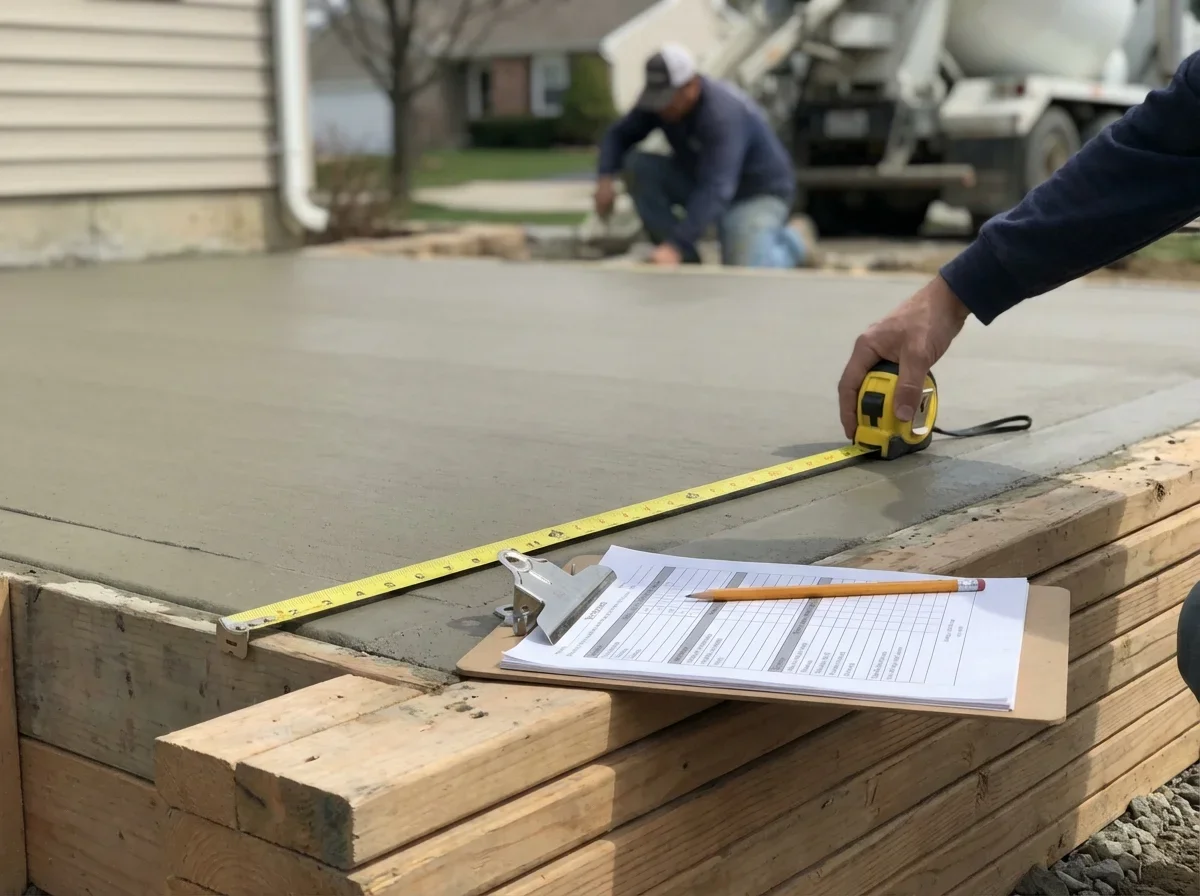
Why Small Jobs Cost More Per Square Foot
A 50-square-foot concrete pad quotes at $12 per square foot ($600 total) while a 500-square-foot patio comes in at $7 per foot ($3,500). The small pad isn't three times harder to pour — you're paying for the same base costs spread over less area.
Concrete delivery minimums drive much of this. Ready-mix trucks have minimum charges (often $150–$200 per truck) regardless of volume delivered. A small job might only need one cubic yard but pays for the truck minimum anyway.
That cost divided by 50 square feet hits harder than the same charge over 500 square feet.
Crew mobilization represents fixed costs that don't scale down. Contractors need to schedule their crew, transport tools and equipment, set up forms, and clean up afterward. These tasks take roughly the same time whether pouring 50 or 500 square feet. The actual pouring and finishing takes longer on bigger jobs, but setup and breakdown stay constant.
Equipment rental doesn't prorate for small jobs. If a contractor rents a concrete saw to cut control joints or a power trowel to finish, they're paying full-day rental whether they use it for two hours or eight. Small jobs carry the same rental costs as large ones but fewer square feet to spread the expense across.
This isn't contractors gouging on small projects.
It's real cost structure making small concrete work economically challenging. When contractors quote small jobs, they're often making less margin per hour than on larger pours because efficiency drops while base costs remain fixed.
How to Compare Contractor Quotes
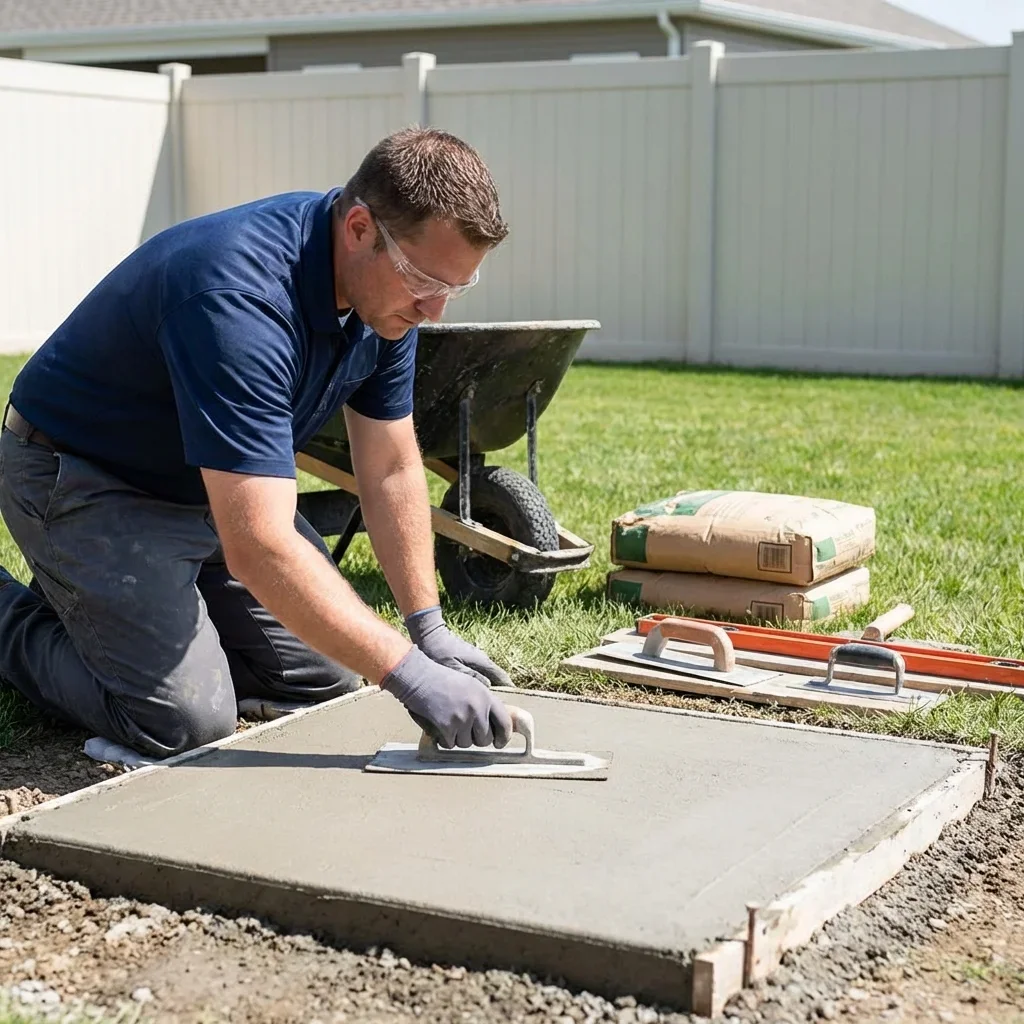
Request quotes from at least three contractors, and make sure you're giving each one identical project specs. A quote for 4-inch thick concrete with wire mesh isn't comparable to one for 6-inch with rebar — you're pricing different products.
Specify your requirements (thickness, reinforcement, finish type, site prep) and ask each contractor to quote the same scope.
Red Flags in Low Bids
Quotes significantly below market (20–30% under comparable bids) should trigger questions, not celebration.
Budget contractors cut costs somewhere, and it's rarely their margin. Common shortcuts include:
Thin pours — quoting 3.5 inches when 4 inches is minimum residential standard. Half an inch sounds trivial but reduces strength by 15–20% and nearly guarantees premature cracking.
Wire mesh instead of rebar for structural applications. Mesh costs half what rebar does but provides minimal crack control. The Portland Cement Association explicitly recommends rebar over mesh for slabs that need structural integrity.[2]
Minimal or skipped base preparation. A quote that doesn't mention excavation depth, base material, or compaction probably isn't including proper prep. You'll pay later for mudjacking or replacement when sections settle.
Rushed cure times. Concrete needs proper curing (keeping it moist for 5–7 days) to reach full strength. Contractors who pull forms next-day and disappear aren't letting concrete cure properly, reducing final strength by up to 40%.
Vague language about "standard installation" or "typical practices" without specifics suggests the contractor doesn't want to commit to quality standards in writing.
Good contractors specify mix strength (PSI), reinforcement type and spacing, base depth and material, and curing procedures.
Pro Tip: A quote that's 20–30% below comparable bids isn't a deal — it's a warning sign. Budget contractors cut corners on thickness (3.5" vs. 4"), use wire mesh instead of rebar, skip proper base prep, or rush cure times. These shortcuts can reduce concrete strength by up to 40% and guarantee callbacks within 2–3 years. Quality contractors specify exact PSI ratings, reinforcement details, and base preparation in writing.
What Should Be Included in Every Quote
Complete quotes detail material specifications: concrete PSI rating, reinforcement type (rebar size and grid spacing or mesh gauge), and finish type. They break out site prep: excavation depth, base material type and thickness, and grading work. They specify what's included in the price and what's additional (demolition, permit fees, special access requirements).
Timeline commitments matter. When does work start? How long until completion? What delays might extend the schedule (weather, permit processing, concrete plant scheduling)?
Good contractors set realistic expectations rather than promising fast turnarounds they can't meet.
Warranty terms should appear in writing — typical coverage runs 1–2 years for labor and addresses specific issues like cracking, settling, or finish defects. Material warranties (concrete itself) usually flow through from suppliers. Understand what triggers warranty coverage and what voids it (improper maintenance, vehicle overload, no winter salt).
Payment terms tell you about contractor stability. Avoid anyone demanding 50%+ upfront or full payment before starting. Standard practice is 10–20% deposit, progress payments tied to milestones (prep complete, pour complete), and final payment after walkthrough.
Contractors asking for unusual payment structures may have cash flow problems.
License and insurance verification should be straightforward. Wisconsin requires contractors to hold proper licensing through the Department of Safety and Professional Services, plus liability insurance and workers' compensation coverage.[1]
Ask for policy numbers and verify them directly with insurers rather than accepting certificate copies that might be outdated.
Find Qualified Concrete Contractors in Fox Valley
Qualified concrete contractors in Fox Valley combine proper licensing, proven experience with Wisconsin climate challenges, and transparent pricing that reflects quality work rather than corner-cutting. The contractors in our directory have been verified for licensing, maintain current insurance, and offer detailed written quotes that specify materials, methods, and warranties.
Compare multiple quotes using the framework above — matching scope, questioning outliers, and prioritizing contractors who explain their approach rather than just throwing numbers at you.
The right contractor costs more than the cheapest bid but less than replacement work in three years.
- U.S. Department of Housing and Urban Development (HUD). "Concrete Slabs for Residential Construction." https://www.huduser.gov/portal/sites/default/files/pdf/ConcreteSlabs.pdf. Accessed February 09, 2026.
- Portland Cement Association. "Concrete Construction Best Practices." https://www.cement.org/docs/default-source/fc_concrete_technology/is001-best-practices-for-concrete-construction.pdf. Accessed February 09, 2026.
- American Council for an Energy-Efficient Economy (ACEEE) referenced via Homewyse industry data. "Cost to Install Concrete Pad - 2024 Cost Calculator." https://www.homewyse.com/services/cost_to_install_concrete_pad.html. Accessed February 09, 2026.